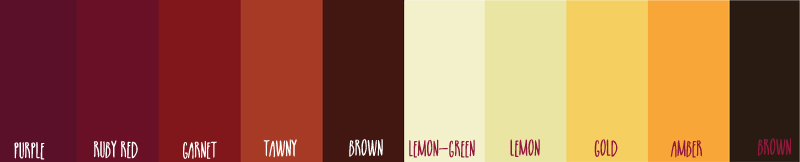
What colour can tell you about wine  When drinking or tasting wine most people focus only on the smell and the taste of it, ignoring what ought to be the first step – looking at the wine’s colour and its general appearance. You might think that choosing red, white or rosé is all you need to think about in terms of the colour of wine but in fact the colour can give you a number of clues about the wine’s age, style, grape and even where it was produced. In blind and non-blind tastings sommeliers and wine experts always start by looking at the wine in the glass. Here’s how and why… How to assess a wine’s colour Look at the colour of the wine in a clear glass against a white background. Pouring wine only until the glass is a quarter or a third full means you can safely tip the wine glass to look at the colour without spilling any wine. What gives wine its colour? The colour of wine derives primarily from phenolic pigments found in the grape skins (the juice of most grapes, red, white or pink, is actually clear). There are more colour pigments in the skins of some grapes than in others so grape variety has some impact. Interaction with oxygen during the wine-making process can also make the grape juice become darker but with careful treatment of the juice and/ or the addition of sulphur dioxide (you can find out more in my blog on sulphites in wine) this risk can be minimised. Ageing or even fermenting a wine whether red, rosé or white, in oak, will alter the colour. Partly this is because of the slight oxidation that occurs when a wine is aged in oak barrels but also due to chemical reactions between the juice/ wine and the oak. Similarly aging a wine even in bottle means there will be some, albeit minimal, exposure to oxygen which will change the wine’s colour. With age a white wine becomes darker whereas a red wine’s colour breaks down and so it becomes lighter. The thicker the grape skin and the longer a wine is left on the grape skins (a process called maceration), the darker a wine will become. Similarly a harsh or heavy grape pressing will mean that more colour is extracted from the skins. Most reputable wine makers tend to press gently these days, mainly to avoid too much bitterness from the pips and stalks entering the juice. In addition, for red wines, acidity has an effect on the colour; generally the higher the acidity the brighter, lighter red a wine is likely to be. This can also help in ascertaining the climate of the region a wine was produced in and therefore the origin of a wine. Cooler climate wine would generally have less ripe grapes and, if you remember from my blog on acidity in wine, therefore tends to have more acidity. Wines from cooler regions are lighter both in colour and in body. Conversely wines with lower acidity from riper grapes grown in warm climate regions tend to be bigger and more full-bodied with deeper colour. The colours of white wine White wines are not white at all but range through a long list of shades from a pale lemon colour with green notes through different shades of gold to orange. White wines have tended to become paler over recent years as wine-making processes have improved; in particular there are now only very rare occurrences of over-oxidation which can cause deep gold to brown shades of white wine.  Paler white wines towards the lemon-green and lemon end of the spectrum are likely to be: young light in body dry with fruit & floral characteristics unoaked and from cooler climate regions  More gold-coloured white wines are more likely to be: older richer fuller-bodied aged or fermented in oak (or on their lees or yeasts) with fruit and some spicy and even bready characteristics from warmer regions  Amber or orange white wines are more likely to be: sweeter or sweet especially if produced from much riper or and even botrytised grapes even richer and fuller in body possibly intentionally oxidised like sherry and orange wines older, possibly past their best if they have been left too long and have oxidised too much  By the way, I tend to find that people who say they get headaches from white wine prefer to drink the lighter coloured wines. I do wonder whether there is something in oak that might not agree with some people…  The colours of red wine There are many hues of red wine, perhaps more than for white wine, or perhaps simply more distinguishable. To keep things simple, red wines can range from bluey purple through crimson reds to browner shades of red to brown itself e.g. in tawny port. Red wines at the purple and light red end of the spectrum are more likely to be very young possibly too young lighter in body higher in acidity with fruity characteristics low in tannins unoaked from cooler climate regions A garnet-coloured wine which is a deep red with brick-coloured hues is more likely to be older medium to full bodied lower in acidity fruity but also with vanilla and toasty characteristics more tannic though in good wine these will have softened over time oaked from warmer climate regions A red wine at the tawny or brown end of the spectrum is likely to be aged round and full-bodiedrich nutty with dried fruit characteristics oaked fortified like port and potentially past its best if not fortified The colours of rosé wine Rosé wines can range from the most delicate pink through salmon pink hues to orange. They take their colour from the black grapes used in their production – particularly important is the length of time the juice is left on the skins for extraction of the colour. In recent times the preference seems to
Guide to rosé wine & the rise in premium rosé
The ultimate guide to rosé wine The ‘too pink, too girly and too sweet’ reputation that rosé wines used to have has finally been shaken off though it has taken several years. Improvements in the production of rosé wines together with a rising interest in dry, paler pink wines to be consumed throughout the year and not just in the summer have led to a prevalence in really crisp rosés displaying summer fruit flavours and aromas often with ‘steely’, mineral notes that emphasise the dry, refreshing style of wine. And the improvements just keep on coming, so much so that there is now a growing premiumisation of the general rosé wine brand. Read on to find out all about how pink wine is made, the different styles of rosé, how and why the market is seeing more and more examples of premium rosé wines & which foods to eat with rosé. ROSÉ’S POPULARITY KEEPS ON GROWING Rosé’s previous poor reputation was long-standing. Back in the 1970s and 1980s the preferred style was for fruity yet slightly sweet, dark pink-coloured rosé wines from Portugal, France – largely in the form of Rosé d’Anjou – and from the USA where, even today, medium-sweet Californian Blush or white Zinfandel still remains popular. Even when improvements started to be made in its production, rosé was still seen as a bit of a sweet, ‘girly’ drink, a reputation that it has finally shaken off. Whilst some of the sweeter, uncomplicated, more commercial styles of wine still remain, they tend to be at the entry level or lower end of the market. There is increasingly more choice of the generally preferred drier style of rosé in the middle and the top end of the range. HOW ROSÉ IS MADE All rosés are made from black grapes (which have white juice); the colour comes from the grape skins. In fact, rosé wine was originally produced simply as a by-product of red wine production where the initial juices from the red grapes were drained off so that the red wine would be darker and more concentrated. Those paler juices were used for rosé; this method is known as saignée, which translates as ‘bled’, and is still used today especially in the USA’s Napa Valley although it is not the most commonly used method. Even fewer rosé wines are made from blending red wine and white wine; some New World wines follow this method which is also used for pink champagne. Most rosés are made by maceration – the fermenting juice of the black grapes used for the rosé wine is left in contact with the skins for a varying degree of time, from just few hours to a few days so that the white juices pick up some of the colour, flavours and tannins from the grape skins. After maceration the wine-making process then continues as if for crisp white wines i.e. fermentation usually in stainless steel tanks at cool temperatures without further contact with the skins. As they are made from black grapes, rosés have tannins although in a good rosé wine these should not be obvious but soft and integrated. To help with this the grapes will usually have been de-stemmed before pressing so that harsh tannins from the stalks are not included. Wines will generally not have been in contact with the skins (and pips) for long because the majority of rosé wines are made for drinking in the short term and not for keeping. However this is changing as some producers experiment with longer maceration times and, after fermentation, leaving the wine on its lees for a few weeks or even months, both of which will add complexity and texture to the wine and structure which means that the wine can be kept for longer before drinking. It is actually considered more difficult to make rosé wine than to make red or white because a delicate balancing act is required to achieve the right amount of colour without losing any of the fruity characteristics and the finesse of the wine. DIFFERENT STYLES OF ROSÉ Rosé wines are made all over the world from all sorts of different red wine grapes though the popular ones are Grenache, Cinsault, Syrah and Tempranillo. I recently tasted an English 100% Pinot Noir rosé and a Canadian 100% Cabernet Sauvignon rosé so the possibilities are endless. Of course it’s all a matter of personal taste but my view is that good rosé is all about fruit and finesse which is quite a difficult balancing act to achieve. Flavours vary according to the grapes used and complexity is obviously better than one-dimensional wine and the finesse comes from making sure that the acidity (which leaves your mouth watering) balances the sweetness of the fruit flavours in order to avoid that sweeter, old-style of rosé. Here is a very brief summary of different rosé wine styles – naturally there are many exceptions so I generalise… Blush Rosé As mentioned above, off-dry or medium-dry rosé continues to be made mainly in the USA under the label of Blush or white Zinfandel and there’s also a sparkling version. The similarly styled Mateus rosé, once hugely popular in the UK, is now thankfully just a nostalgic memory for baby boomers. Provence-style Rosé The Provence region of France is largely considered to be the best source of good quality rosé wines although it is increasingly seeing competition from other wine regions. Provence AOP rosés like Made in Provence Collection Rosé are estate bottled, i.e. made and bottled by the grower under AOP regulations to guarantee a certain quality. By the way, France is the largest consumer (and producer) of rosé drinking c.20 bottles per head per year and rosé accounts for 31.5% of all wine consumed in France. Many of the new, improved rosés are produced in the Provence style from a mix of grapes, usually Grenache, Cinsault, Syrah – dry, really crisp and displaying summer fruit flavours like strawberry, raspberry, red cherries, citrus fruit