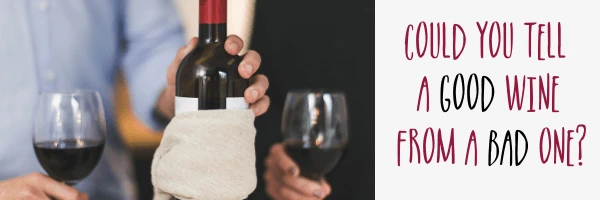
How to tell if a wine is good As the old and unattributed adage goes, life is too short to drink bad wine – but what makes a wine good or bad? What exactly is a good or quality wine? How can you tell if a wine is good? You may read ‘Quality wine’ or similar phrases on the label of a wine bottle but does that really mean that a wine is a decent wine and is well-made? In this blogpost I share with you the best ways to spot a good wine by assessing the quality by tasting it, what the 4 specific things that should be evident in good wine are and what good wine really tastes like.  Do the label & price indicate a wine’s quality? As mentioned above, you may look at a wine’s label when trying to tell if a wine is good However, unless you know that particular wine already or you have had a recommendation from someone you trust, a label is unlikely to tell you more than the origin of the wine, its vintage and its alcohol level and possibly the grape varieties from which the wine is produced. Read more on labelling and appellations. The price of a wine can give you a hint of its quality level but it is by no means the best indication; an expensive wine may be poorly made if the winemaker or his/ her PR is not entirely ethical. Conversely you can find cheap wines that are well-made although you may have to make your way through a lot of wine to find the decent ones. A quality wine does not have to be very expensive but it really is worth moving away from entry-level wine as you have a much higher likelihood of finding a good quality wine above that level – only about £1.70 of a £7.50 bottle relates to the wine itself, the rest being made up of VAT, duties, packaging, transportation etc. At £15 that figure rises to about £6, so better bang for your buck. What to look for when assessing a wine’s quality The best way to tell if a wine is good is to start by assessing the quality of a wine. Here are the four things that you should be looking for when you taste the wine. Bear in mind that this is not a matter of how a wine tastes. Personal preference in wine is very important but it is also very subjective. To assess whether a wine is good or not requires a more objective view and there are four main criteria that you can look for: balance complexity intensity finish Balance First and foremost, quality wine should have balance.  You may well ask what is balance in a wine? To be specific a well-balanced wine’s acidity, sweetness, fruit, alcohol and tannins should all be in harmony. Each of these components should be integrated and complement other components of the wine and none of them should be too obvious. Acidity  A certain amount of acidity is good as it balances the sweetness of the grapes and gives the wine freshness; it can usually be felt on the sides of the tongue. Acidity is important in all wines but especially important in sweet or dessert wines. You need a degree of acidity to stop the wine from being sickeningly sweet; you should almost feel the mouth-watering freshness cut through the sweetness. Too much acidity though will make a wine taste austere and too little will make the wine flat, often described as ‘flabby’, as acidity can help to lift the fruit flavours. Read further on this subject in my blogpost on acidity. Sweetness  Sweetness is essentially the residual sugar in a wine left after fermentation has stopped the conversion of the grape juice sugars into alcohol (though it may be added sugar in cheap plonk). As already mentioned, sweetness in any wine needs to be balanced with acidity so that the wine is not cloyingly sweet. Fruit flavours in wine vary depending not only on the grape variety but also on when the grapes are harvested (too early and they will be green and more vegetal, late and they risk tasting more like jam than fresh fruits) and how the wine is made. Essentially though wine should have a good concentration of fruit flavours; without this concentration a wine will be rather flavourless and as my husband describes some wines ‘thin’. The fruit characteristics do fade as a wine ages which is how wine experts can assess how long a wine can be kept for before it is past its best.  Tannins  Tannins (in red and to some extent in rosé and orange wines) give a wine structure and help a good red wine to age and develop further. Tannins should be smooth and integrated – or with the potential to soften as the wine ages in bottle. Too few tannins and a wine can seem flat; too much tannin will “fur up” the inside of your cheeks and leave you gasping for a glass of water. Tannins can completely overpower a wine and hide the flavours so wines with high tannin need a lot of strong fruit flavours to balance the wine. Read further on this subject in my Guide to tannins in wine.  Alcohol  Alcohol should be sufficient to give the wine body but should not be overpowering; too much can catch the back of your throat and hide the flavours of the wine and/ or cut them short. If a 15% ABV wine is balanced you will not notice the high alcohol as the alcohol will be tempered by the sweetness and fruit. On the other hand, too little alcohol can make a wine seem somewhat lacking, hollow even. That is not to say that all low alcohol wines are hollow; in a good 5% ABV Moscato d’Asti for example, the low alcohol is
Debunking 7 wine myths
Bursting the bubble of 7 wine myths I am amazed by some of the wine tales that I read or hear about to the extent that I sometimes wonder how much wine has been imbibed when the stories originated. Variations of these wine myths suggest that, like a game of Chinese whispers, some of them are being blown out of all proportion as they circulate. Like most urban myths, there is a danger that they can get in the way of reality or worse still spoil our enjoyment of wine.  So it is time to debunk some of these wine misconceptions and burst the bubble of seven wine stories. 1: Putting a silver spoon in the neck of a champagne or sparkling wine bottle will keep the wine fizzy Talking of bursting bubbles, let’s start with fizz. In order to keep your champagne or sparkling wine bubbly after opening a bottle what is most important is keeping it cold – and then it will only keep fizzy up to a point. Whether this long-standing story grew out of the belief that the spoon was trapping cold air in the bottle or through a misguided belief that silver holds some magical bubble-retaining characteristics, I don’t know. I have tested the cold air theory however and sparkling wine kept in the fridge will keep bubbly – but only for a couple of like the plastic stopper pictured which I find keeps the bubbles longer than the clunky metal stoppers which never quite seem to grip the bottle sufficiently. 2: The heavier the bottle, the better the wine I have heard this myth uttered far too many times and I can’t imagine its origin. If you buy a wine in a heavier bottle, it is going to be a more expensive wine as you are simply paying for the heavier packaging – and there is no guarantee about the quality of the wine inside. If you compared two £25 bottles of wine, you would be getting poorer value in the wine in the heavier bottle because you, the consumer, are paying the extra cost of the heavier bottle. Also heavier bottles are not good for the environment; even if glass is recyclable think of all the extra weight on those lorries moving the wine around. And there’s the risk of back strain for those people that move cases around to get your wine to you! 3: Screw caps mean cheap & nasty wine; quality wines are always sealed with a cork This is a myth which may have had some truth to it years ago. The original screw caps were certainly cheaper than corks and a way for producers of cheaper wines to keep their costs down. Producers of better quality wines looked down on the screw cap and preferred to keep using corks as a symbol of premium wine that would age better in bottle. Screw caps became synonymous with the lower end of the quality range and wines meant for drinking immediately. Since then however screw-off caps have come a long way; millions of pounds have been spent on technological advances such that wines with a screw cap can age and develop whilst in the bottle, just as well as a wine in a bottle sealed with a cork. New Zealand is a particular fan of the screw cap; just look at the fabulous wines of Auntsfield and TWR and they are all sealed with screw caps.  In fact of all Wines with Attitude’s portfolio – which only contains good quality wines – about 25% are sealed with a screw cap. I know there will always be those who prefer the sound of a cork popping but don’t assume a wine under screw cap is not good because you could be missing out on some fabulous wines. The price may be a better indication of quality. I will write more about screw caps in another blogpost. 4: Wine under screw cap cannot be corked Following on from Myth 3 some fans of screw caps say that a wine sealed with a screw cap can’t possibly be corked. But that is simply not true and shows a lack of understanding of that wine fault. To read more about corked wine, read my wine faults blog (coming soon). In simple terms, the compound responsible for corked wine, TCA, is not just found on corks but can contaminate whole wineries. So wine sealed under screwcap can be corked, though these days fewer wines suffer this fault than in the past. 5: Thicker legs means a better quality wine Once you have swirled wine in your glass, the liquid dripping back down the inside of the glass is referred to as the legs or tears (rhymes with fears) – and you won’t believe the amount of argument that the cause of this phenomenon has raised in the wine industry over the years. They have been said to indicate either the quality of the wine or its sweetness but they are in fact an indication of the amount of alcohol in the wine. There is a detailed scientific explanation but to keep things short it’s all about surface tension forces between the alcohol and the water in the wine, the faster evaporation of the alcohol, the tension between the liquid and the glass changing and, of course, gravity. This only happens with multi-compound liquids – there are no legs in pure alcohol or in pure water. A higher concentration of alcohol will make wine slide down the glass more slowly but the difference is not huge; it is easier to see the alcohol content on the label of the bottle than by guessing it from the legs. 6: Supermarket discounts A £10 wine that is discounted to £5 may look like a bargain but it is actually a £5 wine that is normally inflated to £10. This is a generalisation as the margins on more expensive wines are higher than on cheaper wines but it’s
Guide to rosé wine & the rise in premium rosé
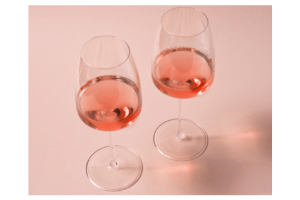
The ultimate guide to rosé wine The ‘too pink, too girly and too sweet’ reputation that rosé wines used to have has finally been shaken off though it has taken several years. Improvements in the production of rosé wines together with a rising interest in dry, paler pink wines to be consumed throughout the year and not just in the summer have led to a prevalence in really crisp rosés displaying summer fruit flavours and aromas often with ‘steely’, mineral notes that emphasise the dry, refreshing style of wine. And the improvements just keep on coming, so much so that there is now a growing premiumisation of the general rosé wine brand. Read on to find out all about how pink wine is made, the different styles of rosé, how and why the market is seeing more and more examples of premium rosé wines & which foods to eat with rosé. ROSÉ’S POPULARITY KEEPS ON GROWING Rosé’s previous poor reputation was long-standing. Back in the 1970s and 1980s the preferred style was for fruity yet slightly sweet, dark pink-coloured rosé wines from Portugal, France – largely in the form of Rosé d’Anjou – and from the USA where, even today, medium-sweet Californian Blush or white Zinfandel still remains popular. Even when improvements started to be made in its production, rosé was still seen as a bit of a sweet, ‘girly’ drink, a reputation that it has finally shaken off. Whilst some of the sweeter, uncomplicated, more commercial styles of wine still remain, they tend to be at the entry level or lower end of the market. There is increasingly more choice of the generally preferred drier style of rosé in the middle and the top end of the range. HOW ROSÉ IS MADE All rosés are made from black grapes (which have white juice); the colour comes from the grape skins. In fact, rosé wine was originally produced simply as a by-product of red wine production where the initial juices from the red grapes were drained off so that the red wine would be darker and more concentrated. Those paler juices were used for rosé; this method is known as saignée, which translates as ‘bled’, and is still used today especially in the USA’s Napa Valley although it is not the most commonly used method. Even fewer rosé wines are made from blending red wine and white wine; some New World wines follow this method which is also used for pink champagne. Most rosés are made by maceration – the fermenting juice of the black grapes used for the rosé wine is left in contact with the skins for a varying degree of time, from just few hours to a few days so that the white juices pick up some of the colour, flavours and tannins from the grape skins. After maceration the wine-making process then continues as if for crisp white wines i.e. fermentation usually in stainless steel tanks at cool temperatures without further contact with the skins. As they are made from black grapes, rosés have tannins although in a good rosé wine these should not be obvious but soft and integrated. To help with this the grapes will usually have been de-stemmed before pressing so that harsh tannins from the stalks are not included. Wines will generally not have been in contact with the skins (and pips) for long because the majority of rosé wines are made for drinking in the short term and not for keeping. However this is changing as some producers experiment with longer maceration times and, after fermentation, leaving the wine on its lees for a few weeks or even months, both of which will add complexity and texture to the wine and structure which means that the wine can be kept for longer before drinking. It is actually considered more difficult to make rosé wine than to make red or white because a delicate balancing act is required to achieve the right amount of colour without losing any of the fruity characteristics and the finesse of the wine. DIFFERENT STYLES OF ROSÉ Rosé wines are made all over the world from all sorts of different red wine grapes though the popular ones are Grenache, Cinsault, Syrah and Tempranillo. I recently tasted an English 100% Pinot Noir rosé and a Canadian 100% Cabernet Sauvignon rosé so the possibilities are endless. Of course it’s all a matter of personal taste but my view is that good rosé is all about fruit and finesse which is quite a difficult balancing act to achieve. Flavours vary according to the grapes used and complexity is obviously better than one-dimensional wine and the finesse comes from making sure that the acidity (which leaves your mouth watering) balances the sweetness of the fruit flavours in order to avoid that sweeter, old-style of rosé. Here is a very brief summary of different rosé wine styles – naturally there are many exceptions so I generalise… Blush Rosé As mentioned above, off-dry or medium-dry rosé continues to be made mainly in the USA under the label of Blush or white Zinfandel and there’s also a sparkling version. The similarly styled Mateus rosé, once hugely popular in the UK, is now thankfully just a nostalgic memory for baby boomers. Provence-style Rosé The Provence region of France is largely considered to be the best source of good quality rosé wines although it is increasingly seeing competition from other wine regions. Provence AOP rosés like Made in Provence Collection Rosé are estate bottled, i.e. made and bottled by the grower under AOP regulations to guarantee a certain quality. By the way, France is the largest consumer (and producer) of rosé drinking c.20 bottles per head per year and rosé accounts for 31.5% of all wine consumed in France. Many of the new, improved rosés are produced in the Provence style from a mix of grapes, usually Grenache, Cinsault, Syrah – dry, really crisp and displaying summer fruit flavours like strawberry, raspberry, red cherries, citrus fruit