Wines With Attitude red logo
Skip to main content

Wines With Attitude

Hot weather & its effects on grapes & wine

Summer – in the Northern hemisphere at least – means, or should mean, beautiful clear skies, sunshine and warmth, all elements that you would imagine combine to make the perfect weather for wine grapes. But with climate change average summer temperatures are rising to such an extent that heatwaves are becoming more frequent – 2017, 2018, 2019, 2022, 2023 and 2026 have all seen heatwaves affecting much of Europe with temperatures especially in continental Europe regularly above 40° Celsius. Whilst wine grapes benefit from sunshine and heat, when is it too hot to be beneficial to them? When is hot too hot for grapes and what impact does hot weather have on the wine produced in the heatwave years that seem to be becoming the norm? Read on to find out more.

Effects of hot weather on grapes

Higher sugar means higher alcohol

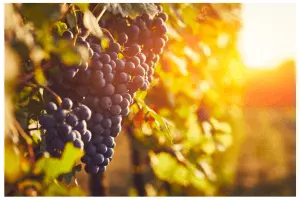
Bunch of ripe black grapes hanging on the vine in the sunshineIt is a basic fact of grape-growing that, in order to produce decent wine, grapes need sunshine and warmth to ripen (to varying degrees depending on the style of wine but always to some extent). Grapes without enough sun and heat do not fully ripen and will have bitter, green or unripe flavours.

As grapes ripen the level of sugar within them rises due to photosynthesis, the process by which plants, using chlorophyll, convert sunlight, water and carbon dioxide into glucose and oxygen. The level of sugar within the grapes at harvest time is one crucial element in the sweetness but also in the quality of the resulting wine. Winemakers measure sugar levels in the grapes daily in the lead-up to harvest time using a refractometer. This helps them decide whether to leave the grapes on the vine for longer in order to ripen further. But this is taking into account the weather forecast as any rainfall before harvest can dilute the sugar content of the grapes.

As the sugar in grapes converts to alcohol, if sugars are too high at the time of harvest, the wine will be high in alcohol. Wine makers are increasingly under pressure to try to control alcohol levels partly due to a general trend towards lighter wines but also because of climate change which is seeing more frequent hot weather. Grapes that are high in sugar can also lead to wine that tastes of stewed, even jammy, fruits. These cooked flavours and the high alcohol can make a wine seem unbalanced. And as regular readers of my blog will know balance is crucial for good quality wine.

You can also read more about alcohol levels in wine in All about ABV.
Sunburn & lower yields

The sun brings another danger as grapes, just like humans, can suffer from sunburn in extreme conditions. It is thought that burnt grapes can also affect the fruit characters of a wine. They lose the fresh fruit flavours that are sought after and develop more cooked fruit flavours mentioned above. The burnt grapes are therefore generally discarded, at least by the better winemakers. Similarly shrivelled grapes will not make the grade in good quality wines as they will lose a lot of moisture and concentrate the sugars. The exception here are grapes intentionally dehydrated in order to concentrate the juice and sugars for richer wines such as Recioto and Vin Santo

Stress

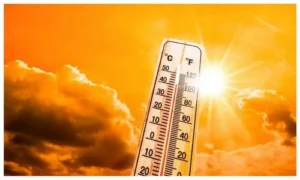
Thermometer in bright sunshine showing high temperatureExcessive heat and drought especially in late summer at peak ripening time is catastrophic as they effectively shut down the grape, causing the processes of photosynthesis and therefore ripening to stop. The temperature at which this is believed to happen is ‘only’ about 32° Celsius so not excessive for many wine-producing countries in the height of summer.

Grape vines under stress close down in order to conserve water. Again, development of the prized fresh fruit flavours is under threat and bitter flavours can even develop in grapes suffering from heat stress. Grapes are also likely to be smaller and therefore yields lower and the vine’s leaves which normally provide shade can drop off.

There may be an option to irrigate the vines to help ease the heat stress but this is not allowed in many wine regions. In the EU, more often than not it is not allowed for quality wine appellations – although authorisation is sometimes given in extreme circumstances. This strict regime has caused at least one château in the Pomerol appellation, Château Lafleur, to move all their wine production to simple Vin de France level in order to be able to irrigate. Climate change might bring about a change to regulations like this in the not too distant future.
Lower acidity

However it is the fall in acidity that is arguably the biggest issue for wine produced in a heat wave vintage. As sugar rises, the acidity in the grapes falls – for more on this subject, see my blog on acidity in wine.  It is key to the natural balance of a wine that grapes are picked at the right time i.e. when acidity and sugars are at “optimal” levels.

Even in years with a more usual weather pattern wine producers constantly measure acidity levels to make sure they do not fall too much. In excessive temperatures the need to monitor acidity is crucial as a drop is much more likely and more acute.

Grapes that are low in acidity will produce wines that are heavy, jammy, lacking in freshness. These wines are described as flat in taste or ‘flabby’ in wine industry terminology. To make sure that wines are fresh, fruity, perfumed and elegant, it is imperative to harvest before acidity has fallen too far.

It is all a fine balancing act for wine producers especially as it is believed that grapes are affected more than any other fruit by differences in climate.

Effects of hot weather on wine

Glass and spilled red wineThe impact of heatwaves on vines means that wines produced during very hot weather risk being:

  • high in alcohol due to over-ripe grapes
  • flat or flabby due to low acidity which takes away the freshness of the wine
  • bitter if the vines suffered from heat stress and /or if tannins could not therefore soften as quickly as they might in cooler years and / or
  • jammy with flavours of stewed fruits rather than fresh fruits. So, not too many positive features.

A wine suffering a combination of any of the above can therefore seem unbalanced, which is not a characteristic of a good wine. Quality wines should taste smooth with the alcohol, acidity and fresh fruit flavours working in harmony together. Mass-produced wines, usually produced in warmer climates for maximum yields, can taste imbalanced even in years where there is no heatwave.

In addition wines produced in very hot years, like those mass-produced wines, are unlikely to be long-lived. Although high alcohol is one factor that can help wines age, low acidity and a lack of fresh fruit flavours do not.

To add insult to injury – or perhaps with the characteristics mentioned above it is a blessing – there is likely to be less wine produced in hotter years. In many areas affected by heatwaves the harvest will be down substantially especially in any areas affected earlier in the year by spring frosts, mildew, long periods of drought and other climatic influences. In 2017 Spain for example reported that in some regions yields were down by as much as 50%. Consequently, the simple laws of supply and demand often see wine prices increase after hot vintages where yields have been severely affected.
What winemakers can do to mitigate the effects of a heatwave

All is not lost. To combat the problems of too much sun, heat and drought there are things that can be done in the vineyard and in the winery.

In the vineyard there are options to:

  • provide a physical shade over the vines, usually by a trellising system such as a High Cordon or the Lyre system where the canopy of leaves provides shade. Head Training or low, free-standing bush vines are used where heat, wind and water stress may be issues
  • manage the canopy or trim the vine leaves in such a way as to maximise shade for the grapes
  • irrigate, though as mentioned above many areas are restricted from irrigation by the wine classification regulations or even by local government regulations
  • thin the crops i.e. the removal of the unhealthy fruit which then helps the vine divert its resources to the remaining grapes producing more concentrated flavours although this process can speed up ripening further
  • use organic and biodynamic principles as many believe these make vines more resistant to drought and excessive heat, though this is obviously not an instant remedy
  • bring forward the date of the harvest. This is becoming increasingly the practice in many areas. In 2025 some French regions started harvest 10 days ahead of 2024. In fact INRAE, the National Institute for Agricultural, Food and Environmental Research in France, estimates that France is starting to harvest its wine grapes on average three weeks earlier than in the 1980s.
  • harvest as quickly as possible to keep the grapes out of the heat as much as possible and at night to take advantage of cooler temperatures.

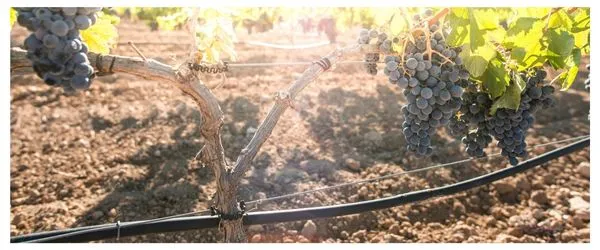
Close up of vine with red grapes and with an irrigation pipe attached

In the winery, efforts can be made to:

  • keep the winery cool to prevent fermentation progressing too quickly
  • add acidity (usually tartaric acid) to the wine. This practice is more common for entry-level, warm-climate wines. The better producers who respect ‘terroir’ will not usually opt to do this or will only acidify as a last resort. In some wine classifications acidification is not even permitted or is strictly limited.

It is also important to stress that mesoclimate is the key rather than the over-riding climate of the region – vineyards in excessively hot areas may see lower temperatures if they are higher up, on hillsides, north-facing, in windy areas or near large expanses of water. This is another reason to get to know more about individual wineries and their vineyards.

Are the heatwave vintages complete write-offs?

The bad news is that there have been some poor-quality wines in all the recent European heatwave years, 2017, 2018, 2019, 2022 and 2023 as the heat in those years was reported to wreak havoc on many crops including grapes destined for wine. And there will undoubtedly be some in 2026. It is also becoming the norm to see wine prices rise after heatwaves due to lower yields and therefore less wine produced than normal. These are reasons enough to drive you to pour a large glass of wine – chilled, naturally…

The good news however is that not all wines from these years are write-offs. Stick to cool climate wines completely if you want to be sure of finding the better wines. You can also look at wines from smaller but experienced wineries which will be doing what they can to avoid the problems caused by the hot weather – or trust in your wine merchant to seek out the best wines for you.

Cheers!

I am passionate about good quality wine and set up Wines With Attitude to share that passion with other wine lovers. If you’re feeling sociable why not follow me on social media or share my blog with others?

independent producers

personally chosen

especially for you

Love wine?

Sign up to my newsletters and be the first to see my wine blogposts and incredible new wines.

Your data is safe with me. Read more in my privacy policy

© 2014-2026 Wines with Attitude Ltd | Registered in England 08918466 | VAT Reg. No. 181 2419 22 |  Fiveways, 57-59 Hatfield Road, Potters Bar, Herts, EN6 1HS