No products in the basket.
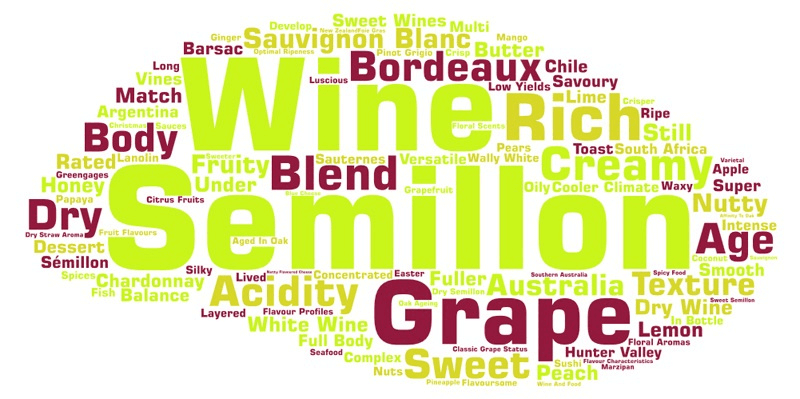
Aside from its home of Bordeaux, Semillon is grown largely in Australia, especially in the Hunter Valley, in South Africa, Argentina and Chile although Semillon vines have reduced in number as the craze for Chardonnay took hold in these countries. In addition it is not the easiest grape to grow, or rather it grows profusely but producing good flavoursome Semillon is notoriously difficult.
At its worst, as a commercial bulk wine, Semillon lacks any flavour characteristics but at its best, when the grapes are grown in low yields and to their optimal ripeness and the dry wine is produced with care, it is intense, multi-layered with fruity, nutty and savoury characteristics, full body and a smooth, creamy texture.
In cool climate Semillon like those produced in Bordeaux and Hunter Valley citrus fruits – lemon, grapefruit and lime – and apple are likely to be predominant; the wine may also have floral aromas. The acidity will generally be higher and so the wine will be a little sharper. And in fact if it has not ripened properly Semillon tends to be very like Sauvignon Blanc to which it is related; some say it is like Pinot Grigio.
It will also tend not to be aged in oak in cooler regions though some flavour characteristics such as honey, butter and toast and textures that may be associated with ageing can develop if a wine is kept in bottle for a reasonable time. These wines are likely to be lower in alcohol at c.12% ABV.
In warmer climate dry Semillon from areas like Southern Australia, South Africa and Argentina the fruit flavours will tend more towards ripe pears, greengages, papaya, peach and mango though the lemon flavour usually remains. The dry straw aroma for which Semillon is known and the floral scents will be more predominant and there may be spices like ginger in the mix.
If oak ageing is used the butter and creamy aromas and tastes and the smooth, full-body will be enhanced. The texture of Semillon from a warmer area can be a little oily (in a good way), some call it lanolin or waxy, and in a good wine this should be balanced with some acidity. The alcohol will be higher at around 13.5 or 14% ABV. These Semillons can be like a rich, creamy Chardonnay.
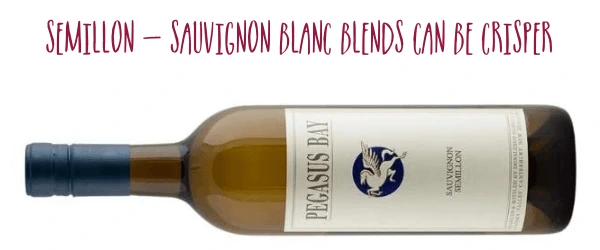
When blended with Sauvignon Blanc, the added acidity from the Sauvignon creates a crisper wine and balances the richness of the Semillon; the flavour profile will depend upon the ratio of each grape in the blend.
 Food-wise dry Semillon has the body to make it the perfect match for rich meals like those we eat at Christmas and Easter where there are a lot of different flavours on a plate including fruity and creamy sauces – remember number one of my wine and food-matching tips – match the weight of the food with the wine. And the nuttiness of the wine complements a nut roast.
Perhaps surprisingly Semillon also makes a good match for relatively spicy food – mildly spiced curries, Thai and Japanese dishes.
Cooler climate Semillon is especially good with fish, seafood and even sushi.
Dessert Semillon wines are great with most desserts – remember number 2 of my food and wine matching tips – always to serve a wine that is sweeter than the food to avoid an acidic or sour taste – so rich and creamy puddings are perfect. But sweet Semillon is also good with some savoury foods – foie gras is perhaps the better known combination but try it also with blue cheese and nutty flavoured cheese like a strong cheddar and Gruyere.
… just find the right style of Semillon for you.
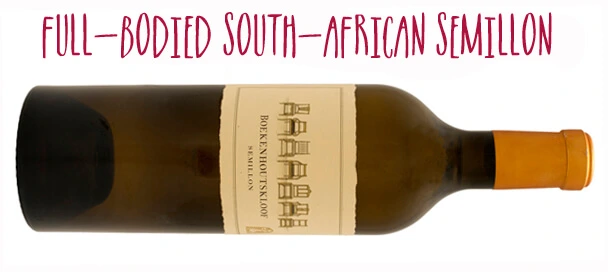
If you are a fan of Chardonnay try a 100% varietal or the Boekenhoutskloof Semillon which has a splash of Sauvignon Blanc to help the acidity. If you are more of a Sauvignon Blanc fan, try a Sauvignon-Semillon blend.
I can’t think of many white wine drinkers who wouldn’t enjoy one of these styles.