Wines With Attitude red logo

Wines With Attitude

A guide to sulphites in wine

Graphic of man in a wine cellar wearing a lab coat adding sulphites to a bottle of wineSulphites in wine are one of the most discussed and misunderstood topics in the wine world. If you’ve ever looked at a bottle label and seen the phrase “contains sulphites” you might have wondered what it means. It may even have put you off buying the bottle as the word sulphites (or sulfites) does not sound very wholesome. But the majority or wines, even so-called natural wines and certified organic wines may contain these compounds. The questions that people ask me most frequently to try to understand what is in their wine include

Are sulphites in wine harmful?

Do they cause headaches?

Why are they added?

In this guide, we’ll look at what sulphites are, why they’re used in winemaking, how much is usually found in different types of wine and whether you should be worried. And finally whether these much-aligned compounds do in fact cause headaches. By separating the fact from the fiction, you will understand sulphites in wine better and be in a position to make more informed choices about wine.

WHAT ARE SULPHITES?

In wine sulphites are effectively sulphur dioxide (E220). Sulphur dioxide is actually a natural by-product of the fermentation process although it is produced naturally in very small amounts. In addition sulphur dioxide in liquified gas format can be added to wine. Potassium metabisulphite (E224) and potassium bisulphite (E228) can be added as alternatives since they release sulphur dioxide when added to an acidic aqueous liquid like wine or grape must.

WHY ARE SULPHITES IN WINE?

Bottles of red wine on with a tag around its neck reading "No sulphites added"As mentioned above, sulphur dioxide is produced naturally in the wine-making process from yeasts during fermentation. In fact it can be said therefore that no wine is completely free from sulphites. It is important to note that if no supplementary sulphites are mixed into the wine, those wines can be labelled with “No sulphites added”.
There are several reasons why additional sulphur dioxide may be added:

  1. as a preservative
  2. to stop oxidation
  3. to kill bacteria.

SAFE LEVELS OF SULPHITES IN WINE

Contains-sulphites

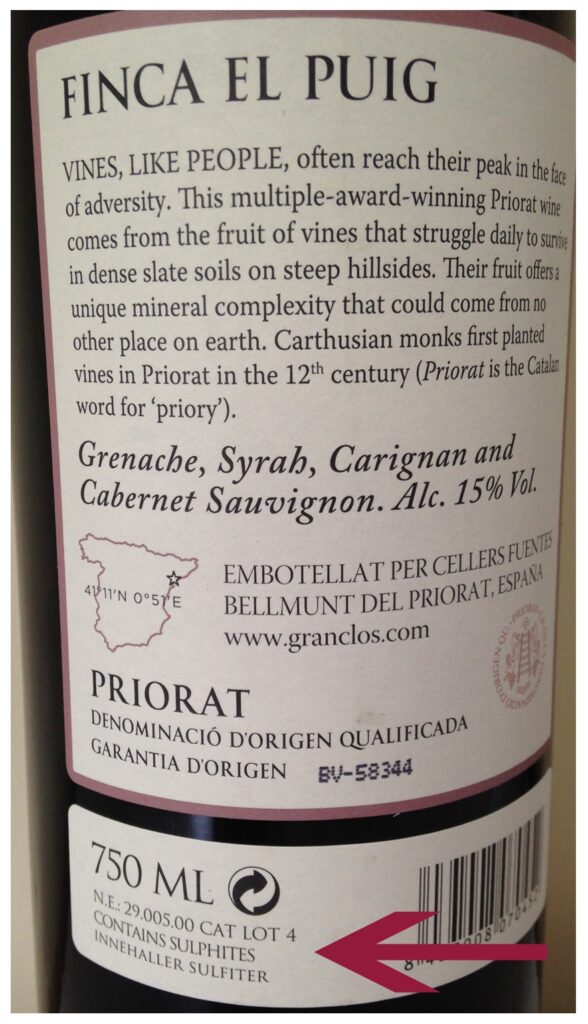
It is as a result of the EU food allergens labelling regulations that those words of warning “Contains Sulphites” (as shown on the left) are required on the label of wines if they contain more than 10 parts per million (“PPM”) of sulphites. This is equivalent to 10 mg per litre, so a very small amount.

The level of sulphites in wine range can range from about 10 PPM to c.400 PPM. A range of 10 to 40 PPM is considered ‘normal’ i.e. the wine has only naturally occurring sulphur, where you might see on labels “No added sulphites”.

By the way, white wines generally have more sulphites than red wine as they are more susceptible to oxidation, not having the high levels of natural antioxidants that red wines have. Another general rule is that the sweeter the wine, the higher the level of sulphites is likely to be. Nevertheless the EU sets limits for different styles of wine and these have reduced over the years. In addition biodynamic and organic wines have lower limits so do have some benefits.

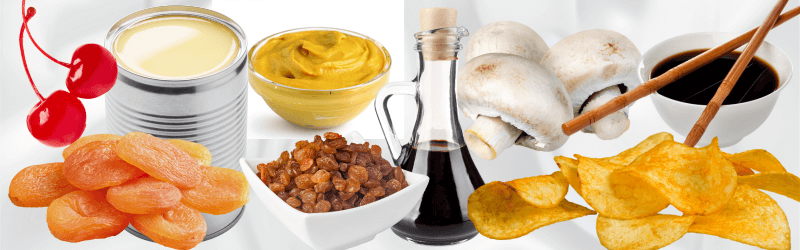
But to put things in context, many foodstuffs contain higher levels than most wine e.g. fresh fruit salads, fruit squash, soy sauce and most processed foods. Dried fruits can be especially high in sulphites at up to c.3000 PPM so in comparison 400 maximum PPM for the sweetest wines does not seem particularly high.

Foods that contain as many if not more sulphites than

REDUCING SULPHITES IN WINE

The good news is that the permitted levels are much lower than they used to be so winemakers have to control contact with oxygen much more tightly and should therefore use sulphur dioxide sparingly.

Harmless sulphites can sometimes be detected by a struck match aroma which some people think adds character to certain wines.  If you don’t like this aroma in your wine the simple solution is to decant the wine and chill it.

One way to reduce sulphites in wines is to add hydrogen peroxide; this substance oxidises the sulphites and converts them to the inoffensive hydrogen sulphate. There are some products based on food-grade hydrogen peroxide being marketed as a means of removing sulphites from wine but they are not yet available in the UK. The jury is still out on that idea but personally I think adding even food-grade hydrogen peroxide sounds far more scary than drinking a wine with safe levels of sulphur dioxide.

WHAT ABOUT SULPHITE-FREE WINES?

As traces of sulphites are produced during fermentation, no wine is truly sulphite-free. It is possible however to make wine without introducing any additional sulphur dioxide. In these instances winemakers must take great care from the time the grapes are picked through to bottling the wine to avoid oxidation which can kill a wine’s fruit flavours. As you can imagine larger, more commercial wine companies are less likely to invest the time and precision needed to control exposure to oxygen so it is generally smaller producers who are looking for a more natural wine reflecting the ‘terroir’ who produce wine without added sulphites.

The results can be amazing – wines without added sulphur dioxide are considered to have brighter flavours and colour (especially for red wine since sulphur dioxide boosts the extraction of pigments in the wine-making process). But given the risk of oxidation these wines won’t keep long and can spoil very easily thus ruining those brighter flavours that the producer has strived to encourage. There is also the danger of the wine developing a very unpleasant ‘mousy’ character which cannot be cured by decanting or any other means.

So, don’t be put off by those words “Contains sulphites” unless you have or suspect you have a sensitivity to them. And if you get chance to try a “No added sulphites” wine, give it a try – but don’t keep the bottle open for long!

WINE HEADACHES

Sulphites and/ or sulphur dioxide are an allergen for a small number of people who can display asthmatic symptoms when in contact with them. Obviously if you are one of the unfortunate few with that sensitivity you should avoid wines containing sulphites or choose those with very low levels – sulphur detection strips are readily available online.

Sulphites in wine have also been thought to be the cause of headaches for some people. However following several studies this theory has largely been disproved. See below my tips for avoiding wine headaches.

Avoiding headaches from wine by Wines With Attitude

If you are one of those people who suffers from headaches whenever they drink wine even in small amounts, I firstly recommend avoiding cheap wine – you may think this is just an effort to tempt you to buy wines with attitude but in general cheaper wines are less well made and more likely to have been adjusted with additional sugar, alcohol, oak flavourings etc. 

It may also be worth trying to avoid oaked wines and grapes particularly high in tannins like Cabernet Sauvignon, Touriga Nacional and Nebbiolo as my theory (not scientifically proven) is that the tannins which develop in wine aged in oak can be the cause of headaches for some people.

To read more of the What’s In My Wine series, why not check out my blogposts on Tannins and on Acidity in wine.

Cheers!

I am passionate about good quality wine and set up Wines With Attitude to share that passion with other wine lovers. If you’re feeling sociable why not follow me on social media or share my blog with others?

independent producers

personally chosen

especially for you

07349 886389

hello@wineswithattitude.co.uk

Love wine?

Sign up to my newsletter to receive exclusive offers and learn more about Wines With Attitude

You have been successfully Subscribed! Ops! Something went wrong, please try again.

© 2014-2026 Wines with Attitude Ltd | VAT Reg. No. 181 2419 22 | Registered in England 08918466 | Fiveways, 57-59 Hatfield Road, Potters Bar, Herts, EN6 1HS