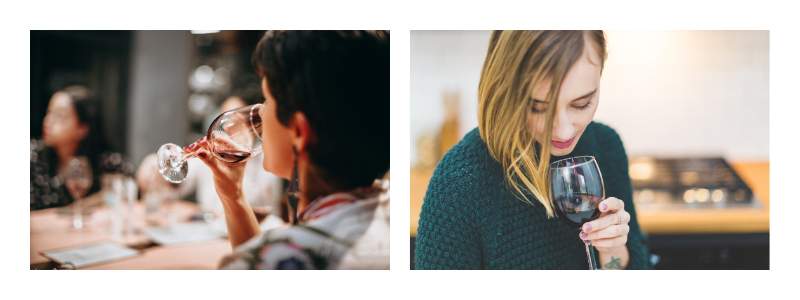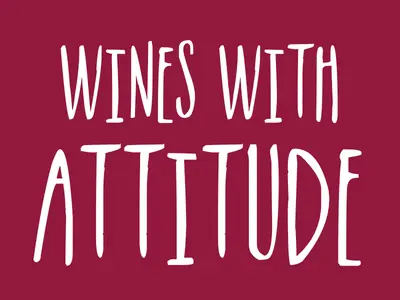
Women and wine In celebration of International Women’s Day here are a few facts and musings about women and wine. Is it true that women are better tasters than men? Can you generalise about women’s taste in wine? Do women spend more on wine than men? How do women buy wine? Do men and women swirl their wine in different directions? These are a few questions I ponder in this light-hearted article – I apologise in advance for any tongue-in-cheek comments and generalisations! Are women better tasters than men? At a trade fair last week I was chatting to someone about winemakers and he said he was surprised that there weren’t more female winemakers as women are better tasters than men.There is some scientific research to back this up; it shows that women tend to be more sensitive to aromas and flavours because women usually have a better sense of smell. This fits with the comments in my supertasters blog that women are more likely than men to be supertasters. It is believed that women’s better or more sensitive sense of smell could be due to the need to protect their children from harmful foods back in the day or simply to be able to recognise their children in a group. Regardless of whether you buy into this I strongly believe that most people can improve their wine tasting skills or their ability to recognise aromas and flavours in wine; my advice would be to taste with other people – who wouldn’t want to anyway? It is amazing how you can start to discern aromas and flavours that other people detect in wine and build them into your “aromas & tastes library”. And talking of learning… Female Wine Experts I used to work in a very male-oriented environment, the financial world. In the early years I was almost always the only woman in meetings. I’m pleased to say that that situation did change in more recent years before I saw the light and changed careers. When I joined the wine world I wondered what the male/ female split would be. Thinking about recent trade fairs, I would estimate the split at about 60% male attendees and 40% female but I would guess that most senior positions in wine companies are still filled by men. According to the 2021-2022 Annual Report of the Institute of Masters Of Wine there are currently 150 female Masters of Wine out of a total of 415, just over a third. The study programme has been open to both women and men since the mid 1950s; it was only in 1970 that the first woman gained her MW qualification. 1979 was the first year that equal numbers of women and men passed and in 2001 more women than men became MWs for the first time. In the last 5 years over 40% of new Masters of Wine were female so the proportion of female MWs to male is growing. There are 271 professionals worldwide who have received the title of Master Sommelier since their first exam in 1969 up to and including 2022. Only in 1984 did the first womean qualify as a Master Sommelier. There are no official figures but a quick check on the list of members suggests only c.15% are women, a figure which does not seem to be improving with time. This seems quite surprising to me as there are more and more female sommeliers in restaurants these days sharing their passion for wine. Perhaps some of them are choosing to take the MW exams instead. There are 12,000+ individuals worldwide who have gained the WSET Diploma in Wines and Spirits including yours truly but no information is given on the split between the genders. I am certain the percentage is higher than the Master Sommeliers. Women’s tastes in wine Is it true that women drink more white wine and sweeter wines than men or are these just urban myths?Sensitive tasters have a tendency to dislike strong flavours and so if we continue with the very broad generalisations about women being more sensitive to smells and tastes they are unlikely to choose to drink highly tannic or highly acidic wines and more likely to gravitate toward whites, rosés and sweeter wine. Of course there is also the influence of the wineries that specifically aim those sort of wines at women. I was a little disappointed this week to read that SJP will be launching a Sauvignon Blanc and a rosé wine; it seems a little stereotypical. Why not add a red wine to the mix SJP? How women buy wine There are studies that show that women drink more wine than men… and spend less on it. What I hear from women at wine tastings backs this up as they say that they are more likely to buy wine in the supermarket than from specialist wine stores. This is possibly a sign that more women are doing the supermarket shop than men – and another opportunity for those marketeers to target the whites and rosés at women. And let’s not forget Prosecco and how successful its marketing campaign has been – once, like most bubbly, Prosecco was consumed to celebrate and now it’s an “everyday wine”. I have read some fairly patronising articles that suggest women just need to be educated about wine and then they would spend more on it. There is also a theory that women buy wine for “wine o’clock”, an almost every day glass of wine to chill out after a busy day whereas men are more likely to buy wines for dinner parties and to impress; there has been some research that suggests that men can be more swayed to buy wine by ratings e.g. Parker Points. But that is no surprise if we go along with the generalisation that men prefer more strongly-flavoured wines. It is well-known that Robert Parker preferred big, powerful wines, the antithesis of what many women choose to drink. Women winemakers Traditionally
Women Winemakers
Women Winemakers In recognition of International Women’s Day on 8 March, I’m celebrating female winemakers in this blogpost. Wine production has traditionally been very male-dominated and that situation has been slow to change however in the last 30 years or so there has been a quiet evolution with more women than ever involved in wine. And, if the general consensus that women are more sensitive to aromas and flavours than men is to be believed, then the industry – and wine – can only benefit from more women winemakers. THE FIRST FEMALE WINEMAKER Back in the early 19th century winemaking was certainly not considered a suitable profession for women. But, after the death of her husband in 1805, Barbe-Nicole Clicquot Ponsardin, became the first woman to run a champagne house, Veuve Clicquot. Rather than just a figurehead of the business, the widow Clicquot was heavily involved in the business and is thought to have come up with at least two important inventions: – the riddling process whereby champagne bottles are moved upside-down over a couple of months from a horizontal position to dislodge the yeast sediment and – adding a little red wine to champagne to create rosé champagne. So we have a lot to thank Veuve Clicquot for. 3 MODERN WOMEN WINEMAKERS None of the main educational organisations offering oenology courses provides a breakdown of the number of women attending or passing its wine courses but it is evident to me visiting wine regions, attending trade fairs and reading wine trade press that there are an increasing number of women involved in wine. Here are just three of the amazing women winemakers that I work with and whose work and wines I admire: TIZIANA SETTIMO OF AURELIO SETTIMO In 1943 Tiziana’s grandfather, Domenico Settimo bought what is now the Aurelio Settimo estate in the hamlet of Annunziata in Piedmont and the family they practised mixed farming, producing fruit, corn, hazelnuts and grapes and breeding hens, rabbits and cows. Most of the grapes were sold off to local wineries with a small amount used to produce wine for the family as was the custom although by the late 1950s Tiziana’s father Aurelio had begun to bottle some wine. When he took over the winery in 1962 he decided to grow only grapes and expanded the vineyards, producing wine under the Aurelio Settimo label. It was only in 1974 that the winery stopped selling 50% of its grapes and kept them all to produce more wine. Tiziana worked alongside her father from 1987 until his death in 2007 and then took over the wine-making. The business is still a family affair and the philosophy remains the same: a focus on quality and respect for tradition. They continue to produce only red DOC and DOCG wines from the Nebbiolo and Dolcetto grapes from their own six hectares of vineyards. Whilst respecting traditions in her wine-making, Tiziana keeps yields low and practises careful maceration to avoid over-extraction, with the aim of elegant, balanced wines that are not excessively tannic – and wow, does she succeed! The 2016 Langhe Nebbiolo which she describes as her “baby Barolo” is fresh, fruity and smooth in texture – and drinking beautifully in 2023. The 2011 Barolo is fuller in body and more complex given its age and wood ageing but it still retains elegance, balance and a silky long finish. MADELINE FERRAN, DOMAINE DES ESCARAVAILLES In recognition of their daughters’ involvement in the business, the Ferran family business name is Ferran et Filles. Fourth generation and elder daughter Madeline has been involved since 2018 after studying oenology and gaining experience both in France and overseas. Working alongside her father, Madeline is now at the forefront of the business with a growing influence on the 30-hectare vineyards in the southern Rhone and on the wines themselves. Practising sustainable viticulture, Madeline is driving the estate towards organic farming certification, a process that takes a number of years. The aim is to “produce authentic and unique wines, a reflection of our terroirs and our work”. The vineyards are the highest of the Rasteau appellation which allows them to achieve freshness and balance in their wines which many in this warm region cannot. Domaine des Escaravailles benefits from a number of different soils ranging from the water-retaining blue marl famous in the appellation, large stones (“galets”) as can be seen in the photo and sandy soils all of which have their advantages (and challenges). The range of terroirs also allows plot-specific wines to be produced from 15 different grape varieties, though Grenache dominates. Most of the vines are old which combined with low yields means wines that are concentrated, complex with depth. ANNA FLOWERDAY, TE WHARE RA Anna Flowerday and her husband, Jason, produce a number of stunning wines at their 11-hectare vineyard and winery, Te Whare Ra (pronounced Tea Far-ee Ra and Maori for ‘House in the Sun’) in Marlborough, New Zealand. From McLaren Vale in Australia, Anna is the sixth generation of her family to be involved in wine. Having met in Australia and gained experience in winemaking overseas, Anna and Jason bought TWR in 2003, restoring the vineyards and starting the conversion to organic growing and production by saving old vines, the oldest in the region that others told them to rip out, and bringing the soil back to life. The health of the soil is the key according to Anna. Yields are kept low and the wines are made with minimal intervention as the aim is to make wines that best express their origins. Environmental sustainability is at the heart of the TWR approach showing respect for and with the environment produces the best wines in Anna’s view. Whenever I talk with Anna I am struck by her clear passion for what she does and this is reflected in the quality of the TWR wines which show finesse, balance and elegance with subtle richness, complexity and texture from their old vines and from lees contact rather than