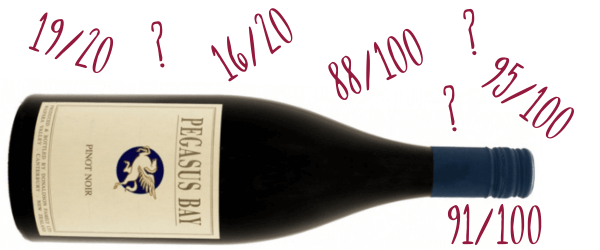
Wine Ratings: what’s the score? A critique of the wine critics There are many people who review and score wine; I am often asked which of these wine critics I rate. So below are those wine critics at the top of my list and why together with some information on the different ways in which they rate wine. I include what I think are the minimum wine scores that you should look for from each of my selected wine critics if you wish to ensure that you are getting a really good quality wine. Plus some things to bear in mind when looking generally at wine ratings. Wines With Attitude’s approach to wine ratings Wines With Attitude Customers and regular readers of my wine blog posts will know that it is only after I have selected wines for the Wines With Attitude portfolio that I subsequently check whether the wines chosen have been reviewed and / or scored by wine critics. If they have I will include where I can the scores and comments in order to give you, the consumers, more information upon which to base your wine-purchasing decision. I don’t necessarily always agree with the reviews or scores – but they are another opinion – and usually any differences in opinion are more a question of taste than of the wine’s quality. Things to bear in mind when looking at wine ratings Firstly, remember that not all wines are reviewed. So if you see a wine that has no rating it could simply be that the producer or importer of that wine has chosen not to submit it for review. Some wines are reviewed religiously each year but more often than not a producer will seek ratings when they are trying to build up their reputation and increase sales. Once they hit the big time, they often rely more on the reputation that they have built rather than on other people’s opinions. The fact that a wine does not have a score attributed to it does not mean that it falls in the “Avoid this wine at all costs” category. If you restrict yourself to drinking only those that have a score, you may miss out on some amazing wines. Wine ratings and reviews are considered by many to be crucial to the wine industry; they can make or break a wine’s reputation and ultimately its sales. The ratings and reviews given by wine critics carry a lot of weight, but it is interesting to note that they can differ greatly depending on who has written them. Critics such as Jancis Robinson, The Wine Advocate and Decanter all have their own unique styles and preferences when it comes to tasting and rating wines, leading to a range of scores for the same wine. So, what do these wine critics look for when rating wine? Jancis Robinson and team are known for their focus on balance and harmony in wines, favouring those that are elegant and restrained. The Wine Advocate or RobertParker.com perpetuates the reputation that founder Robert Parker had for favouring bolder, richer wines with more intense fruit flavours. Decanter takes a more holistic approach, considering factors such as the wine’s ageability, complexity, and typicity i.e. how well it represents its style or region. These differing perspectives and preferences can lead to vastly different scores for the same wine, leaving consumers to navigate a sea of conflicting opinions. Another factor that can influence wine ratings and reviews is personal taste. Although it should be wine quality rather than its taste that is judged, personal preference is bound to have an impact. At the end of the day, wine is a subjective experience, and what one person loves, another may hate. Critics are no exception to this rule – they have their own individual palates and preferences that will influence their ratings. Some may prefer certain grape varieties or regions over others, leading to higher scores for those wines. Others may be more inclined towards organic or biodynamic wines, giving such wines a higher rating even when other critics may find them lacking. Furthermore, there is the influence of external factors that can affect wine ratings and reviews. These can include factors such as the critic’s mood or health on the day they tasted the wine, the setting in which the wine was tasted, or even their personal relationships with the winery or winemaker. It is also important to say that sometimes the reviewers are tasting the wines straight from the barrel months before the wines are bottled and released – and as we know most wines of quality will change and improve over time – up to a point. Different wine reviewers & their ratings Jancis Robinson I have to confess that Jancis is my wine hero not least for forging a path for other women in the wine industry (see photo of me receiving my WSET Diploma from Jancis). I also rate the JancisRobinson.com scores because, like me, Jancis and her hugely experienced team (with at least ten Masters of Wine) are pretty strict markers in my view – though there are differences even between Jancis’ reviewers. Their maximum score is 20 points for a “truly exceptional” wine but I don’t remember the last time I saw a score from Team Jancis higher than 17.5+ points and even that level is quite rare. Bear in mind also that that 17.5 points equates to 87.5 points out of 100 which for some of the other wine critics is only just in the realms of a good wine. Other scores are: “19 – A humdinger18 – A cut above superior17 – Superior16 – Distinguished15 – Average, a perfectly nice drink with no faults but not much excitement” My view would be not to look below 15.5 points on the Jancis Robinson rating system. Wine Advocate Although you may not be familiar with the name Wine Advocate, if you are interested in wine you will almost certainly
Why champagne tastes like champagne
Why champagne tastes like champagne Why does champagne taste like it does? This ‘quick & general’ guide to the champagne flavour profile looks at what champagne tastes like and the reasons why. Essentially, why champagne tastes like champagne. It compares the production of champagne and other wines made by the champagne method to the production of other sparkling wines like prosecco because the differences in the techniques used in the winery have perhaps the biggest influence on the flavour profile. Other things of course affect the taste of sparkling wine not least the grape varieties, terroir and weather variations, the sweetness and alcohol levels so there are many contributing factors that lead to such a wide range of sparkling wine types and flavours. But here the focus is on the sparkling wine production techniques in the winery. You can also find an explanation of some of the terms you might find on Champagne labels. Wines produced by the Champagne method We all know and love champagne but did you know that there are a number of other sparkling wines made in the same way (known as the champagne or traditional method)? These include: English sparkling wines; these make a great alternative to champagne and are just getting better and better. In fact these days, there are many who prefer English sparkling wines like Nyetimber Classic Cuvée, Ridgeview’s Blanc de Noirs and their Rosé de Noirs. Initially produced very much in the same style as champagne, English sparkling wines have developed their own character and are now, rightly, a well-respected category of their own. Similar to champagne but with more emphasis on fruit and often a more subtle lees influence on the taste. Cava and Penedès wines; you may be surprised to see Cava in the list as there are many very commercial style Cavas on the UK supermarket shelves so you do need to take care in your choices. This commercialisation of Cava has led to several producers moving their wines to the Penedès appellation and getting back to the classic, higher quality style of Cava as in Colet’s Tradición. Franciacorta from Italy tends to be a little lighter and less rich in style than champagne but not as light or sweet or fruity as Prosecco. South African sparkling wines labelled Méthode Cap Classique like Krone Borealis and Krone Rosé Cap Classique. Saumur & Vouvray from the Loire Valley; often made from Chenin Blanc and usually lighter than Champagne with more smoky characteristics. Crémants like Manoir du Carra’s Crémant de Bourgogne. Crémants are French sparkling wines made outside of the Champagne region by the champagne method. They come from regions such as Burgundy (Crémant de Bourgogne), Bordeaux, the Loire and Alsace. Strict regulations dictate that only wines made in Champagne by the champagne method can be called Champagne however. And strictly speaking outside of champagne, we should refer to the traditional method rather than the champagne method. What creates the flavours of Traditional method wines? Grapes of course are a major factor in the taste of any wine. English Sparkling Wine tends to be made from the three main grapes used in Champagne, Chardonnay, Pinot Meunier and Pinot Noir but Cava, Franciacorta, Saumur, Vouvray and the Crémants allow more latitude. Manoir du Carra’s Crémant de Bourgogne is a Blanc de Blanc Crémant as it is produced exclusively from white grape, Chardonnay. What all these wines have in common is the traditional method of production and this probably has the biggest influence on the flavour profile. The champagne or traditional method in a nutshell means that the second fermentation takes place in individual bottles rather than in a pressurised vat or tank. A first fermentation produces a still wine with alcohol at c. 10% ABV. The second fermentation takes place after yeasts and sugars are added to the base wine created by the first fermentation. It is the interaction of these substances that creates the carbon dioxide or bubbles in the wine – and increases the alcohol level a degree or so. What is the significance of a fermentation in bottle you might ask. Well, it means that the wine has exposure to the yeast cells as they die and then break down, a process known as yeast autolysis. The compounds released into the wine from interaction with the dead yeast cells or lees is essentially where the aromas and flavours of champagne and champagne method wines are developed. That is the fundamental reason why champagne tastes like champagne! The bottles are stored for many months (at least 15 for champagne) and sometimes for years, initially flat to maximise the contact of the wine and the lees. Subsequently, they were traditionally moved to riddling racks or “pupitres” like those below and turned over time to move the sediment to the neck of the bottle ready for removal. This process is now more often than not done by a mechanised palette known as a “gyropalette”. Of course by the time you have your glass of champagne there is no yeast left in the wine but it has had a major impact on the taste. Autolysis is responsible for the biscuity, brioche type of aromas and flavours associated with champagne and other champagne method wines. They might also be described as toast, pastry and even cheese in some instances. Yeast autolysis also helps create complexity and the rich, rounded texture of the champagne and other traditional method wines. The source of these toasty flavours is often assumed to be from oak but in most champagne method wines it is from the lees. A wine left on the lees for longer will show more intense bready aromas and flavours so ageing is also a factor. For sparkling wines not produced by the champagne method, like prosecco, this second fermentation takes place in a large vat or tank so although there may be some interaction with the lees, especially if they are stirred as sometimes happens, the effect is much more diluted or subtle. Sparkling wines like
How & why our wine tastes change
How & why our wine tastes change Do our wine tastes change as we get older? Think back to when you first started drinking wine – what was your preferred wine style then? My guess is something different from your current favourite style of wine. For me personally I suspect it was something like a medium-dry German white wine à la Blue Nun or a rustic Chianti from a raffia-covered bottle but that probably says more about my age and wallet than about my taste in wine! Whatever that first glass was, it certainly wasn’t my wine epiphany – that came much later. But it does follow the start to most people’s wine journey, a trajectory which starts or is perceived to start with sweeter, lighter styles of wine, moves on to bigger, bolder wines and ends up with lighter, more elegant wines. But is this journey to a wider, more sophisticated range of wines a result of a change in our sense of taste as we get older – or is there more to it than that? Our tastes in food certainly change over time. It’s a standing joke in my family whenever anyone eats a banana that I pull a face of disgust and everyone chants “…but you used to love bananas…”. I can’t remember eating them as a child but as I now can’t abide the smell, taste or texture of the darned things, it’s hard to imagine that I ever used to eat them let alone love them. But I will concede that it is possible because tastes do change as we age. I never used to be bothered about chocolate but I do now enjoy a piece every now and then. Similarly I used to dislike Sauvignon Blanc but now appreciate a glass of (really well-made) Sauvignon. Here’s my somewhat light-hearted look at how and why our tastes in wine change as we age. How our taste in wine can change as we age Several research projects have been undertaken to determine how our tastes in wine change, most recently by Sonoma State University*. They devised an unscientifically proven wine palate life cycle which suggests 4 stages of taste preferences in wine: 1. a preference for medium dry or medium sweet white and rosé wines such as Riesling, Muscat, Prosecco 2. dry white and rosé wines like Sauvignon Blanc and softer, lighter red wines like Merlot and Pinot Noir 3. distinctive, more aromatic white varietals like Gruner Veltliner and Torrontes and bolder reds like Malbec and Cabernet Sauvignon 4. more distinctive wines like Barolo, Burgundies and dry Riesling. They tested this model with a survey which showed that 69% of participants said that their tastes in wine had changed over time – young adults were as likely as older participants to report a change – with 54% of participants reporting semi-sweet and sweet white and rosé wines as their initial preferred style and 61% giving their current preferred style as dry reds and slightly sweet red wines (the latter a relatively new category popular in the US where the survey took place). By the way this study was carried out in 2018 so interesting I think to see semi-sweet and sweet wines so high relatively recently. Of the 31% of respondents who reported no change in preference a “statistically significant percentage” were sweet and semi-sweet wine drinkers. Why our sense of taste changes as we age What is the main reason or reasons for wine preferences changing over time for most people? Age seems to play a large part. We are born with 10,000 taste buds all over our mouths (not just on our tongues) and these regenerate every 10 to 14 days although apparently our ability to detect aromas develops and plateaus when we are still children. As we age the regeneration of our taste buds slows down and in fact some of the taste buds don’t grow back so we end up with fewer than we used to have. This can happen in our fifties and even earlier especially for women. In addition our taste buds shrink as we get older. If that’s not bad enough our sense of smell deteriorates as we get older too although it is thought at a later age than our sense of taste, from our sixties, and sadly the deterioration cannot be reversed. Some even argue that the deterioration starts at a much earlier age. And as a triple whammy saliva production also reduces as we get older – and saliva helps transmit the substances that we eat or drink to the taste receptors but is also thought to stimulate our taste buds. Other reasons why our sense of taste changes Just as malfunction of our salivary glands can impact on our ability to taste wine, many illnesses can have the same effect – we all know that Covid-19 can affect our sense of smell and / or taste but even the common cold and some allergies can do the same. Other more serious illnesses including disorders of the nervous system can cause you to lose your ability to taste food and wine so if you have a prolonged period without being able to taste or develop a sudden loss of taste that you can’t find a reason for, get it checked out. Drugs can also alter how we perceive flavours and can change the make-up of our saliva, especially antibiotics, blood pressure drugs and some cancer treatments. Medication can also make your mouth dry and this dehydration can mean flavours may not be detected as easily. Deficiency in some nutrients including vitamin B12 and zinc can also lead to a loss of taste. As we are more likely to develop medical problems and take more drugs as we age, then it does seem likely that ageing is a major factor in why our tastes change. The degree to which we lose our senses of smell and taste differs per person so you
A guide to Tawny Port
Guide to Tawny Port Ever wondered about the difference between ruby and tawny port? Ruby port seems to be more popular but tawny port is having a bit of a revival either slightly chilled or with tonic as an aperitif or as a more traditional after-dinner drink. Having written in detail about ruby ports in another blogpost, I’m now writing about tawny port and how it is produced, how tawny port differs from ruby port, the different styles of tawny port that you can get (and one you may want to avoid), what tawny port tastes like and which foods it goes with – and it’s not just cheese! HOW PORT IS PRODUCED All port is produced in a similar way to still wine up to the fermentation stage; quite early during that fermentation process, grape-based alcohol is added to interrupt the fermentation, effectively killing off the yeast in the grape juice so that it can no longer interact with the sugar to produce alcohol. This means that some unfermented sugar is retained in the wine making it a naturally sweet wine and raising the ABV from 5 – 9% to about 19% – 22%; the increased level of alcohol also stabilises the port whilst it is ageing. The level of sweetness depends on how soon the fermentation is halted. Other fortified wines produced by this port method include most Madeiras and Vins Doux Naturels. Sherry is made in a similar way but the grape spirit is added after fermentation. The English can take some credit for creating port as English merchants added brandy to still red wine to preserve it for transportation. Port is produced in the Douro region, a denominated wine region since 1756 and then moved for ageing to the coastal town of Villa Nova de Gaia. The wine used to be transported on the river Douro by the beautiful rabelos but these days are moved by road. Many grape varieties are approved to be used to make port and they are usually all grown and fermented together in complex blends. Touriga Nacional is perhaps the best of the port grapes and the best known. It is also used for the ever-improving Portuguese still red wines like Invincible Numero Dos Tinto. HOW TAWNY PORT (USUALLY) DIFFERS FROM RUBY PORT Most tawny ports are wood ports which means that they are matured in barrel or cask for several years and therefore have some exposure to oxygen (more than they would if aged in bottle) and this exposure contributes to the ports losing their red hues and gaining a complex array of flavours and a silky texture. They are generally therefore tawny coloured as opposed to ruby red nutty & dried fruit-flavoured compared to the berry fruit flavours of ruby ports and more syrupy in texture than ruby ports which are aged in bottle. Tawny ports are bottled after ageing in barrel, when ready to drink, and do not age further in bottle so they should be drunk within a couple of years of bottling. As the ageing of tawny port has been in barrel there should be no sediment in the bottle so decanting should not be required. Read about which wines should be decanted. Note however that tawny port oxidises fairly rapidly after opening so do not keep it for longer than 1 or 2 weeks, possibly longer if you use a simple wine preservation system like a Vacuvin to pump out excess air from the bottle. Very old and Colheita port should keep longer – see below for the various serving suggestions to help you make the most of tawny port before it spoils. In contrast most ruby ports are bottle-aged (after an initial ageing in cask) and therefore have little exposure to oxygen so that ageing is very slow leading to a smooth, redder, more fruity style of port. They are also rarely filtered before bottling so generally require decanting. DIFFERENT STYLES OF TAWNY PORT & WHAT THEY TASTE LIKE SIMPLE TAWNY PORT However, beware, some ports labelled as tawny ports are no older than ruby port and are not really representative of the general tawny port style. These are produced from lighter coloured wines from grapes grown in the cooler part of the Douro valley that may not have had chance to ripen fully. Consequently these unaged tawny ports are not deep coloured, nor are their flavours very intense. There are however ways of intensifying the colour even simply by leaving them in the hotter part of the valley for longer than normal to “bake” but this leaves the port with a baked, flat taste without many fruit flavours and a lack of freshness. This lighter style may be your preference but if you like the amber-coloured, nutty-flavoured style, you might be disappointed if you were to buy one of these. AGED TAWNY PORTS Given my lack of enthusiasm for straight tawny port you will not be surprised to read that my advice would be to ignore anything labelled simply “tawny port” and select an aged tawny port which means that it has been aged in wooden barrels or cask for at least six years. Ageing tawny ports are kept in Villa Nova de Gaia where it is cooler to prevent them from spoiling in the heat. Tawny Reserve Port Reserve or Reserva on the label of a tawny port means that it has been aged in wood for a minimum of six years; it still retains some fruity characteristics but shows some signs of wood ageing. Tawny Port with an indication of age -10, 20, 30 & 40+ years old Port These tawny ports are older than reserve tawny port but note that the age is only an indication as the ports are made up of a blend of wines and therefore the age indication is an average of all the wines in the blend. Take a look at the delicious Kopke 10 year old tawny port. Port houses will mix a blend according
Guide to tannins in wine
Guide to tannins in wine Tannins in wine tend to have a bad press but is it justified? This blogpost takes a look at exactly what tannin is and how you can detect it in wine, which wines are the most tannic and which the least and how levels of tannin can be altered during wine-making and during ageing from the effects of oak. I’ll also cover the best foods to match with tannic wines and try to answer whether tannins are good or evil. Firstly, let’s look at how to detect whether the wine you are drinking is tannic. HOW TANNINS IN WINE TASTE It is in fact impossible to describe the smell or taste of tannins. It is easier to detect them through the sensations they create in the mouth… When taking my Diploma in Wine & Spirits I asked almost every lecturer and wine expert that came to talk to my class at the Wine & Spirit Education Trust how tannins can be detected and measured particularly as we were expected to describe tannins with words such as ripe, soft, green, stalky, chewy, coarse and fine-grained. It is very hard to describe how they can be measured and there were a lot of attempts to answer my question but the best explanation came from Michelle Cherutti-Kowal, now a Master of Wine, and it helped immeasurably in my general understanding of tannins and in those descriptions required for the blind wine tasting exams. Here’s how to tell if a wine has tannins and what kind they are, whether coarse or fine for example. When you have a small amount of wine in your mouth, keeping your mouth closed, carefully rub your tongue over your top front teeth. With a tannic wine you can feel a bit of roughness on the teeth. Try it with several different wines and you will begin to be able to differentiate between coarse- and fine-grained tannins, wines with finer tannins feeling slightly smoother on the teeth than those with coarser tannins. In addition tannins leave you with an astringent sensation in the mouth, astringency being detectable by a mouth-puckering dryness on the inside of your cheeks such as you would get from sucking on a lemon. This feeling is caused by tannins interacting with proteins in the saliva; this interaction dries out the mouth. Some say that tannins create a bitter taste but in fact it is astringency evidenced in highly astringent wines by a chalky, powdery feeling in the cheeks but in less astringent wines with balanced or low tannins by a smooth silky texture. WHAT ARE TANNINS IN WINE? In the vineyard as grapes develop and ripen in the sunshine and warmth, the tannins in the skins and pips soften and become less astringent. Grapes grown in warm climate wine regions have more chance of creating wines with softer tannins than grapes grown in cool climate areas. The best time to harvest black grapes isn’t just about reaching the optimal level of sugar and acidity in the grapes but also about making sure the tannins are ripe and not too “green”. To understand tannins in wine and the effect they have, it helps to know where they come from. Tannins are found in many plants like the vine, tea plants and rhubarb. On the vine they are concentrated in the skins of grapes but are also found in the pips and in the stalks and leaves of the vine itself. Without being too technical, tannins are natural compounds and as mentioned above they react with proteins to make an unpleasant astringent sensation, thought to be nature’s way of deterring animals from nibbling on some plants. I am often asked if white wines have tannins. In fact since all grapes have skin and almost all have pips, all wines have them but to varying degrees. And in general white wines and rosé will have fewer but the level of tannins depends on a number of factors – all of which I expand on below – such as the amount of time on the vine before harvesting, the grape variety itself and on the wine-making process. HIGH TANNIN WINES Some grapes are naturally higher in tannin than others. Grapes that are particularly high (often thicker-skinned grapes) include Cabernet Sauvignon (think of young Left Bank Bordeaux wines), Shiraz, Sangiovese, Nebbiolo, Malbec and Pinotage. But bear in mind that this does not mean that all wines made from Cabernet Sauvignon for example will display high levels of tannins because so much depends on the vintage and on the way the grapes have been treated in the vineyard and in the winery. In general younger red wines will have harsher tannins than aged red wines but, if they are well-made wines, their tannins will soften after ageing in a vat or in bottle. LOW TANNIN WINES Grapes that are naturally low in tannins include Pinot Noir, Dolcetto and Gamay. In a similar vein this does not mean that all Gamays for example will be low in tannins because winemakers could for example ferment and age the wine in new oak barrels, the effects of which are explained below. Grenache and Merlot are also fairly low in them. In general white wines have lower levels of tannins because of the way they are processed during wine-making. TANNINS IN WINE-MAKING Tannins change during the wine making process and during ageing but the chemical process is still not fully understood despite numerous research projects. Aside from the ripeness of the tannins when the grapes are picked, the following can have a significant effect on the level of tannins in wine: – The length of time the grape skins are in contact with the juice and whether the grape stalks are included during maceration. In making red wine production it is essential to extract colour and flavours from the skins of the grapes and therefore tannins are unavoidable. The key is not to over-extract. For white wine the juice of the
Fruit & Root days: do they affect how wine tastes?
Fruit & Root days: do they affect how wine tastes? Have you ever wondered why some days a wine tastes great but the next time you open a bottle of the same wine from the same vintage, it tastes really different? There is such a thing as bottle variation usually caused by damage to a seal or cork such that oxygen infiltrates the bottle more quickly making the wine more developed or even faulty. But there is another theory: according to some there are fruit and root days which might affect how a wine tastes. This theory is based upon the lunar calendar and proponents of the theory claim that wine tastes better or worse depending on whether we are on a fruit day or a root day or on a leaf or flower day. There are also many who think this theory is complete tosh. It is probably one of the most controversial issues in the wine trade. So let’s dive into the theory of whether fruit or root days can affect the taste of your wine. THE LUNAR CALENDAR & BIODYNAMIC FARMING As I mentioned in my blogpost on biodynamic wine, planting and harvesting according to the lunar calendar are common although not mandatory in biodynamic farming practices. The theories around the effect of the moon’s cycles on crops have been attributed to Rudolf Steiner, the father of biodynamic farming, but it was in fact Maria Thun, a German farmer who tested his general biodynamic principles in the 1950s and developed them further into a calendar by which farmers should sow, fertilise and harvest their crops to create higher yields of bigger and better quality crop that would last longer. FRUIT DAYS & ROOT DAYS After extensive trials Maria Thun’s sowing and planting calendars were based on her conclusions that the movements of the moon through the constellations of the zodiac had different effects on different types of crops. The lunar cycle lasts for 29.5 days during which time the moon passes every few days in front of the 12 different constellations (I am ignoring recently discovered Ophiuchus, the serpent bearer), each of which is associated with one of the elements, fire, earth, air and water. According to Thun’s calendar: Fruits grow better if planted or sown when the moon is in the constellations associated with the Fire signs of Aries, Sagittarius and Leo; these days are therefore known as Fruit Days. She believed that fruit plants should be fertilised and watered when the moon was waning and the earth inhaling, the soil better therefore for absorbing nutrients and water. According to the calendar fruits should be harvested when the moon (and sap) is rising, preferably on Fruit Days. Root crops grow better if they have been sown or planted when the moon is descending and in the constellations associated with the Earth signs of Capricorn, Taurus and Virgo. Similarly, fertilisation is better when the moon is waning. Harvesting is considered to be better on Root Days. Flowers and flowering plants are in tune with the Air signs of Gemini, Libra and Aquarius and should be planted and harvested on Flower Days. Leafy plants associated with the Water signs of Pisces, Scorpio and Cancer should be sown on Leaf Days and harvested when the moon is waxing. Although Maria Thun passed away in 2012, her family continue publishing her calendar annually. WHAT DOES THE LUNAR CALENDAR MEAN FOR WINEMAKERS As wine is produced from fruit, it is believed that only on fruit days should vines be planted and fertilised, if at all when the moon is descending. Vines should also be pruned during a descending moon when the sap is falling and grafted during an ascending moon when the sap is rising in order to ensure the best fruit. Grapes should be harvested on fruit days if possible but certainly when the moon is ascending. Although not all biodynamic wine producers follow the calendar to the letter, there are many winemakers who use the calendar even if they are not whole-hearted proponents of all biodynamic wine-making practices. FRUIT & ROOT DAYS & THEIR EFFECT ON WINE TASTING Maria Thun took her theories further in 2010 when she first published her calendar for wine drinkers, based on research carried out at her farm. She believed that, since wine itself is a living organism, it is also affected by cosmic rhythms and therefore tastes differently according to the waxing and waning of the Moon and its passage through the constellations. Wine is supposed to taste best on fruit days, favourably on flower days, slightly less good on leaf days and unfavourably on root days. I don’t believe that the calendar’s proponents are saying that on a root or leaf day wine will taste bad (unless you have purchased a really awful bottle of wine!) but just that it will be more closed or slightly duller on those days and more expressive, fruity, more open, on flower and fruit days. FRUIT & ROOT DAYS – MORE MUMBO JUMBO? Of course there are many who say that wine tasting differently according to the moon’s trajectory is plain nonsense. And in fact even some of those who do believe in fruit and root days will admit that most people won’t notice a difference in the taste of their wine. But most trade fairs and wine tastings I attend are planned for fruit days which I don’t believe is a coincidence. But whether the organisers of those events believe wholeheartedly in the cosmic concept or just don’t want to leave the success of the day to chance, I couldn’t say. There have been various studies and experiments to try to prove or disprove Maria Thun’s wine tasting theory, the most recent that I’m aware of being undertaken in New Zealand in 2017. Scientists then claimed to have disproved the theory after research involving 19 wine professionals tasting a number of Pinot Noir wines both on fruit days and root days; the tasters did not know which
Why we celebrate with champagne
Why we celebrate with champagne In the run-up to Valentine’s Day, Christmas and New Year’s Eve, many wine merchants like me will recommend that you open a bottle of bubbly with your loved ones. After all, we should celebrate the good things in life. This got me thinking… whether champagne, prosecco, English sparkling wine, crémant or cava is your fizz of choice, why do we celebrate with champagne or sparkling wine? And it’s not just Valentine’s Day, Christmas and New Year’s Eve that make us reach for the sparkling wine. Birthdays, weddings, engagements, Mother’s Day, Father’s Day and sporting events. You name the occasion and we just love to drink champagne. But, if you are a lover of Left Bank Bordeaux for example, why not open a bottle of that instead? When and why did this tradition for celebrating with bubbly begin? CHAMPAGNE IS USED FOR CELEBRATIONS IN MANY COUNTRIES Oscar Wilde is reported to have asked “Why do I drink Champagne for breakfast? Doesn’t everyone?” Well, as nice as that sounds, in fact most of us don’t drink champagne for breakfast or even every day or every week. Although in France, which still consumes about half of the champagne produced, it is common for a bottle to be opened just as you would open any other bottle of wine to have as an aperitif or with a meal, it is more commonly used to celebrate an event in the export markets of the UK and the USA (by far the biggest export markets), Japan, Germany, Belgium, Australia, Italy etc. And the celebrations for which champagne or sparkling wine is the preferred choice range from birthdays, anniversaries, the birth of a child, weddings, divorces (sometimes), job promotions, naming ships, sporting victories etc etc though I just don’t understand the practice of spraying champagne all over your fellow competitors at the end of a Formula 1 race – too much clearing up afterwards and too much champagne wasted! THE ORIGINS OF CHAMPAGNE Wine has been produced in the Champagne region for many centuries but the original wines were not sparkling or white but light pink wines made mainly from Pinot Noir. The sparkle was actually created by accident. London had become a good market for French wines and the bottles of pink wines from Champagne, with sugar added to satisfy the British sweet tooth, would often burst from the pressure created by a second fermentation in the bottle as temperatures rose in the spring after the wine had been bottled. It was the British who, with their coal resources that could fire hot furnaces, initially produced sturdier wine bottles to withstand better the pressure so that they could enjoy more of this bubby wine. However since some of those stronger bottles also exploded the now sparkling wines imported into London society became scarce and in demand. This demand which was not unnoticed and was replicated back across the Channel especially in the early 18th century. CHAMPAGNE AS A LUXURY PRODUCT The scarcity of the sparkling champagne made it a luxury product throughout the 18th century, enjoyed only by those with the means to buy it. Only in the first half of the 19th century did champagne production improve sufficiently to make the final product more stable, consistently sparkling and more widespread. The widow Veuve Cliquot is renowned for her contribution to the improvements in the industry but one of the major breakthroughs came from a little-known pharmacist called André Francois who worked out a formula for the amount of sugar that could be added to the wine to promote a second fermentation without the bottles exploding. After this many more champagne houses were established and the product became more widely available for several years though still largely a product for the aristocracy and the rich. There was further scarcity in the latter years of the 19th century thanks to the phylloxera louse that decimated vines throughout the world including in the Champagne region. This meant that other sparkling wines were developed and gained more of a hold in the market and this fuelled some fraudulent négotiants to pass off other wines as champagne sparking the Champagne Riots of 1911. I can quite understand rioting about champagne! But on a more serious note the outcome was the birth of laws requiring champagne’s origins to be declared on labels and ultimately of the Champagne appellation in 1936. MARKETING CHAMPAGNE Since the two World Wars, champagne production and the champagne market have grown massively but the wine still manages to maintain its reputation as a celebratory product and a luxury though certainly now much more accessible to people outside the aristocracy. This has largely been due to clever marketing by the champagne houses and by the champagne industry. The better or more canny (or both) champagne houses developed their names into brands. Advertising and celebrity endorsements, intended or otherwise, have helped some houses more than others but certainly boost champagne’s general image as a luxury (and sometimes expensive) product. And whilst champagne is generally more accessible, specific brands priced outside the pockets of the average person in the street have now become the luxury items only for consuming by the rich and famous – think Krug, Cristal and Armand de Brignac which Jay Z is associated with, even featuring it in some of his songs, and is believed to have invested in. In what is possibly the worst marketing ploy I have heard about in the wine trade, it is believed that a careless comment by someone at Cristal about rappers’ association with their brand was the trigger for Armand de Brignac’s subsequent success. LET’S OPEN A BOTTLE OF BUBBLY & CELEBRATE The price of champagne will sadly always keep it out of reach of most people for their “everyday” wine. What’s for sure though is that champagne and other sparkling wines will remain the drinks of choice for celebrations for many years to come. The symbolism associated with opening bottle of
What does acidity in wine mean?
WHAT DOES ACIDITY IN WINE MEAN? This Wines With Attitude guide covers everything you need to know about acidity in wine – how you taste acidity in wine, what causes it, which wines have high acidity and which are low in acidity, whether high or low acidity is better plus tips on matching high acid wines with food. Wine writers use the word “acidity” frequently – I know that I write the term often in my Wines With Attitude tasting notes. Conscious that some consumers may be wary of the words “acidity” or “acidic”, I try to vary the words I use to describe wines displaying acidity so you will see terms such as fresh, bright, zesty, zingy, refreshing, tangy and crisp though whether these really convey the true meaning could be debated. It is simply difficult if not impossible to avoid using “acidity” because it is one of the essential components of a good wine. So, if we can’t avoid the term, let’s find out more about it. HOW TO TASTE ACIDITY IN WINE Acidity is not a taste as such (if your wine tastes of acid then you have a problem) but it can be detected by a tingling sensation on the sides of the tongue. When you taste a wine with high acidity such as a Sancerre, your mouth will water more than usual – just as it does when you bite into a sharp Granny Smith apple or drink unsweetened lemonade. It whets the appetite, making you want to take another bite or sip. WHAT ACIDITY ADDS TO WINE structure and longevity; a wine low in acidity is less likely to age well stability by helping to keep bacteria and microorganisms at bay colour; the more acid, generally the more stable, intense and more vibrant the colour flavours; just as lemon can lift flavours in fish, acidity makes wine refreshing or crisp and leaves you wanting more similarly, acidity can sharpen the aromas of a wine. Hot tip: Tannins and acidity in particular can clash so avoid wines with high levels of both WHAT CAUSES ACIDITY IN WINE? Acidity is naturally present in grapes as it is in many foods and different varieties have different natural levels of acidity – Nebbiolo and Sauvignon Blanc for example are at the high end of the scale and Grenache and Viognier are at the low end. The level of acidity is also affected in the vineyard by soils, location and the weather or vintage. The level of acidity in grapes first increases but then declines as the grapes ripen on the vine and the level of sugar rises. It is therefore key to the natural balance of a wine that grapes are picked at the right time i.e. when acidity and sugars are at “optimal” levels. Why? Well, if acidity falls too much, a wine could be considered flat or “flabby” with dull flavours and a higher susceptibility to spoilage and infection. Too much acid can make a wine seem too sharp or even bitter. It is all a balancing act for the winemakers as they also need to consider fruit flavours, sugar and therefore alcohol levels. Winemakers might be tempted to adjust the acid (or the sugar- or both) and are generally permitted to do so within the boundaries of local regulations. Acidification, generally by the addition of tartaric acid, the most dominant acid in grapes, can be undertaken to increase acidity in warmer climate areas but can result in poorly made wine, especially where the adjustments are made post fermentation where the added acid has less chance to blend with the wine. A good taster can often recognise poor acidification as there is a very artificial acidic taste to the wine. Acidity is usually naturally lowered by malo-lactic fermentation or secondary fermentation, a process often encouraged by winemakers as it softens the acidity, converting malic acid into lactic acid and carbon dioxide. Deacidification may also be permitted by adding a carbonate – and though acid levels are reduced this can leave calcium tartrate crystals in the wine. These crystals are harmless but can deter some consumers from buying or drinking a wine. One type of acidity in wine that is not desirable is volatile acidity, essentially acetic acid or vinegar. A small amount is produced during fermentation but it increases in a wine exposed to air and in large quantities spoils the wine. Hot Tip: If you smell vinegar or nail polish remover in a wine, send it back WHICH WINES HAVE HIGH AND WHICH HAVE LOW ACIDITY? I could get scientific and talk about measuring total acidity and pH levels in wine but I’ll keep it short and just say that wines generally have a pH between 3.3 and 3.7 which sits in between black coffee with a pH of 5.0 and orange juice with a pH of 3.0. Few wines therefore are more acidic than a glass of your morning orange juice. But which wines should you opt for if you prefer to avoid those wines – here are a few tips: Hot tip: White wines tend to have higher acidity than red wines Almost all red wines undergo malo-lactic fermentation to convert harsh malic acid to softer lactic acid but not all white wines do; for example producers tend not to use MLF for Sauvignon Blanc but for producers of white Burgundy it is essential for the style. Lighter style red wines tend to have higher acidity than heavier, more full-bodied reds. As mentioned above as grapes ripen the level of acidity in them increases but then declines as the level of sugar rises. In cool climate areas such as Burgundy vines can struggle to ripen fully so grapes generally have higher acidity and lower sugar. Conversely grapes grown in warmer climates tend to have low acid and high sugar. Hot tip: Cool climate wines tend to have higher acidity than wines from warmer regions Very dry wines tend to have good acidity but this does not mean that