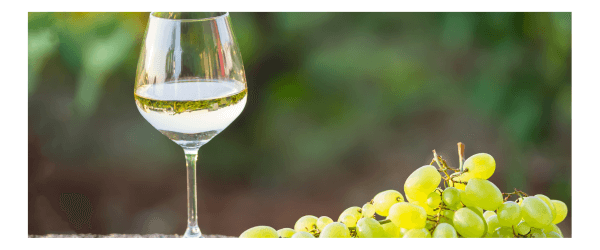
Which wines to drink in hot weather Which wines should you drink in hot weather – and which should you avoid? Some prefer a cold beer or a long cocktail with heaps of ice or stick to non-alcoholic drinks because they think there is no wine that will be refreshing enough to enjoy when temperatures rise. But for wine-lovers there are definitely some wines that will taste better than others when a heatwave strikes. So here are my tips on which wines to drink in the heat and how to drink them – plus my top current wine-based summer tipple! I have to admit that neither wine nor indeed any form of alcohol is the best thing to drink in very hot weather. But show me a wine lover who doesn’t enjoy a glass of their favourite tipple whilst sitting on the terrace on a warm summer’s evening or in the shade enjoying a leisurely lunch on a scorching hot day. And of course post-peak-pandemic there are parties to be held to catch up with friends and family members where a few glasses of wine might be consumed. But which wines would be best? The effects of drinking wine in hot weather on you We all know the importance of staying well-hydrated in a heatwave – in hot weather our bodies release more fluids to start with. As a diuretic, alcohol messes up the body’s water regulation system further, making alcohol more potent, impairing our mental faculties and intensifying the risk of dehydration, heat stroke, exhaustion and even a stroke. So there is absolutely no shame in diluting your wine. I know there is something very “Abigail’s party” about it but spritzing white wines with soda water, tonic water or even sparkling mineral water creates a refreshing long drink, ice-cubes optional. I would stick to diluting only the light, crisp styles of white wine rather than anything too oaky as cooler temperatures will make the oak seem too obvious and I can’t imagine making a spritzer from any red wine or from anything very valuable in your wine cellar. And talking of spritzers, don’t forget my recipe for Aperol Spritz as detailed in my blog though in particularly hot weather I would add more soda than usual to the mix. Whether you decide to dilute or not, always make sure that you drink plenty of water in between sips of wine. The types of wine to drink in hot weather The best wines to drink when the temperatures outside are soaring are: Low in alcohol Wines with medium to high ABV, anything over 13%, are likely to heat you up and dehydrate you more than alcohol wines at 12.5% ABV or lower. Wines that are lower in alcohol are generally lighter in body and so will also seem less heavy. The high alcohol in some wines will seem more intense in hot weather and is likely to make you feel more sluggish in the heat. Alcohol-wise, low is the way to go. High in acidity Wines that are low in acidity can seem flat, heavy and lacking in freshness. In hot weather we are more likely to want wines that are mouth-wateringly fresh with clean fruit flavours and aromas. In general white wines and rosés have higher acidity than reds and wines from cool climate regions be more refreshing than wines from hotter climes. You can read more about acidity in wine in my blogpost. Low in tannin Tannins can seem very drying at the best of times but more so in hot weather so avoid heavily tannic red and rosé wines. And if you chill your red wine, the tannins will overpower the fruit flavours of the wine and make the wine taste quite metallic and bitter. If you are following the guidance towards a wine that’s high in acidity, beware, as high tannins will clash with high acidity. Red or rosé wines that are low in tannins will seem lighter and will allow the fruit flavours to dominate. Unoaked Wines that have more than a very light touch of oak will also seem heavier in hot weather so stick to unoaked or lightly oaked wines. Chilling an oaked wine too much can make the oak seem very bitter. White wines to drink in hot weather Look for light- or medium- bodied white wines with low alcohol and high acidity which will make the mouth water and keep you refreshed. You are more likely to find choice in the crisp light white and aromatic styles of white wine than in rich, creamy whites. Great white wines to drink in a heatwave are Picpoul de Pinet, cool climate Sauvignon Blanc from places like the Loire and New Zealand and Albariño which is usually unoaked. A heavily oaked Chardonnay would not be the best choice but, if you want to stick to Chardonnay, make sure it is unoaked like a traditional Chablis. I’ve always enjoy the delights of Portugal’s vinho verde in hot weather – see above image. This white wine is notoriously light, low in alcohol at around 11.5% and even has a touch of spritz. And talking of bubbles, don’t forget chilled sparkling wine makes a good choice too – just stick to the same principles, lighter in style, only lightly oaked or unoaked and with high acidity – why not try a Crémant de Bourgogne, a champagne-method, champagne style wine that’s lighter and fruitier. Rosé wines to drink in hot weather Lighter Provence style rosés are all the rage in the summer – and rightly so as they are the perfect wine for hot weather. That’s not to say that a more aromatic style of rosé won’t do – just make sure it’s unoaked or not too oaky in style. Unoaked Sancerre rosé or this English rosé wine are both delicious chilled. Red wines to drink in hot weather Red wine may not be the obvious choice but if you are a red
What colour can tell you about wine
What colour can tell you about wine When drinking or tasting wine most people focus only on the smell and the taste of it, ignoring what ought to be the first step – looking at the wine’s colour and its general appearance. You might think that choosing red, white or rosé is all you need to think about in terms of the colour of wine but in fact the colour can give you a number of clues about the wine’s age, style, grape and even where it was produced. In blind and non-blind tastings sommeliers and wine experts always start by looking at the wine in the glass. Here’s how and why… How to assess a wine’s colour Look at the colour of the wine in a clear glass against a white background. Pouring wine only until the glass is a quarter or a third full means you can safely tip the wine glass to look at the colour without spilling any wine. What gives wine its colour? The colour of wine derives primarily from phenolic pigments found in the grape skins (the juice of most grapes, red, white or pink, is actually clear). There are more colour pigments in the skins of some grapes than in others so grape variety has some impact. Interaction with oxygen during the wine-making process can also make the grape juice become darker but with careful treatment of the juice and/ or the addition of sulphur dioxide (you can find out more in my blog on sulphites in wine) this risk can be minimised. Ageing or even fermenting a wine whether red, rosé or white, in oak, will alter the colour. Partly this is because of the slight oxidation that occurs when a wine is aged in oak barrels but also due to chemical reactions between the juice/ wine and the oak. Similarly aging a wine even in bottle means there will be some, albeit minimal, exposure to oxygen which will change the wine’s colour. With age a white wine becomes darker whereas a red wine’s colour breaks down and so it becomes lighter. The thicker the grape skin and the longer a wine is left on the grape skins (a process called maceration), the darker a wine will become. Similarly a harsh or heavy grape pressing will mean that more colour is extracted from the skins. Most reputable wine makers tend to press gently these days, mainly to avoid too much bitterness from the pips and stalks entering the juice. In addition, for red wines, acidity has an effect on the colour; generally the higher the acidity the brighter, lighter red a wine is likely to be. This can also help in ascertaining the climate of the region a wine was produced in and therefore the origin of a wine. Cooler climate wine would generally have less ripe grapes and, if you remember from my blog on acidity in wine, therefore tends to have more acidity. Wines from cooler regions are lighter both in colour and in body. Conversely wines with lower acidity from riper grapes grown in warm climate regions tend to be bigger and more full-bodied with deeper colour. The colours of white wine White wines are not white at all but range through a long list of shades from a pale lemon colour with green notes through different shades of gold to orange. White wines have tended to become paler over recent years as wine-making processes have improved; in particular there are now only very rare occurrences of over-oxidation which can cause deep gold to brown shades of white wine. Paler white wines towards the lemon-green and lemon end of the spectrum are likely to be: young light in body dry with fruit & floral characteristics unoaked and from cooler climate regions More gold-coloured white wines are more likely to be: older richer fuller-bodied aged or fermented in oak (or on their lees or yeasts) with fruit and some spicy and even bready characteristics from warmer regions Amber or orange white wines are more likely to be: sweeter or sweet especially if produced from much riper or and even botrytised grapes even richer and fuller in body possibly intentionally oxidised like sherry and orange wines older, possibly past their best if they have been left too long and have oxidised too much By the way, I tend to find that people who say they get headaches from white wine prefer to drink the lighter coloured wines. I do wonder whether there is something in oak that might not agree with some people… The colours of red wine There are many hues of red wine, perhaps more than for white wine, or perhaps simply more distinguishable. To keep things simple, red wines can range from bluey purple through crimson reds to browner shades of red to brown itself e.g. in tawny port. Red wines at the purple and light red end of the spectrum are more likely to be very young possibly too young lighter in body higher in acidity with fruity characteristics low in tannins unoaked from cooler climate regions A garnet-coloured wine which is a deep red with brick-coloured hues is more likely to be older medium to full bodied lower in acidity fruity but also with vanilla and toasty characteristics more tannic though in good wine these will have softened over time oaked from warmer climate regions A red wine at the tawny or brown end of the spectrum is likely to be aged round and full-bodiedrich nutty with dried fruit characteristics oaked fortified like port and potentially past its best if not fortified The colours of rosé wine Rosé wines can range from the most delicate pink through salmon pink hues to orange. They take their colour from the black grapes used in their production – particularly important is the length of time the juice is left on the skins for extraction of the colour. In recent times the preference seems to
What AOC on wine labels means
Wine appellations & labels There seem to be an increasing number of letters on wine labels like AC, AOC, AP, AOP, DO, DOC, DOCG, DOP, DOQ, IGP, IGT, PDO, PGI, POP and VdIT – and these are just a selection from wine labels from EU countries. But what do they actually mean? What is AC wine? What does AOP mean? What is the difference between AC and AOC? These are just some of the questions that I am asked as these acronyms can cause more confusion than clarification. The short answer is that AOC, AP etc are all geographical indications or GIs. But what does that mean and what do these geographical designations or appellations as they are often called tell us about the origin of the wine? And do appellations on wine labels guarantee more than the origin of the wine? Read ahead for the answers to these questions and more so that you can make sense of these wine label terms and tell the difference between AC, AOC, AP & AOP etc. Geographical indications and wine AC, AOC, AP, AOP, DO, DOC, DOCG, DOP, DOQ, IGP, IGT, PDO, PGI, POP and VdIT are all geographical indications as defined by the EU, i.e. terms used to identify a product as originating from a particular region and where according to the EU “its quality, reputation or other characteristic is linked to its geographical origin”. This distinct quality, reputation or characteristic may arise because of traditional viticulture practices, wine-making methods or particular grape varieties which have been used in the specific region for many years. As well as giving consumers some reassurance about the origin, GIs are also useful for producers to help market their products. GIs don’t just apply to wines of course but also to foods like Parma ham and Roquefort cheese. In terms of wine, GIs are essentially defined, designated vineyard areas that can be as large as Bordeaux or as small as a particular vineyard plot such as Les Longeays in Pouilly Vinzelles in the Mâcon region of Burgundy. So is a GI or an appellation a guarantee that a wine is the product of grapes grown in that area? You would think so – but it’s not quite that simple … As I have stated in my previous blog on the provenance of wine, for some wines, if a GI is stated, only a minimum of 85% of grapes used must come from the GI in question. Similarly only 85% need come from grapes of the specified vintage and from the specified grape variety. So in order for you to be 100% sure we need to delve a little deeper and split GIs into PDOs and PGIs (more acronyms, sorry!). PDOs or Protected Designation of Origin PDOs are also known as wine appellations A PDO indicates products that are produced, processed and prepared in a specific geographical area, using the recognised know-how of local producers and ingredients from the region concerned. To be recognised formally as a PDO the producers must adhere to a precise set of specifications particular to each individual PDO including permitted grape varieties, wine-making techniques and vineyard practices such as permitted yield levels. But the fundamental requirements for all PDO wine are that 100% of grapes must come from the region and the wine itself must be made in the region. The PDO logo whilst mandatory for PDO food products is optional for wine and I must say I don’t think I have ever seen it on a wine label. PDOs are what we know as appellations of origin although the term appellation is mistakenly used more generally to include PGIs. PGIs or Protected Geographical Indication Like PDOs a PGI product’s quality and/ or reputation is linked to the place or region where it is produced, processed or prepared but the ingredients used need not necessarily all come from that PGI area. For wine it means that a minimum of 85% of the grapes must come from the geographical area where the wine is made. The PGI areas tend to be larger than PDO regions. Again all PGI products must adhere to a precise set of specifications though in general these are not as strict as PDO regulations. The PGI logo is also optional for wine. Wines without geographical indication There is a third wide category of wines and they are wines without geographical indication, a catch all for everything else that doesn’t fall into the PDO and PGI categories. If the PDO and PGI logos are not used on wine labels, how are we to know whether a wine is PDO, PGI or a wine without GI? To answer this we need to look at each individual country’s PDO, PGI & other wine designations since each country sets the detailed specifications that must be met and polices the use of their GIs. I go into more detail with examples below and I use the French terms as they are probably the ones that are most familiar. I also set out in tables below the terms used in the other main EU wine-producing countries. Note however that I don’t go into much detail on Germany and Austria’s wine labelling; the reason for this is simply that their wine label terms are more complex and deserve a detailed blog of their own. PDO examples / Wine appellations * In Germany the PDOs must state the region they come from on the label but you will also see either the term Qualitätswein or Prädikatswein (or one of its 6 subcategories) depending on the grape’s sweetness at harvest e.g Andreas Bender’s Pinot Noir is labelled Deutscher Qualitätswein Pfalz, Pfalz being the region where all the grapes are grown and the wine is made. More on German & Austrian wine at a later date. All PDO wines can use PDO or the equivalent local term but in countries where there are different quality levels of PDO e.g. Italy’s DOCG & DOC and Spain’s DOCa &
Vinho Verde
Vinho verde wines: perfect wine for summer Portugal is perhaps best known, wine-wise at least, for its fortified wine, port (about which you can read more in my port blogposts on ruby port (coming soon) and tawny port) but the largest wine region in Portugal is actually Vinho Verde – and the UK is its second biggest export market after France. Nevertheless vinho verde remains a bit of a mystery wine with a reputation for being a bit ‘rustic’, a bit fizzy and a bit sweet, all in all not very appealing. But vinho verde has been undergoing a long, slow revolution which is seeing its quality improve, a variety of styles develop and its exports grow. And summer is the perfect time to try vinho verde as we will discover. What is vinho verde? The usual characteristics of vinho verde are: a light white still wine. The Vinho Verde region also produces red and (true) sparkling wines but these are a small percentage of the total proportion and so I am focusing on the whites low in alcohol, typically 8% to 11.5% ABV in particular it has crisp acidity making most vinho verde mouth-wateringly refreshing these days it is usually dry but sometimes off-dry vinho verde makes its way into UK wine retailers so if you are not a fan of off- or medium-dry wines, make sure you select a dry one like Márcio Lopes’ Pequeños Rebentos Vinho Verde DOC (currently out of stock) usually produced with a spritz but not so much of a fizz that it would be defined as a sparkling wine. This light prickle was traditionally caused by a second fermentation in the bottle after the first in the open troughs or ‘lagares’ where the grapes used to be trodden (the first fermentation is now more likely to take place in a stainless steel tank). Disappointingly many producers now inject carbon dioxide into the wine before bottling instead of allowing the fermentation in bottle. Some more modern winemakers like Márcio Lopes prefer to let nature take its course and in the case of his vinho verde there is no discernible spritz on the palate, though you may still see a few bubbles in the wine. usually very pale lemon in colour (sometimes with a slight pink tinge to it if made wholly or mainly with Alvarinho grapes). What do vinho verde wines taste like? Vinho verde can be made from permitted grape varieties either as a blend or as a 100% varietal wine. The flavour profile will depend partly on the grapes used – and there are many varieties permitted, mostly grapes that are indigenous to the region. When Márcio Lopes started up Pequeños Rebentos he initially grew just Alvarinho and Trajadura (known as Albariño and Treixadura in Spain) but he started producing vinho verde from local varietal Loureiro in 2016 having realised the fine, elegant wine that could be produced from it. Loureiro will give floral aromas and a long citrus and mineral finish on the palate. Alvarinho also has the potential to produce quality wines and so many producers use it in part and increasingly on its own for their vinho verde. Rather than the peachy aromas that you see in Spanish Albariño from the Rías Baixas especially, vinho verde made from Alvarinho creates quite sharp, fragrant and fruity wines. As a general rule vinho verde is light, crisp and citrussy with saline minerality. It rarely sees oak and it is not produced to age but to drink young – vinho verde means green or young wine though some believe the green in the name refers or referred originally to the verdant surroundings of the region where it is produced. Where is vinho verde produced? The largest of 31 DOC wine regions, Vinho Verde DOC is in the cool north west of Portugal, an area which is strongly influenced by its proximity to the Atlantic ocean, which effectively means that it rains a lot. Soils are usually fertile and mainly granite so free draining which is good given that there is a risk of rot and mildew in a damp climate. The major downside is that it is difficult in cool climate wine regions for grapes to ripen sufficiently; the tradition in the small vineyards typical of the region was to train the vines to grow up tall pergolas or even up trees but now many train the vines along low wires and particular care is taken to trim the leaves of the vine to give the grapes the best chance to ripen. Modern winemakers like Márcio Lopes practise sustainable viticulture and prefer low intervention, aiming to make wines with balance that reflect the terroir – there are nine sub-regions in the Vinho Verde DOC region – Monção, Melgaço, Lima, Basto, Cávado, Ave, Amarante, Baião, Sousa and Paiva – all with their own individual nuances in terroir. How to recognise vinho verde wines True vinho verde will have a seal like the one in the image above on the back of the bottle to certify that the wine meets the Vinho Verde DOC region’s requirements and has been analysed and approved by the regulator, the CVRVV (Comissão de Viticultura da Região dos Vinhos Verdes). Any wines from the region that don’t have this seal will be from the lower category of wine in Portugal, ‘vinho regional’, the equivalent of ‘vin de pays’ or these days IGP wines or simply ‘vinho’, the catch-all lowest rank. When to drink vinho verde? Vinho verde is not generally produced for keeping but, having said that, better vinho verde wines can keep longer. Although some producers are experimenting with oak which would provide a structure more suited to ageing, oak has a tendency to overpower the grapes used to produce it and so needs very careful handling. Vinho verde is produced for drinking young, at 1 to 2 years of age though well made vinho verde that has been kept on its lees for
Vegan & Vegetarian Wine Guide
Vegan & Vegetarian wine guide There is a lot of talk about vegan wine these days. You may wonder what all the fuss is about. After all wine is made from grapes, a plant, so you would think it fits perfectly into a vegetarian’s or vegan’s approved list of food stuffs, wouldn’t you? This vegan wine guide looks at why wine isn’t always vegan, the differences between vegan and non-vegan wine, the differences between vegan and vegetarian wine and how to make sure you choose vegan wine if you have a preference for it.s? The ultimate vegan wine guide Veganism is not just a flash in the pan. The UK’s Veganuary campaign – where people eat vegan for the month of January – has risen dramatically year on year since setting up in 2014. In 2020’s campaign more than 400,000 people pledged to try a vegan diet, up from just over 250,000 in 2019. There are now estimated to be over 600,000 people in the UK aged 15 or over who are vegans (according to a report commissioned by the Vegan Society last year) and the rate of growth is increasing. This means that 1.16% of the UK population meet the Society’s definition of veganism “… a way of living which seeks to exclude, as far as is possible and practicable, all forms of exploitation of, and cruelty to, animals for food, clothing or any other purpose.” Foodstuffs that are avoided include meat, dairy, eggs and honey. And an increasing number of people who, whilst not following a strict vegan or vegetarian way of life, are buying meat-free and dairy-free products either for health, animal welfare and / or environmental reasons. Can vegans drink wine? The short answer is yes, vegans can drink wine – but not all wine. You may be surprised, even horrified, to know that some wines are not suitable for vegetarians and some not for vegans – and, perhaps worse, there is no requirement to state on the label if a wine is not vegan- or vegetarian-friendly. Why isn’t wine vegan? Once a wine has been produced, whether a crisp light white wine for drinking in the next year or two or a fuller-bodied red wine that has been aged in oak for a couple of years, the final process before the wine is bottled is known as fining; the aim of fining is to clarify and stabilise the wine before it is released to consumers. And fining may involve the use of animal-based products. Filtration is sufficient to get rid of some of the larger unwanted particles in wine but without fining wine is likely to be cloudy and potentially have unpleasant aromas and flavour due to microscopic impurities such as dead yeast cells and tiny bits of grape, leaves or stalks. Whilst these usually disperse with time, many winemakers use fining to get rid of the smaller impurities in order to make sure that the consumer gets what they are expecting i.e. a clear, clean-smelling, pleasant-tasting wine. The fining agents used in the fining process effectively bind with the impurities and the resulting precipitate is removed by filtration or by pumping the wine off the sediment; the problem is that many of the fining agents commonly used consist of animal proteins such as: Egg whites or albumin – eggs Isinglass – traditionally from sturgeon bladders and now more usually from general fish waste Gelatine– from animal tissue, bones & skin Casein – a milk protein Years ago even ox or bull’s blood was used but their use was banned in Europe in 1987. What is vegan wine? The good news for wine-loving vegans is firstly that wine does not need to be fined – eventually the wine will become clear itself. However most wine drinkers would not accept cloudy wine and most winemakers do not want to have to hang onto their wine in the cellar for a long time. But secondly there are alternatives to animal proteins that can be used. Bentonite, a form of clay, charcoal, or silica sol are the main acceptable alternatives for vegetarians and vegans. I find bentonite is most commonly used. Christophe Thibert of Domaine Thibert explained to me that the fining process is a very delicate balance; he tries to avoid fining altogether but has to keep checking the wine. If fining is required, Thibert uses bentonite and as little as possible. Some argue that no traces of animal products remain after fining as all the protein is removed with the impurities. But vegan friends do not agree with that argument – they prefer to drink wine that has had no animal products in it at any stage. The difference between vegetarian & vegan wine Vegan-friendly wine would have to be unfined or have had Bentonite, charcoal, or silica sol used as the fining agent. A wine that had been fined with egg whites or casein might be acceptable for vegetarians but not for vegans. However it is probably safer for vegetarians to seek out vegan wines to be absolutely sure that no meat or fish products have been used. Vegan wine labelling The bad news is that you won’t know from most wine labels what has been used to fine a wine if anything. Only rarely will you find a wine label that states that the wine may contain eggs, fish or milk – despite these being on EU’s list of allergens that must be listed on foodstuffs since December 2014. Labels like this one from the lovely Alpha Domus The Wingwalker Viognier are rare. Most vegetarians would find egg whites and milk/ casein acceptable but vegans would not. It is probably safer for vegetarians to seek out vegan wines to be absolutely sure that no meat or fish products have been used. One suggestion is to stick to unfiltered wines in order to avoide wines that have been fined with animal-based products. All well and good but I am not convinced that filtering
The Shiraz or Syrah grape and wines
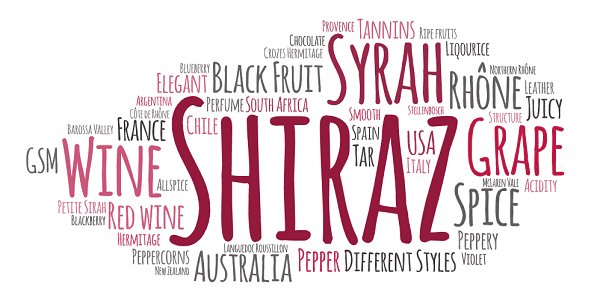
The Shiraz / Syrah grape & wines Shiraz used to be very popular here in the UK but Syrah remained, and still remains to some extent, relatively unknown. In fact Shiraz is the same grape as Syrah. This guide to the Shiraz or Syrah grape will reveal more about this wine grape variety and the different styles of Shiraz or Syrah wine. I’ll also be looking into what Shiraz tastes like, whether Shiraz is a good wine or just a big juicy but somewhat one-dimensional wine as we used to see dominating our supermarket shelves as well as advice on which food to eat with Shiraz or Syrah wine. The Syrah grape / The Shiraz grape Despite our proximity to France, here in the UK the Australian name, Shiraz, is the better known name of this black grape variety; this is partly because France has historically not labelled its wines with the grape variety and partly because in the late 1990s and early 2000s Australia, which proudly names the grape on its wine labels, encouraged by the UK’s bulk wine buyers and supermarkets, flooded the UK market with simple, value-for-money Shiraz which was very popular for a number of years. In fact France produces more Syrah or Shiraz than Australia, largely in Provence, Languedoc-Roussillon and the Rhône regions. These two countries have by far the most Shiraz vines but there are plantings in many countries including the USA, South Africa, Argentina, Chile, Spain, Italy and Portugal etc. Shiraz remains the 6th most widely grown wine grape variety in the world despite the fall in popularity of the entry-level Australian Shiraz and this is partly because many Australian Shiraz wine producers have upped their game, partly because it is a vigorous grape variety and partly because the grape blends well with several other grape varieties. There has been much debate about the origins of the Syrah grape but it has been proved by DNA profiling to have originated in France, a cross between two lesser-known French grapes, Dureza and Mondeuse Blanche. There is a top quality, small-berry version known as Petite Syrah – but this is not to be confused with the Petite Sirah grape also known as Durif and found in the Americas. Hermitage is another name for the Shiraz or Syrah grape in Australia but it is also a synonym for other varieties so its use is confusing and therefore rare. Whilst Syrah used to be largely the old world name for the grape and Shiraz the new world name, now the names are increasingly used to differentiate between two styles of wine – Shiraz for the big, juicy, warmer climate wine and Syrah for the more refined, cooler climate wines – but this is not an official definition and I use the terms Syrah and Shiraz interchangeably in this blogpost. Shiraz / Syrah styles of wine Syrah or Shiraz is a very versatile grape and this is reflected in the different styles of wine produced from it across many wine regions. It can be found as a single-varietal, i.e. 100% Shiraz or as part of a blend of different grape varieties. Even as a varietal wine Syrah can produce different styles: think of the smooth classics of the Northern Rhône like Crozes Hermitage, Cornas, Hermitage and Côte Rôtie, the typically full-bodied spicy Barossa Valley Shiraz wines and an increasing number of fine examples from South Africa which generally sit somewhere between the above two styles. Shiraz from generally warm-climate areas such as Barossa Valley and McLaren Vale in Australia and the more sheltered parts of Stellenbosch in South Africa are generally: fuller-bodied, darker in colour, with more obvious, sweeter tannins and higher alcohol (c. 14%+ ABV) Cooler climate Syrah or Shiraz from areas such as the Northern Rhône and New Zealand tend to be: more elegant, more perfumed and have more acidity and, as is often the case, Syrah produced in cooler climate regions tends be more age-worthy as the grapes retain more acidity despite being ripened over a longer period. Increasingly in cooler climate areas of Australia wine makers are successfully also achieving this more elegant, lighter style of 100% Shiraz – so much so that as mentioned above some prefer to label their wine as Syrah to differentiate it from warmer climate, juicy-fruit style Shiraz wines. Syrah is often seen in blends. In Australia, the USA and South America it is often paired with the more austere and tannic grape, Cabernet Sauvignon, to soften the wine and give it a more rounded structure and a smoother texture. In the Southern Rhône Syrah is the “S” in the famous GSM blends (with Grenache and Mourvèdre) like the classic Châteauneuf du Pape and Côtes du Rhône. It gives structure and age-ability. Sometimes a splash of white grape Viognier is also added for its perfume and silkiness, producing a really elegant, feminine style of wine. In answer to the question, can you get good Shiraz, yes, and increasingly so these days. Producers of the mid to top price range Syrahs are looking towards the more elegant style and experimenting with terroir to … What does Syrah or Shiraz taste like? One of the key characteristics of most Syrahs or Shiraz is its distinctive pepper flavour and aroma which comes from alpha-ylangene, a molecule also found in peppercorns; apparently 20% of people are unable to smell it however so don’t be too surprised if you can’t. But in a blind wine tasting pepper is often the first clue, to those that can smell it, that the wine is a Shiraz. Other typical flavours and aromas are black fruits, liqourice, leather and sometimes tar. Warmer climate Shiraz will have ripe black fruit flavours like blackberry and blueberry, spice and chocolate flavours. Flavours of cooler climate Shiraz tend to include more herbs, olives and more pronounced pepper and spice with some meaty aromas and still some black fruits but less ripe fruits. Younger Syrah tends to have floral aromas like
Organic wine
Organic wine “Organic” is one of the most searched for terms on the Wines With Attitude website and so organic wine seems to be a priority for discerning wine consumers perhaps because of one or a combination of the following concerns: the environment, health, quality of product, animal welfare and / or provenance. This Guide to Organic Wine will therefore focus on organic wine and answer questions such as: what is organic wine? how do you know if a wine is organic or not? are organic wines better wines? and is it worth buying organic wines? What is organic wine? It is important to differentiate between organic wine and organic grapes because a wine can be made from organic grapes but the wine itself may not be organic. How so? Wine produced with organic grapes but not itself organic will be labelled “wine made from organic grapes”. The organic practices required in the production of wine made from organic grapes are limited to the vineyard so for example there are strict limits on the use of chemical pesticides and fertilisers but the winemaker will have more freedom in what he or she can add to, or take out of, the wine during the wine production process. For example, he or she may chose to add sorbic acid to wine made from organic grapes albeit amounts are limited by the EU; this substance may be used to prevent yeast fermentation in the bottle but the practice is frowned upon by more reputable winemakers as the issue can be prevented by careful filtration and good hygiene. In addition most people can detect sorbic acid at levels of 135mg per litre whilst EU limits are above that at 200mg per litre. A truly organic wine must be produced from organic grapes AND follow strict regulations dictating the production of the wine in the winery. So using the above example an organic wine would not be permitted to have any sorbic acid added. Other limitations include most notably sulphur dioxide levels in still wine which must be at least 50mg per litre lower than the levels allowed in non-organic still wine (read more on sulphites in wine). This is the equivalent of 33% lower for red still wines and 25% lower for still white wines. Therefore an EU organic wine will be produced from grapes that have seen have no pesticides or fertilisers but, contrary to popular belief, it may have had extra sulphites added, though the levels will almost certainly be lower than in non-organic wines. And as you can read in my sulphites blog post sulphites are not necessarily a bad thing as long as limits are controlled. How to find organic wines Organic wines are usually easily identifiable; look for the EU organic logo (green leaf with stars above) on organic wines produced in the EU after July 2012 and country-specific organic certification logos (like the UK Soil Association below or the French ‘Agriculture Biologique’). Certification of organic grapes and of organic wine is controlled by various control bodies in each country authorised by the EU to monitor the winemakers; there is a conversion period of at least two years before the organic label can be used and annual checks are carried out to ensure organic principles continue to be applied. Only a small percentage of the world’s vineyards are certified organic though increasing numbers are striving to gain certification. The UK Soil Association is one of a number of regulators in England. Unfortunately different certifying bodies can have slightly different criteria and regulations about growing grapes though all must ensure that the EU regulations are adhered to. Uncertified wines may still be produced according to organic principles as producers may be working towards certification or prefer to remain uncertified for whatever reason. Some of these producers may boast on the label of production “according to organic principles”. But they are often referred to as organic wines even if not certified (I mention in the tasting notes on the website if my wines are not certified organic). Are organic wines better wines? The organic wine industry first gained some traction in the 1970s but has had a chequered history until relatively recently. In fact as mentioned earlier it was only in 2012 that the EU came up with a written definition of organic wine, after the USA, Chile, Australia and South Africa had already set their own organic wine regulations and standards. And whilst there is an ever-increasing number of people buying organic food, sales of organic wine are not increasing at the same pace. I am asked more about vegan wine than organic wine. One of the problems for organic wine is its definition. There is no worldwide standard for organic wine as we have seen. There is added confusion from the often interchangeable but incorrect use of the terms “organic”, “bio-dynamic”, “natural” and “raw” wines (read more about biodynamic wine). And in the early days of organic wine there was also a problem with rapid deterioration in some low sulphite wines which did not help the reputation. Fortunately winemakers have improved their techniques and management of sulphites so that this is rarely a problem now. There was also resistance from within the industry which perhaps saw organic wine as a threat to the norm and there was a more general lack of belief that more naturally produced wines were of a higher quality as was and is still claimed. The EU’s Organic Farming website gives the following definition of organic grapes: “Organic grapes are grown on vines in soils, managed in harmony with nature, containing large numbers of earthworms, beetles and other organisms. The grape varieties chosen are adapted to local conditions and as resistant to disease as possible. From these organic grapes local wineries and chateaux produce high quality and rich wines.” And according to the EU, organic farming relates to “agricultural production systems that seek to provide the consumer with fresh, tasty and authentic food while
How to tell if a wine is a good wine?
How to tell if a wine is good As the old and unattributed adage goes, life is too short to drink bad wine – but what makes a wine good or bad? What exactly is a good or quality wine? How can you tell if a wine is good? You may read ‘Quality wine’ or similar phrases on the label of a wine bottle but does that really mean that a wine is a decent wine and is well-made? In this blogpost I share with you the best ways to spot a good wine by assessing the quality by tasting it, what the 4 specific things that should be evident in good wine are and what good wine really tastes like. Do the label & price indicate a wine’s quality? As mentioned above, you may look at a wine’s label when trying to tell if a wine is good However, unless you know that particular wine already or you have had a recommendation from someone you trust, a label is unlikely to tell you more than the origin of the wine, its vintage and its alcohol level and possibly the grape varieties from which the wine is produced. Read more on labelling and appellations. The price of a wine can give you a hint of its quality level but it is by no means the best indication; an expensive wine may be poorly made if the winemaker or his/ her PR is not entirely ethical. Conversely you can find cheap wines that are well-made although you may have to make your way through a lot of wine to find the decent ones. A quality wine does not have to be very expensive but it really is worth moving away from entry-level wine as you have a much higher likelihood of finding a good quality wine above that level – only about £1.70 of a £7.50 bottle relates to the wine itself, the rest being made up of VAT, duties, packaging, transportation etc. At £15 that figure rises to about £6, so better bang for your buck. What to look for when assessing a wine’s quality The best way to tell if a wine is good is to start by assessing the quality of a wine. Here are the four things that you should be looking for when you taste the wine. Bear in mind that this is not a matter of how a wine tastes. Personal preference in wine is very important but it is also very subjective. To assess whether a wine is good or not requires a more objective view and there are four main criteria that you can look for: balance complexity intensity finish Balance First and foremost, quality wine should have balance. You may well ask what is balance in a wine? To be specific a well-balanced wine’s acidity, sweetness, fruit, alcohol and tannins should all be in harmony. Each of these components should be integrated and complement other components of the wine and none of them should be too obvious. Acidity A certain amount of acidity is good as it balances the sweetness of the grapes and gives the wine freshness; it can usually be felt on the sides of the tongue. Acidity is important in all wines but especially important in sweet or dessert wines. You need a degree of acidity to stop the wine from being sickeningly sweet; you should almost feel the mouth-watering freshness cut through the sweetness. Too much acidity though will make a wine taste austere and too little will make the wine flat, often described as ‘flabby’, as acidity can help to lift the fruit flavours. Read further on this subject in my blogpost on acidity. Sweetness Sweetness is essentially the residual sugar in a wine left after fermentation has stopped the conversion of the grape juice sugars into alcohol (though it may be added sugar in cheap plonk). As already mentioned, sweetness in any wine needs to be balanced with acidity so that the wine is not cloyingly sweet. Fruit flavours in wine vary depending not only on the grape variety but also on when the grapes are harvested (too early and they will be green and more vegetal, late and they risk tasting more like jam than fresh fruits) and how the wine is made. Essentially though wine should have a good concentration of fruit flavours; without this concentration a wine will be rather flavourless and as my husband describes some wines ‘thin’. The fruit characteristics do fade as a wine ages which is how wine experts can assess how long a wine can be kept for before it is past its best. Tannins Tannins (in red and to some extent in rosé and orange wines) give a wine structure and help a good red wine to age and develop further. Tannins should be smooth and integrated – or with the potential to soften as the wine ages in bottle. Too few tannins and a wine can seem flat; too much tannin will “fur up” the inside of your cheeks and leave you gasping for a glass of water. Tannins can completely overpower a wine and hide the flavours so wines with high tannin need a lot of strong fruit flavours to balance the wine. Read further on this subject in my Guide to tannins in wine. Alcohol Alcohol should be sufficient to give the wine body but should not be overpowering; too much can catch the back of your throat and hide the flavours of the wine and/ or cut them short. If a 15% ABV wine is balanced you will not notice the high alcohol as the alcohol will be tempered by the sweetness and fruit. On the other hand, too little alcohol can make a wine seem somewhat lacking, hollow even. That is not to say that all low alcohol wines are hollow; in a good 5% ABV Moscato d’Asti for example, the low alcohol is
How & why our wine tastes change
How & why our wine tastes change Do our wine tastes change as we get older? Think back to when you first started drinking wine – what was your preferred wine style then? My guess is something different from your current favourite style of wine. For me personally I suspect it was something like a medium-dry German white wine à la Blue Nun or a rustic Chianti from a raffia-covered bottle but that probably says more about my age and wallet than about my taste in wine! Whatever that first glass was, it certainly wasn’t my wine epiphany – that came much later. But it does follow the start to most people’s wine journey, a trajectory which starts or is perceived to start with sweeter, lighter styles of wine, moves on to bigger, bolder wines and ends up with lighter, more elegant wines. But is this journey to a wider, more sophisticated range of wines a result of a change in our sense of taste as we get older – or is there more to it than that? Our tastes in food certainly change over time. It’s a standing joke in my family whenever anyone eats a banana that I pull a face of disgust and everyone chants “…but you used to love bananas…”. I can’t remember eating them as a child but as I now can’t abide the smell, taste or texture of the darned things, it’s hard to imagine that I ever used to eat them let alone love them. But I will concede that it is possible because tastes do change as we age. I never used to be bothered about chocolate but I do now enjoy a piece every now and then. Similarly I used to dislike Sauvignon Blanc but now appreciate a glass of (really well-made) Sauvignon. Here’s my somewhat light-hearted look at how and why our tastes in wine change as we age. How our taste in wine can change as we age Several research projects have been undertaken to determine how our tastes in wine change, most recently by Sonoma State University*. They devised an unscientifically proven wine palate life cycle which suggests 4 stages of taste preferences in wine: 1. a preference for medium dry or medium sweet white and rosé wines such as Riesling, Muscat, Prosecco 2. dry white and rosé wines like Sauvignon Blanc and softer, lighter red wines like Merlot and Pinot Noir 3. distinctive, more aromatic white varietals like Gruner Veltliner and Torrontes and bolder reds like Malbec and Cabernet Sauvignon 4. more distinctive wines like Barolo, Burgundies and dry Riesling. They tested this model with a survey which showed that 69% of participants said that their tastes in wine had changed over time – young adults were as likely as older participants to report a change – with 54% of participants reporting semi-sweet and sweet white and rosé wines as their initial preferred style and 61% giving their current preferred style as dry reds and slightly sweet red wines (the latter a relatively new category popular in the US where the survey took place). By the way this study was carried out in 2018 so interesting I think to see semi-sweet and sweet wines so high relatively recently. Of the 31% of respondents who reported no change in preference a “statistically significant percentage” were sweet and semi-sweet wine drinkers. Why our sense of taste changes as we age What is the main reason or reasons for wine preferences changing over time for most people? Age seems to play a large part. We are born with 10,000 taste buds all over our mouths (not just on our tongues) and these regenerate every 10 to 14 days although apparently our ability to detect aromas develops and plateaus when we are still children. As we age the regeneration of our taste buds slows down and in fact some of the taste buds don’t grow back so we end up with fewer than we used to have. This can happen in our fifties and even earlier especially for women. In addition our taste buds shrink as we get older. If that’s not bad enough our sense of smell deteriorates as we get older too although it is thought at a later age than our sense of taste, from our sixties, and sadly the deterioration cannot be reversed. Some even argue that the deterioration starts at a much earlier age. And as a triple whammy saliva production also reduces as we get older – and saliva helps transmit the substances that we eat or drink to the taste receptors but is also thought to stimulate our taste buds. Other reasons why our sense of taste changes Just as malfunction of our salivary glands can impact on our ability to taste wine, many illnesses can have the same effect – we all know that Covid-19 can affect our sense of smell and / or taste but even the common cold and some allergies can do the same. Other more serious illnesses including disorders of the nervous system can cause you to lose your ability to taste food and wine so if you have a prolonged period without being able to taste or develop a sudden loss of taste that you can’t find a reason for, get it checked out. Drugs can also alter how we perceive flavours and can change the make-up of our saliva, especially antibiotics, blood pressure drugs and some cancer treatments. Medication can also make your mouth dry and this dehydration can mean flavours may not be detected as easily. Deficiency in some nutrients including vitamin B12 and zinc can also lead to a loss of taste. As we are more likely to develop medical problems and take more drugs as we age, then it does seem likely that ageing is a major factor in why our tastes change. The degree to which we lose our senses of smell and taste differs per person so you
Guide to the Semillon grape & wines
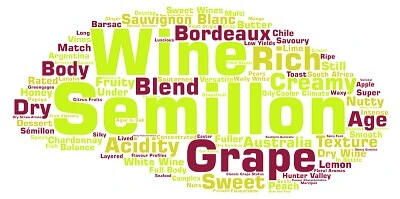
Guide to the Semillon grape and wines Semillon (or Sémillon) may not enjoy the same instant recognition as Chardonnay or Sauvignon Blanc, yet this white grape has been producing some of the world’s most complex, age-worthy and food-friendly wines for centuries. From the legendary sweet wines of Sauternes and Barsac to the crisp, long-lived dry styles of Bordeaux and Australia’s Hunter Valley, Semillon is one of the most versatile white wine grapes you can buy — and arguably one of the most underrated. This combination of versatility, longevity and food-friendliness makes Semillon a grape worth rediscovering. Whether you enjoy structured dry whites, elegant blends, or opulent sweet wines, there is almost certainly a style of Semillon to suit your palate. Yet despite its pedigree and proven track record, plantings of Semillon have declined in several countries, partly due to the global rise of Chardonnay and the demand for easy-drinking, early-release wines. Semillon often needs time — both in the vineyard and in the bottle — to show its true character. When cropped too heavily or released too young, it can seem neutral and unremarkable. But when yields are controlled and the wine is given patience, Semillon reveals depth, texture, honeyed complexity and an ability to age for decades. In this guide, we’ll explore what makes Semillon unique among white wine grapes, where it is grown and how climate influences the flavour of its wines, how Semillon ages and when to drink it, the best food pairings for both dry and sweet styles and why you should try it. If you’ve overlooked Semillon in the past, it may be time to take another look. This understated grape has been quietly producing some of the world’s finest white wines — and it deserves far more attention than it gets. What’s the big deal with Semillon? Admittedly Semillon may not appeal to people who prefer their white wines to be very light in colour and body but it has a lot going for it, not least the fact that it is so versatile. Few white grape varieties can match its range. Semillon produces: complex fuller-bodied dry white wines that evolve beautifully with age some of the most successful white wine blends in the world — particularly when it is paired with Sauvignon Blanc and particularly in Bordeaux and Australia and rich, luscious dessert wines with extraordinary longevity. It is Semillon’s ability to make arguably the best sweet wines in the world in Sauternes and Barsac that earns Semillon its classic grape status. In the right conditions the sugars in the grapes become concentrated to make them super-sweet; we’ll go into more detail on this process in a future blogpost. Semillon can be crisp and citrus-led in cooler climates or textured, waxy and generously fruity in warmer regions. It can be bright and minerally or creamy and oak-influenced. In short, Semillon is a grape of remarkable adaptability. Where to find Semillon Aside from its home of Bordeaux, Semillon is grown largely in Australia, especially in the Hunter Valley, in South Africa, Argentina and Chile although Semillon vines have reduced in number as the craze for Chardonnay took hold in these countries. In addition it is not the easiest grape to grow, or rather it grows profusely but producing good flavoursome Semillon is notoriously difficult. Flavour profiles of Semillon wines Dry Semillon At its worst, as a commercial bulk wine, Semillon lacks any flavour characteristics but at its best, when the grapes are grown in low yields and to their optimal ripeness and the dry wine is produced with care, it is intense, multi-layered with fruity, nutty and savoury characteristics, full body and a smooth, creamy texture. In cool climate Semillon like those produced in Bordeaux and Hunter Valley citrus fruits – lemon, grapefruit and lime – and apple are likely to be predominant; the wine may also have floral aromas. The acidity will generally be higher and so the wine will be a little sharper. And in fact if it has not ripened properly Semillon tends to be very like Sauvignon Blanc to which it is related; some say it is like Pinot Grigio. It will also tend not to be aged in oak in cooler regions though some flavour characteristics such as honey, butter and toast and textures that may be associated with ageing can develop if a wine is kept in bottle for a reasonable time. These wines are likely to be lower in alcohol at c.12% ABV. In warmer climate dry Semillon from areas like Southern Australia, South Africa and Argentina the fruit flavours will tend more towards ripe pears, greengages, papaya, peach and mango though the lemon flavour usually remains. The dry straw aroma for which Semillon is known and the floral scents will be more predominant and there may be spices like ginger in the mix. If oak ageing is used the butter and creamy aromas and tastes and the smooth, full-body will be enhanced. The texture of Semillon from a warmer area can be a little oily (in a good way), some call it lanolin or waxy, and in a good wine this should be balanced with some acidity. The alcohol will be higher at around 13.5 or 14% ABV. These Semillons can be like a rich, creamy Chardonnay. When blended with Sauvignon Blanc, the added acidity from the Sauvignon creates a crisper wine and balances the richness of the Semillon; the flavour profile will depend upon the ratio of each grape in the blend. Sweet Semillon A fabulous sweet Semillon will have a lovely silky, luscious texture and a multitude of flavours and aromas such as honey, nuts, marzipan, peaches, coconut, pineapple etc. To avoid it being cloyingly sweet the wine must have some crisp acidity to balance the sweetness. When to drink Semillon Good Semillon is generally better if it has a few years under its belt before being consumed. The problem with most wine retailers (and I include the
Grenache grapes & wine styles
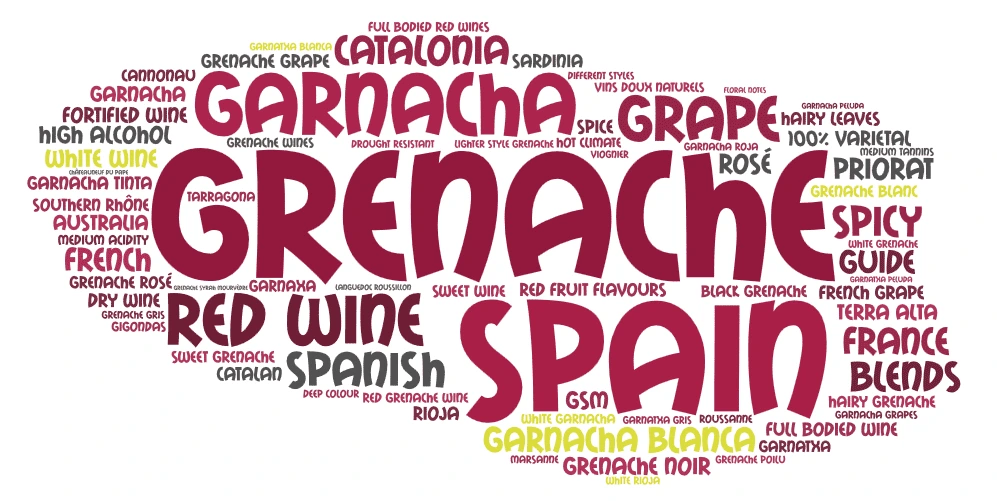
Grenache grapes & wine styles There’s a whole family of Grenache grapes and consequently a wide range of different Grenache wines. So, what wines are made from Grenache grapes? Grenache can be a full-bodied wine or a lighter style, Grenache can be a dry wine or a sweet wine, a red wine, white wine or rosé and a fortified wine as you will discover. This blogpost will also look at the regions where Grenache is grown, why Grenache produces different wines, what grape Grenache is similar to and what you should eat with Grenache. Grenache grape: Grenache or Garnacha or Garnatxa? Although many believe Grenache is a French grape, it is in fact Spanish, its Spanish name being Garnacha. There are some who claim that it comes from Sardinia where it is and for centuries has been known as Cannonau. However since Spain has all three different coloured Garnacha grapes and more variations and mutations it seems to be the most likely source. The biggest plantings of Grenache by far are in Spain and Southern France and so the Spanish and French names are the best known (and used interchangeably in this blog post); I have also included the Catalan names since there is a growing interest in the Grenache grape amongst winemakers in Catalonia. There are black, white, grey and even hairy versions of the Grenache grape – yes, you read that correctly, a hairy Grenache grape … Black Grenache To give it its full French name Grenache Noir is known as Garnacha (Tinta) in Spain and Garnatxa or Garnaxa in Catalonia. It is a very old variety and the 7th most widely-planted black wine grape in the world (163 000 ha in 2015), perhaps surprising since Grenache only wines are quite rare. The Grenache grape is very vigorous. drought resistant and adapts easily to different soils. It has naturally high alcohol, red fruit flavours, medium acidity and tannins. There are a number of problems for wine makers: the yields and the alcohol level need controlling, harvesting time must be carefully selected to achieve full ripeness and sufficient acidity and if Grenache vinyeards are irrigated they can produce dilute, one-dimensional wines. It can also oxidise easily and often needs drinking while relatively young. So it seems it is not the easiest grape to tend. Producers of commercial style Grenache are less concerned about this but producers of better quality wines keep the alcohol in check by not letting the grapes over-ripen; there is an added danger that if grapes are left on the vine too long the acidity, which is not overly high in Grenache, will fall too low and produce flat of “flabby” wines. When winemakers produce a balance between the juicy fruit flavours, the alcohol. the acidity and the tannins, Grenache can be a truly amazing wine that can age well. White Grenache Garnacha Blanca is also known as Grenache Blanc or Garnatxa Blanca in Catalan. The white version of Grenache has similar qualities to the black Grenache grape though it is nowhere near as widely planted. Again care needs to be taken to keep yields low and not to let the alcohol take over. Grey Grenache Known as Garnacha Roja, Grenache Gris and Garnatxa Gris, this grey or pink-skinned variety of Grenache is more unusual and most often used in blends with Grenache Blanc to add perfume and body. Hairy Grenache Grenache Poilu, Garnacha Peluda or Garnatxa Peluda is very similar to Garnacha Tinta but has one major advantage, higher natural acidity, and one major difference, its hairy leaves. The underside of the leaves are covered in down thought to have developed to preserve moisture. There is also a grape known as Garnacha Tintorera but it is from another grape family altogether. Where is Grenache grown? France and Spain are by far the two largest producers of Grenache Noir, together they account for 87% of its vineyard area worldwide. In France you will find it mainly in the Southern Rhône, in Provence and in Languedoc-Roussillon, all areas in the south with a hot climate. In Spain it is grown mainly in Aragon in the North East, in Catalonia, in Rioja and in Priorat. It is grown elsewhere but sadly not always to produce the best wines. In some New World warm climate areas Grenache is used for high volume, inexpensive wines. This I know is a very wide generalisation and it is increasingly possible to find high quality Grenache in all countries where it is grown when care has been taken in the wine-making process. In pre-Shiraz Australia Grenache was the most planted black variety and its plantings are again increasing there as our love for Aussie Shiraz is declining. Again Southern France and Spain have the most Garnacha Blanca vines. Many of the French grapes are destined for blends and for vin doux naturel, a fortified wine. In North East Spain and Tarragona it is grown for blends – it is permitted in white Rioja, Priorat, Terra Alta etc – and increasingly for 100% varietals in Terra Alta. What wines are made from Grenache grapes? There are many different styles of Grenache because there are different Grenache grapes and because theuy can be vinified in different ways. Here I cover mainly the red Grenache-based wines and briefly the other styles. I will write in more detail about Garnacha Blanca in a later blog post. Red Grenache wine styles Oz Clarke has described Grenache Noir in his inimitable style as the “wild, wild woman of wine, the sex on wheels and devil take the hindmost, the don’t say I didn’t warn you” perhaps because of its tendency to high alcohol. This is probably also why, despite being a widely planted grape, Grenache noir is rarely found as a varietal or 100% pure Grenache though it is being seen increasingly in North East Spain. The closest I have had (though now sadly sold out) is the Australian Eperosa Stonegarden
Debunking 7 wine myths
Bursting the bubble of 7 wine myths I am amazed by some of the wine tales that I read or hear about to the extent that I sometimes wonder how much wine has been imbibed when the stories originated. Variations of these wine myths suggest that, like a game of Chinese whispers, some of them are being blown out of all proportion as they circulate. Like most urban myths, there is a danger that they can get in the way of reality or worse still spoil our enjoyment of wine. So it is time to debunk some of these wine misconceptions and burst the bubble of seven wine stories. 1: Putting a silver spoon in the neck of a champagne or sparkling wine bottle will keep the wine fizzy Talking of bursting bubbles, let’s start with fizz. In order to keep your champagne or sparkling wine bubbly after opening a bottle what is most important is keeping it cold – and then it will only keep fizzy up to a point. Whether this long-standing story grew out of the belief that the spoon was trapping cold air in the bottle or through a misguided belief that silver holds some magical bubble-retaining characteristics, I don’t know. I have tested the cold air theory however and sparkling wine kept in the fridge will keep bubbly – but only for a couple of like the plastic stopper pictured which I find keeps the bubbles longer than the clunky metal stoppers which never quite seem to grip the bottle sufficiently. 2: The heavier the bottle, the better the wine I have heard this myth uttered far too many times and I can’t imagine its origin. If you buy a wine in a heavier bottle, it is going to be a more expensive wine as you are simply paying for the heavier packaging – and there is no guarantee about the quality of the wine inside. If you compared two £25 bottles of wine, you would be getting poorer value in the wine in the heavier bottle because you, the consumer, are paying the extra cost of the heavier bottle. Also heavier bottles are not good for the environment; even if glass is recyclable think of all the extra weight on those lorries moving the wine around. And there’s the risk of back strain for those people that move cases around to get your wine to you! 3: Screw caps mean cheap & nasty wine; quality wines are always sealed with a cork This is a myth which may have had some truth to it years ago. The original screw caps were certainly cheaper than corks and a way for producers of cheaper wines to keep their costs down. Producers of better quality wines looked down on the screw cap and preferred to keep using corks as a symbol of premium wine that would age better in bottle. Screw caps became synonymous with the lower end of the quality range and wines meant for drinking immediately. Since then however screw-off caps have come a long way; millions of pounds have been spent on technological advances such that wines with a screw cap can age and develop whilst in the bottle, just as well as a wine in a bottle sealed with a cork. New Zealand is a particular fan of the screw cap; just look at the fabulous wines of Auntsfield and TWR and they are all sealed with screw caps. In fact of all Wines with Attitude’s portfolio – which only contains good quality wines – about 25% are sealed with a screw cap. I know there will always be those who prefer the sound of a cork popping but don’t assume a wine under screw cap is not good because you could be missing out on some fabulous wines. The price may be a better indication of quality. I will write more about screw caps in another blogpost. 4: Wine under screw cap cannot be corked Following on from Myth 3 some fans of screw caps say that a wine sealed with a screw cap can’t possibly be corked. But that is simply not true and shows a lack of understanding of that wine fault. To read more about corked wine, read my wine faults blog (coming soon). In simple terms, the compound responsible for corked wine, TCA, is not just found on corks but can contaminate whole wineries. So wine sealed under screwcap can be corked, though these days fewer wines suffer this fault than in the past. 5: Thicker legs means a better quality wine Once you have swirled wine in your glass, the liquid dripping back down the inside of the glass is referred to as the legs or tears (rhymes with fears) – and you won’t believe the amount of argument that the cause of this phenomenon has raised in the wine industry over the years. They have been said to indicate either the quality of the wine or its sweetness but they are in fact an indication of the amount of alcohol in the wine. There is a detailed scientific explanation but to keep things short it’s all about surface tension forces between the alcohol and the water in the wine, the faster evaporation of the alcohol, the tension between the liquid and the glass changing and, of course, gravity. This only happens with multi-compound liquids – there are no legs in pure alcohol or in pure water. A higher concentration of alcohol will make wine slide down the glass more slowly but the difference is not huge; it is easier to see the alcohol content on the label of the bottle than by guessing it from the legs. 6: Supermarket discounts A £10 wine that is discounted to £5 may look like a bargain but it is actually a £5 wine that is normally inflated to £10. This is a generalisation as the margins on more expensive wines are higher than on cheaper wines but it’s
Best wines to drink with chilli
The best wines to drink with chilli spice What are the best wines to drink with chilli and other spicy hot food? I’m talking here about chilli-hot food. Your first thought might be to reach for the biggest, heartiest red wine on the wine rack to pair with a hot chilli con carne for example – after all I recommend in my general food and wine matching tips that you think about the matching the structure of the wine and the food aiming to balance the weight or richness of the most dominant ingredient in the dish (often the sauce) with the body of the wine. You would therefore think that a strong flavoured, fuller-bodied wine might be the best choice of wine to drink with chilli. But there are much better wines to drink with chilli, wines that won’t be drowned by or that won’t clash with the chilli as I’ll explain. Why it is hard to find wines to pair with chilli What got me writing about finding the best wines to drink with chilli is that I was recently thinking about which wine to serve with a particularly fiery tomato sauce. Many people, myself included, have been taking advantage of the ban on visiting restaurants and the extended time at home during lockdown in 2020 and 2021 to dig out long-abandoned recipe books and to look at the ever-increasing array of recipes online to produce meals that are a little different or more adventurous than we would produce in our usually time-poor weekday evenings. A new find was simple and very tasty pork mince burger recipe by Nigel Slater who is one of my favourite cooks, Pork burgers with lime leaves and coriander; burgers are not something I would usually choose to eat – but these are not normal times! The burgers themselves were delicious without any sauce as Nigel recommends them but I decided to add a hot tomato sauce and serve with pasta; the sauce was really very fiery, the chillies being hotter than I thought. Hence my wine choice dilemma… Chilli is one of those flavours that are notoriously difficult to have with wine. It’s not actually the flavour that is the problem but rather the heat of the chilli; a substance called capsaicin in chillies creates the hot sensation that can feel like it is actually burning the inside of your mouth, your tongue and lips. Quite simply very hot spicy foods can dull the taste buds. The heat of chilli makes many wines taste completely different and usually not very pleasant as subtle complexities and fruit flavours are masked. Wines can seem rather hollow and not at their best. Best wines to drink with chilli Assuming that you want to enjoy the complexities of the wine with your spicy hot food, look for wines with one or more of the following characteristics: Wines with higher sugar This doesn’t mean that you need to drink a dessert wine with your chilli; that would be a little strange. But seek out a slightly sweeter wine than you might usually drink – an off dry white wine with a good slug of refreshing acidity, will make a huge difference because the sweetness of the wine tempers the heat of the chilli – and the heat in the food takes away some of the wine’s sweetness so you will not necessarily notice that the wine is off-dry. The weight of the slightly sweeter wine also balances well with the chilli and with other spices which is why I also recommend an off-dry wine such as a Riesling or an aromatic white wine that is slightly sweeter like Pinot Gris or Gewürztraminer with your Chinese takeaway (even when it’s not a chilli hot meal). It’s difficult to find red wines that have higher residual sugar levels but as a general rule, lower alcohol wines will be slightly sweeter than wines with 15% ABV. Wines with lower alcohol High levels of alcohol in wine can make spicy hot foods seem even hotter so to mute the heat of chillies look for wines with 9 to 12% ABV. This will mean you have a much bigger choice of white wines than you will of red wines – look to the cool climate regions where grapes are slower to ripen and therefore to convert their sugars into alcohol. German reds and whites would usually fit the bill as would some Loire Valley wines like Chenin Blanc or a Portuguese Vinho Verde and most Proseccos. The slight sweetness and the spritz or bubbles of these latter two wines will also help dispel the heat – see above and below). Wines with low tannins One advantage of tannic wines is that the astringency of tannins can cut through rich or fatty food but the big disadvantage is that tannins accentuate the heat of spicy foods, masking all the flavours of the food and the wine. This is again why white wines, preferably off-dry but even dry white wines, are better partners for hot food than red wines. If it has to be a red wine, make it one that is naturally low in tannins like a Pinot Noir, Dolcetto and Gamay rather than a big tannic Cabernet Sauvignon from, say, Bordeaux. Unoaked Grenache, Zinfandel or Merlot will usually also fit the bill. Younger fruity wines As a general rule younger wines that are not intended to be kept long or have not yet developed huge complexity are better for more elaborate and hotter dishes. Older fine wines with their more complex flavours and texture and in the case of red wines softer tannins are best kept aside for more simple fare. The more fruit-forward nature and lighter body of younger wines, red or white or rosé, balance well with hot chilli flavours. And you could even serve the reds slightly cooler than normal to help with the taming effects of the wine on the heat. An off-dry Riesling or
Best wines to drink with Beef Stroganoff
Best wines to drink with Beef Stroganoff Regular readers of my blog will know that I believe the main aim in pairing is to find wines and food that complement each other; one should not overpower the other. There are a number of foods that are notoriously difficult to pair well with food, usually because the food in question has a strong taste that can clash with the wine, making the wine seem bitter or even flat: asparagus, artichoke, vinaigrette, lemons and chilli spring to mind. But sometimes I am blind-sided by what you might think would be an easy dish to pair wine with: most recently this happened to me with beef stroganoff. You might think that the dish calls for a sturdy red since it’s beef, surely the predominant flavour, but the problem with stroganoff – and the same could apply to Mushroom Stroganoff for non-meat eaters and to any other beef dish cooked in a creamy sauce – is that there are several competing foods and flavours which require careful selection of the right wine. Let’s look at why it can be difficult to find a good wine to go with beef or mushroom stroganoff – and which seven wines will work well with them both. Wines for the components of a Beef Stroganoff Originating in Russia and thought to be named after an old wealthy Russian family named Stroganov, beef stroganoff became a popular item on the menu of many restaurants in Great Britain in the 1960s and 1970s and a dinner party staple of the middle classes. Since then its popularity has waned though many modern day chefs have written recipes for beef in cream sauce, a stroganoff by another name. The main ingredients and the wines that you might normally choose with them individually are: beef – this should be a good lean cut since the cooking time is relatively fast and the meat should be tender to eat. Some might be tempted by a bottle of Bordeaux but the tannins and oak are much better suited to fattier cuts of beef. In a stroganoff, there will be some umami flavour from the caramelisation of the meat; these and the lean beef would normally pair well with red wines with low tannins and little oak influence like a Cru Beaujolais. If you feel it has to be Bordeaux, it should be a mature wine where the tannins have softened and the oak influence is well integrated. mushrooms – these are usually added to a beef stroganoff and can be used as a substitute for beef in a vegan or vegetarian variation of the dish. As mushrooms are an earthy, savoury vegetable, they make some wines seem more acidic and less fruity so my usual instinct is to go for a savoury red wine with lower acidity for most mushroom dishes like a Pinot Noir, a Barolo or a Nebbiolo. Cream, often sour cream – the fat content of cream sauces can subdue mouth-watering acidity in wine so you need to make sure that you select a wine with good acidity to start with. This will also help cut through the fat and prevent the dish from seeming too rich. Wines that are notoriously good to drink with creamy sauces are rich white wines like white Burgundy, Semillon or a Chenin Blanc. Mustard is not always added to beef or mushroom stroganoff but it adds a bit of heat and spice and prevents the cream from taking over the dish. Wines that would work with a predominantly mustard-tasting dish would have good acidity to match the acidity in the mustard and relatively high tannins as the mustard will soften them. A wine that’s low in tannins can seem flat and lose its fruity flavours. For predominantly mustard-flavoured dishes you might consider a young Bordeaux, a Syrah or a Sangiovese. Aside from the above four basic ingredients, other additions may include nutmeg, brandy and also lemon that some people add to cut through the cream in the same way that an acidic wine would. These additional ingredients add further dimensions to the dish – and add further confusion to the wine choice. Which are the best wines to drink with Beef Stroganoff? Cru Beaujolais, young or mature red Bordeaux, Pinot Noir, Barolo, Nebbiolo, white Burgundy, Semillon, Chenin Blanc, Syrah or Sangiovese??? With such a variety of wine suggestions for the main ingredients, where do you start with choosing a wine that will pair perfectly with the dish when the ingredients are all combined? The first thing to think about is the structure or richness of the most dominant ingredient of any dish and try to match that with the structure of the wine. In this instance the cream is the dominant characteristic of the dish, even if only a small amount is added. The cream will make a stroganoff fairly heavy which means that very light wines are not really going to work. The richness of the sauce needs a wine with good acidity as mentioned above – though not too high given the mushrooms. You might not consider drinking white wine with beef dishes but a rich, mature & full-bodied Chardonnay that has acquired a buttery taste and a creamy texture from fermentation and / or ageing in oak barrels really does work well. Semillon or Chenin Blanc would also work but they too must be fairly rich and full-bodied with good acidity as that will cut through the creamy sauce making it seem less fatty. These wines will also complement the umami and savoury flavours of the red meat and the mushrooms. If you have to have red wine, look to a young-ish fruity red Burgundy or Beaujolais, young because older fine wines with their more complex flavours and softer tannins are better with simple food. Younger wines that are not intended to develop or have not yet developed on the other hand are better for more complex
A guide to oaked and unoaked wine
A guide to oaked and unoaked wine Many wine drinkers have a strong preference for either oaked wines or unoaked wines; people seem to love one and hate the other. It is important to differentiate between oaky wines with a strong taste of oak that appeal to a small proportion of wine drinkers and oaked wines. The latter have been fermented and / or aged in oak and may have no discernible wood on the palate or nose. Over-oaky wines like heavily-oaked Californian Chardonnay and commercial style Rioja, popular up till relatively recently, have not helped the reputation of oaked wines in general. So this guide looks at how wood affects wine, why and when oak is used in winemaking and how to tell oaked wines from unoaked wines. And, if wines matured in barrel are not your bag, there are also some tips on how to avoid them. How oak affects wine Oak can affect wine in a number of different ways. It can obviously affect the aroma and flavour of wine – but importantly, it does not have to affect the aroma and flavour. It can also have an impact on the colour, tannins and structure of wine and it can encourage clarification of the wine, with time. Aromas & flavours from oak Firstly though, let’s take a look at the aromas and flavours from oak that can be distinguished in wine. Vanilla is probably the flavour that first springs to mind and this comes from vanillin in the wood itself. Many of the other flavours come from toasting the barrel, a process used primarily to make the wood flexible enough to shape it but also to get rid of any bitter, green, raw wood flavours and to release other more palatable flavours. The stronger the degree of toasting, the more intense the flavours. Lighter toasting shows spices like cloves and nutmeg with more intense toasting leading to flavours like dried fruit, dill, coconut, caramel, cocoa or chocolate, coffee, toast, smoke and even burnt wood (flavours like those depicted in the left hand side of the image below). This wide range is why wine aged in barrel is often described as having complexity. The right hand side of the image depicts the fresh fruit aromas likely to dominate in a wine that has not been fermented or aged in barrel. Of course wine produced in a stainless steel vat can also be complex but the complexity comes from the grapes, the influence of the soils and the terroir in general and from the production processes such as maceration – where the grape juice is left on the skins – and lees ageing – where the wine rests on the dead yeast after fermentation. Colour from oak The longer white wines rest in oak, the darker they become. Chances are a deep yellow coloured white wine will have been fermented and / or aged in barrel although lees ageing can also make a white wine darker. Ageing wine in oak stabilises the colour of red wine rather than changing it. Read more in my blogpost on the colour of wine. Tannins & oak Tannins in wood can transfer into wine though mainly if new barrels are used and so winemakers have to monitor the affects carefully to avoid over-tannic wines. However, although oak is watertight – and wine-tight! – it does allow a tiny amount of oxygen to enter the wine and this slight oxidation helps to soften the tannins and make the wine rounder and smoother. It is these tannins and structure that give a wine the ability to age well. Tannins from oak can also assist in development of polyphenols, the many naturally-occurring compounds that affect the colour, taste and texture of the wine. Read more in my blogpost on tannins in wine.Guide to tannins in wine. Body & texture from oak In addition to the softening of wine in barrels through subtle oxidation, there is research to suggest that micro-organisms in the wood contribute to the smooth texture and elegance of the wine. Certainly it is known that American oak is relatively high in certain organic esters that give wine a creamy texture. In brief, oak brings more complexity to wine. In an unoaked wine fresh fruit flavours dominate, the body is likely to be lighter, tannins will be low and the wine is unlikely to be particularly age-worthy. Most (well-made) oaked wines will have fresh fruits balanced with the flavours from the oak; tannins will give the wine structure but should not be too harsh or mouth-drying and the wine will have a fuller body and smooth mouthfeel. How oak is used in winemaking Oak is widely used in wine making and it can enhance many wines – though not all. Care has to be taken not to overpower the wine’s natural flavours and aromas. In fact most wines will have spent some time in an oak cask but there are a large number of variables which mean that the influence of the oak ranges from high to practically zero and that the impact is on different aspects of the wine. Choices for the winemaker about using oak barrels Winemakers can influence the colour, aromas, flavours and texture of a wine if they choose to: 1) use oak as a fermentation vessel or not The wines in my portfolio that I describe as unoaked have not been fermented or aged in oak just so that you can be sure of their complete unoaky provenance (some other retailers will describe wine fermented in oak but not aged in oak as unoaked). But don’t worry too much about wine fermented in oak – many wines are but the vessels are usually very large and very old so the effects on taste are very subtle, if noticeable at all. There are other advantages however to fermenting wine in oak, even if the oak vessels are large and old… Large oak
Contains Sulphites on wine labels
A guide to sulphites in wine Sulphites in wine are one of the most discussed and misunderstood topics in the wine world. If you’ve ever looked at a bottle label and seen the phrase “contains sulphites” you might have wondered what it means. It may even have put you off buying the bottle as the word sulphites (or sulfites) does not sound very wholesome. But the majority or wines, even so-called natural wines and certified organic wines may contain these compounds. The questions that people ask me most frequently to try to understand what is in their wine include Are sulphites in wine harmful? Do they cause headaches? Why are they added? In this guide, we’ll look at what sulphites are, why they’re used in winemaking, how much is usually found in different types of wine and whether you should be worried. And finally whether these much-aligned compounds do in fact cause headaches. By separating the fact from the fiction, you will understand sulphites in wine better and be in a position to make more informed choices about wine. WHAT ARE SULPHITES? In wine sulphites are effectively sulphur dioxide (E220). Sulphur dioxide is actually a natural by-product of the fermentation process although it is produced naturally in very small amounts. In addition sulphur dioxide in liquified gas format can be added to wine. Potassium metabisulphite (E224) and potassium bisulphite (E228) can be added as alternatives since they release sulphur dioxide when added to an acidic aqueous liquid like wine or grape must. WHY ARE SULPHITES IN WINE? As mentioned above, sulphur dioxide is produced naturally in the wine-making process from yeasts during fermentation. In fact it can be said therefore that no wine is completely free from sulphites. It is important to note that if no supplementary sulphites are mixed into the wine, those wines can be labelled with “No sulphites added”. There are several reasons why additional sulphur dioxide may be added: as a preservative to stop oxidation to kill bacteria. SAFE LEVELS OF SULPHITES IN WINE It is as a result of the EU food allergens labelling regulations that those words of warning “Contains Sulphites” (as shown on the left) are required on the label of wines if they contain more than 10 parts per million (“PPM”) of sulphites. This is equivalent to 10 mg per litre, so a very small amount. The level of sulphites in wine range can range from about 10 PPM to c.400 PPM. A range of 10 to 40 PPM is considered ‘normal’ i.e. the wine has only naturally occurring sulphur, where you might see on labels “No added sulphites”. By the way, white wines generally have more sulphites than red wine as they are more susceptible to oxidation, not having the high levels of natural antioxidants that red wines have. Another general rule is that the sweeter the wine, the higher the level of sulphites is likely to be. Nevertheless the EU sets limits for different styles of wine and these have reduced over the years. In addition biodynamic and organic wines have lower limits so do have some benefits. But to put things in context, many foodstuffs contain higher levels than most wine e.g. fresh fruit salads, fruit squash, soy sauce and most processed foods. Dried fruits can be especially high in sulphites at up to c.3000 PPM so in comparison 400 maximum PPM for the sweetest wines does not seem particularly high. REDUCING SULPHITES IN WINE The good news is that the permitted levels are much lower than they used to be so winemakers have to control contact with oxygen much more tightly and should therefore use sulphur dioxide sparingly. Harmless sulphites can sometimes be detected by a struck match aroma which some people think adds character to certain wines. If you don’t like this aroma in your wine the simple solution is to decant the wine and chill it. One way to reduce sulphites in wines is to add hydrogen peroxide; this substance oxidises the sulphites and converts them to the inoffensive hydrogen sulphate. There are some products based on food-grade hydrogen peroxide being marketed as a means of removing sulphites from wine but they are not yet available in the UK. The jury is still out on that idea but personally I think adding even food-grade hydrogen peroxide sounds far more scary than drinking a wine with safe levels of sulphur dioxide. WHAT ABOUT SULPHITE-FREE WINES? As traces of sulphites are produced during fermentation, no wine is truly sulphite-free. It is possible however to make wine without introducing any additional sulphur dioxide. In these instances winemakers must take great care from the time the grapes are picked through to bottling the wine to avoid oxidation which can kill a wine’s fruit flavours. As you can imagine larger, more commercial wine companies are less likely to invest the time and precision needed to control exposure to oxygen so it is generally smaller producers who are looking for a more natural wine reflecting the ‘terroir’ who produce wine without added sulphites. The results can be amazing – wines without added sulphur dioxide are considered to have brighter flavours and colour (especially for red wine since sulphur dioxide boosts the extraction of pigments in the wine-making process). But given the risk of oxidation these wines won’t keep long and can spoil very easily thus ruining those brighter flavours that the producer has strived to encourage. There is also the danger of the wine developing a very unpleasant ‘mousy’ character which cannot be cured by decanting or any other means. So, don’t be put off by those words “Contains sulphites” unless you have or suspect you have a sensitivity to them. And if you get chance to try a “No added sulphites” wine, give it a try – but don’t keep the bottle open for long! WINE HEADACHES Sulphites and/ or sulphur dioxide are an allergen for a small number of people who can display asthmatic symptoms when in contact with
Guide to the Chardonnay grape & Chardonnay wines
The Chardonnay grape & Chardonnay wines I’ll show my hand upfront – I love a good Chardonnay but I know it is quite a divisive grape with many who don’t like it. Remember the “Anything but Chardonnay” or “ABC” era in the late 1990s? This was almost certainly a backlash against “Nothing But Chardonnay” being served. Chardonnay seemed to be just about everywhere and then sank almost into oblivion as Sauvignon Blanc became the white wine or grape “du jour”, superseded more recently by Pinot Grigio. Although it has always had a loyal band of followers Chardonnay wine is gaining new fans as people realise that there are different styles of Chardonnay. This guide to Chardonnay therefore looks at what wines are made from Chardonnay grapes, why Chardonnay can produce different wines, how Chardonnay wines taste and what to eat with different styles of Chardonnay. THE CHARDONNAY GRAPE Chardonnay is the most grown white wine grape in the world (a common pub quiz trick question, this used to be Spanish grape, Airén, but Chardonnay has now pushed that little known, mainly sherry-destined grape into second place). It is not surprising that it is so ubiquitous as it is very adaptable; Chardonnay performs well in hot, sunny climes as well as in cool climate areas. And it can express very well the terroir of different vineyards, which partly explains why the taste of Chardonnay can vary so much. Read more in my blogpost about terroir. It is widely considered that the better-rated Chardonnay wines come from cool climate areas where the grapes will maintain their acidity. In hotter regions as the sugar rises in ripening grapes, the acidity falls away so Chardonnay wines produced in some of the hotter, often New World, regions risked being overly fruity and a little heavy. As the grape grows so easily there is also a temptation to produce high yields but high yields tends to mean lower quality, more dilute wine although this is a strongly-debated topic within the wine world. Perhaps a topic for a later blogpost! One of the benefits of the Chardonnay grape is that its flavours are quite subtle, almost neutral. Therefore the wine’s flavours tend to come mainly from the terroir and from the wine-making process. Chardonnay producers can choose to use malolactic fermentation – and many of them do; this process converts harsher malic acids to softer lactic acid and it is that which creates the creamy, buttery flavours. Not using malolactic fermentation will mean the acidity in the wine seems higher and the fruit flavours will be more prominent as is the case with the gorgeous Chacra Mainqué Chardonnay below from the very cool climate area of Patagonia.Winemakers also have the option to age the wine pre-bottling on its lees (dead yeast cells) or not; doing so will increase the complexity of the wine’s flavours and its texture. The effect can be intensified by stirring the lees. But by filtering or pouring the wine off its lees the wine will be more fruity and less multi-dimensional in style. The problem as we have seen with other wines like Rioja is that once producers see a wine rise in popularity, general quality tends to deteriorate as characterless, mass-produced wines are seen as an easy way to make a fast buck. And then there’s the oak issue: in the 1980s and 90s many winemakers tried to copy Burgundian methods since white Burgundy was definitely considered the epitome of Chardonnay and was highly acclaimed for its elegance, intensity and relative longevity. However many less reputable winemakers tried to copy Burgundian methods but in a much more commercial style which often produced wines which were over-oaked with very buttery flavours and little or no evidence of the grapes’ subtle fruit flavours or of the terroir. This is not to say that any Chardonnay other than white Burgundy is poor quality. In fact, these days terroir is much more of a focus for better wine producers even in warmer climate regions. They recognise that terroir gives them the opportunity to show what makes their vineyards special. Over-oaking remains only at the lower end of the market. DIFFERENT STYLES OF CHARDONNAY WINE & HOW THEY TASTE Chardonnay’s versatility means that there are many different styles so it’s a case of finding your preferred style. Below are some of the different Chardonnay wines in stock with a brief hint of their styles. For simplicity, I’ve narrowed the different styles of Chardonnay down to four main categories:. UNOAKED CHARDONNAY Produced in cool climate Burgundy Chablis like the one on the left is perhaps the best known and best quality unoaked Chardonnay (though increasingly, more and more Chablis wines are oaked though more for the texture than for the taste). You can read more about Burgundy Chardonnay in my guide to Burgundy wines. Chardonnay with no oak influence tends to be leaner, crisper and dry, lighter in colour and in body, with flavours tending towards green apple, lemon, white flowers and flint or steel (think wet stones). Having no oak influence these wines can be very good examples of terroir-focused wines. Fermentation takes place in stainless steel to keep the wine cool and to preserve the acidity and the fruit flavours. New World unoaked Chardonnays from cool climate areas in places like Australia, New Zealand, Patagonia and Oregon tend to display a little more fruit – melon, quince, apple, pear and grapefruit – but remain lighter and crisp in style. Unoaked Chardonnay will pair well with fish dishes and seafood including oysters. OAKED CHARDONNAY Chardonnay has an affinity with oak; the wines that have been fermented and aged in oak or just aged in oak are more full-bodied, creamy and will age further in bottle, the better wines for up to 10 years. Aside from traditional Burgundy white wines like Domaine Bachey Legros Bourgogne Saint Martin, you can find prime oaked Chardonnay in Australia, New Zealand, South Africa and Canada. Aromas and flavours are usually more intense and more complex ranging
A guide to Tawny Port
Guide to Tawny Port Ever wondered about the difference between ruby and tawny port? Ruby port seems to be more popular but tawny port is having a bit of a revival either slightly chilled or with tonic as an aperitif or as a more traditional after-dinner drink. Having written in detail about ruby ports in another blogpost, I’m now writing about tawny port and how it is produced, how tawny port differs from ruby port, the different styles of tawny port that you can get (and one you may want to avoid), what tawny port tastes like and which foods it goes with – and it’s not just cheese! HOW PORT IS PRODUCED All port is produced in a similar way to still wine up to the fermentation stage; quite early during that fermentation process, grape-based alcohol is added to interrupt the fermentation, effectively killing off the yeast in the grape juice so that it can no longer interact with the sugar to produce alcohol. This means that some unfermented sugar is retained in the wine making it a naturally sweet wine and raising the ABV from 5 – 9% to about 19% – 22%; the increased level of alcohol also stabilises the port whilst it is ageing. The level of sweetness depends on how soon the fermentation is halted. Other fortified wines produced by this port method include most Madeiras and Vins Doux Naturels. Sherry is made in a similar way but the grape spirit is added after fermentation. The English can take some credit for creating port as English merchants added brandy to still red wine to preserve it for transportation. Port is produced in the Douro region, a denominated wine region since 1756 and then moved for ageing to the coastal town of Villa Nova de Gaia. The wine used to be transported on the river Douro by the beautiful rabelos but these days are moved by road. Many grape varieties are approved to be used to make port and they are usually all grown and fermented together in complex blends. Touriga Nacional is perhaps the best of the port grapes and the best known. It is also used for the ever-improving Portuguese still red wines like Invincible Numero Dos Tinto. HOW TAWNY PORT (USUALLY) DIFFERS FROM RUBY PORT Most tawny ports are wood ports which means that they are matured in barrel or cask for several years and therefore have some exposure to oxygen (more than they would if aged in bottle) and this exposure contributes to the ports losing their red hues and gaining a complex array of flavours and a silky texture. They are generally therefore tawny coloured as opposed to ruby red nutty & dried fruit-flavoured compared to the berry fruit flavours of ruby ports and more syrupy in texture than ruby ports which are aged in bottle. Tawny ports are bottled after ageing in barrel, when ready to drink, and do not age further in bottle so they should be drunk within a couple of years of bottling. As the ageing of tawny port has been in barrel there should be no sediment in the bottle so decanting should not be required. Read about which wines should be decanted. Note however that tawny port oxidises fairly rapidly after opening so do not keep it for longer than 1 or 2 weeks, possibly longer if you use a simple wine preservation system like a Vacuvin to pump out excess air from the bottle. Very old and Colheita port should keep longer – see below for the various serving suggestions to help you make the most of tawny port before it spoils. In contrast most ruby ports are bottle-aged (after an initial ageing in cask) and therefore have little exposure to oxygen so that ageing is very slow leading to a smooth, redder, more fruity style of port. They are also rarely filtered before bottling so generally require decanting. DIFFERENT STYLES OF TAWNY PORT & WHAT THEY TASTE LIKE SIMPLE TAWNY PORT However, beware, some ports labelled as tawny ports are no older than ruby port and are not really representative of the general tawny port style. These are produced from lighter coloured wines from grapes grown in the cooler part of the Douro valley that may not have had chance to ripen fully. Consequently these unaged tawny ports are not deep coloured, nor are their flavours very intense. There are however ways of intensifying the colour even simply by leaving them in the hotter part of the valley for longer than normal to “bake” but this leaves the port with a baked, flat taste without many fruit flavours and a lack of freshness. This lighter style may be your preference but if you like the amber-coloured, nutty-flavoured style, you might be disappointed if you were to buy one of these. AGED TAWNY PORTS Given my lack of enthusiasm for straight tawny port you will not be surprised to read that my advice would be to ignore anything labelled simply “tawny port” and select an aged tawny port which means that it has been aged in wooden barrels or cask for at least six years. Ageing tawny ports are kept in Villa Nova de Gaia where it is cooler to prevent them from spoiling in the heat. Tawny Reserve Port Reserve or Reserva on the label of a tawny port means that it has been aged in wood for a minimum of six years; it still retains some fruity characteristics but shows some signs of wood ageing. Tawny Port with an indication of age -10, 20, 30 & 40+ years old Port These tawny ports are older than reserve tawny port but note that the age is only an indication as the ports are made up of a blend of wines and therefore the age indication is an average of all the wines in the blend. Take a look at the delicious Kopke 10 year old tawny port. Port houses will mix a blend according
Guide to tannins in wine
Guide to tannins in wine Tannins in wine tend to have a bad press but is it justified? This blogpost takes a look at exactly what tannin is and how you can detect it in wine, which wines are the most tannic and which the least and how levels of tannin can be altered during wine-making and during ageing from the effects of oak. I’ll also cover the best foods to match with tannic wines and try to answer whether tannins are good or evil. Firstly, let’s look at how to detect whether the wine you are drinking is tannic. HOW TANNINS IN WINE TASTE It is in fact impossible to describe the smell or taste of tannins. It is easier to detect them through the sensations they create in the mouth… When taking my Diploma in Wine & Spirits I asked almost every lecturer and wine expert that came to talk to my class at the Wine & Spirit Education Trust how tannins can be detected and measured particularly as we were expected to describe tannins with words such as ripe, soft, green, stalky, chewy, coarse and fine-grained. It is very hard to describe how they can be measured and there were a lot of attempts to answer my question but the best explanation came from Michelle Cherutti-Kowal, now a Master of Wine, and it helped immeasurably in my general understanding of tannins and in those descriptions required for the blind wine tasting exams. Here’s how to tell if a wine has tannins and what kind they are, whether coarse or fine for example. When you have a small amount of wine in your mouth, keeping your mouth closed, carefully rub your tongue over your top front teeth. With a tannic wine you can feel a bit of roughness on the teeth. Try it with several different wines and you will begin to be able to differentiate between coarse- and fine-grained tannins, wines with finer tannins feeling slightly smoother on the teeth than those with coarser tannins. In addition tannins leave you with an astringent sensation in the mouth, astringency being detectable by a mouth-puckering dryness on the inside of your cheeks such as you would get from sucking on a lemon. This feeling is caused by tannins interacting with proteins in the saliva; this interaction dries out the mouth. Some say that tannins create a bitter taste but in fact it is astringency evidenced in highly astringent wines by a chalky, powdery feeling in the cheeks but in less astringent wines with balanced or low tannins by a smooth silky texture. WHAT ARE TANNINS IN WINE? In the vineyard as grapes develop and ripen in the sunshine and warmth, the tannins in the skins and pips soften and become less astringent. Grapes grown in warm climate wine regions have more chance of creating wines with softer tannins than grapes grown in cool climate areas. The best time to harvest black grapes isn’t just about reaching the optimal level of sugar and acidity in the grapes but also about making sure the tannins are ripe and not too “green”. To understand tannins in wine and the effect they have, it helps to know where they come from. Tannins are found in many plants like the vine, tea plants and rhubarb. On the vine they are concentrated in the skins of grapes but are also found in the pips and in the stalks and leaves of the vine itself. Without being too technical, tannins are natural compounds and as mentioned above they react with proteins to make an unpleasant astringent sensation, thought to be nature’s way of deterring animals from nibbling on some plants. I am often asked if white wines have tannins. In fact since all grapes have skin and almost all have pips, all wines have them but to varying degrees. And in general white wines and rosé will have fewer but the level of tannins depends on a number of factors – all of which I expand on below – such as the amount of time on the vine before harvesting, the grape variety itself and on the wine-making process. HIGH TANNIN WINES Some grapes are naturally higher in tannin than others. Grapes that are particularly high (often thicker-skinned grapes) include Cabernet Sauvignon (think of young Left Bank Bordeaux wines), Shiraz, Sangiovese, Nebbiolo, Malbec and Pinotage. But bear in mind that this does not mean that all wines made from Cabernet Sauvignon for example will display high levels of tannins because so much depends on the vintage and on the way the grapes have been treated in the vineyard and in the winery. In general younger red wines will have harsher tannins than aged red wines but, if they are well-made wines, their tannins will soften after ageing in a vat or in bottle. LOW TANNIN WINES Grapes that are naturally low in tannins include Pinot Noir, Dolcetto and Gamay. In a similar vein this does not mean that all Gamays for example will be low in tannins because winemakers could for example ferment and age the wine in new oak barrels, the effects of which are explained below. Grenache and Merlot are also fairly low in them. In general white wines have lower levels of tannins because of the way they are processed during wine-making. TANNINS IN WINE-MAKING Tannins change during the wine making process and during ageing but the chemical process is still not fully understood despite numerous research projects. Aside from the ripeness of the tannins when the grapes are picked, the following can have a significant effect on the level of tannins in wine: – The length of time the grape skins are in contact with the juice and whether the grape stalks are included during maceration. In making red wine production it is essential to extract colour and flavours from the skins of the grapes and therefore tannins are unavoidable. The key is not to over-extract. For white wine the juice of the
Guide to rosé wine & the rise in premium rosé
The ultimate guide to rosé wine The ‘too pink, too girly and too sweet’ reputation that rosé wines used to have has finally been shaken off though it has taken several years. Improvements in the production of rosé wines together with a rising interest in dry, paler pink wines to be consumed throughout the year and not just in the summer have led to a prevalence in really crisp rosés displaying summer fruit flavours and aromas often with ‘steely’, mineral notes that emphasise the dry, refreshing style of wine. And the improvements just keep on coming, so much so that there is now a growing premiumisation of the general rosé wine brand. Read on to find out all about how pink wine is made, the different styles of rosé, how and why the market is seeing more and more examples of premium rosé wines & which foods to eat with rosé. ROSÉ’S POPULARITY KEEPS ON GROWING Rosé’s previous poor reputation was long-standing. Back in the 1970s and 1980s the preferred style was for fruity yet slightly sweet, dark pink-coloured rosé wines from Portugal, France – largely in the form of Rosé d’Anjou – and from the USA where, even today, medium-sweet Californian Blush or white Zinfandel still remains popular. Even when improvements started to be made in its production, rosé was still seen as a bit of a sweet, ‘girly’ drink, a reputation that it has finally shaken off. Whilst some of the sweeter, uncomplicated, more commercial styles of wine still remain, they tend to be at the entry level or lower end of the market. There is increasingly more choice of the generally preferred drier style of rosé in the middle and the top end of the range. HOW ROSÉ IS MADE All rosés are made from black grapes (which have white juice); the colour comes from the grape skins. In fact, rosé wine was originally produced simply as a by-product of red wine production where the initial juices from the red grapes were drained off so that the red wine would be darker and more concentrated. Those paler juices were used for rosé; this method is known as saignée, which translates as ‘bled’, and is still used today especially in the USA’s Napa Valley although it is not the most commonly used method. Even fewer rosé wines are made from blending red wine and white wine; some New World wines follow this method which is also used for pink champagne. Most rosés are made by maceration – the fermenting juice of the black grapes used for the rosé wine is left in contact with the skins for a varying degree of time, from just few hours to a few days so that the white juices pick up some of the colour, flavours and tannins from the grape skins. After maceration the wine-making process then continues as if for crisp white wines i.e. fermentation usually in stainless steel tanks at cool temperatures without further contact with the skins. As they are made from black grapes, rosés have tannins although in a good rosé wine these should not be obvious but soft and integrated. To help with this the grapes will usually have been de-stemmed before pressing so that harsh tannins from the stalks are not included. Wines will generally not have been in contact with the skins (and pips) for long because the majority of rosé wines are made for drinking in the short term and not for keeping. However this is changing as some producers experiment with longer maceration times and, after fermentation, leaving the wine on its lees for a few weeks or even months, both of which will add complexity and texture to the wine and structure which means that the wine can be kept for longer before drinking. It is actually considered more difficult to make rosé wine than to make red or white because a delicate balancing act is required to achieve the right amount of colour without losing any of the fruity characteristics and the finesse of the wine. DIFFERENT STYLES OF ROSÉ Rosé wines are made all over the world from all sorts of different red wine grapes though the popular ones are Grenache, Cinsault, Syrah and Tempranillo. I recently tasted an English 100% Pinot Noir rosé and a Canadian 100% Cabernet Sauvignon rosé so the possibilities are endless. Of course it’s all a matter of personal taste but my view is that good rosé is all about fruit and finesse which is quite a difficult balancing act to achieve. Flavours vary according to the grapes used and complexity is obviously better than one-dimensional wine and the finesse comes from making sure that the acidity (which leaves your mouth watering) balances the sweetness of the fruit flavours in order to avoid that sweeter, old-style of rosé. Here is a very brief summary of different rosé wine styles – naturally there are many exceptions so I generalise… Blush Rosé As mentioned above, off-dry or medium-dry rosé continues to be made mainly in the USA under the label of Blush or white Zinfandel and there’s also a sparkling version. The similarly styled Mateus rosé, once hugely popular in the UK, is now thankfully just a nostalgic memory for baby boomers. Provence-style Rosé The Provence region of France is largely considered to be the best source of good quality rosé wines although it is increasingly seeing competition from other wine regions. Provence AOP rosés like Made in Provence Collection Rosé are estate bottled, i.e. made and bottled by the grower under AOP regulations to guarantee a certain quality. By the way, France is the largest consumer (and producer) of rosé drinking c.20 bottles per head per year and rosé accounts for 31.5% of all wine consumed in France. Many of the new, improved rosés are produced in the Provence style from a mix of grapes, usually Grenache, Cinsault, Syrah – dry, really crisp and displaying summer fruit flavours like strawberry, raspberry, red cherries, citrus fruit