Fruit & Root days: do they affect how wine tastes? Have you ever wondered why some days a wine tastes great but the next time you open a bottle of the same wine from the same vintage, it tastes really different? There is such a thing as bottle variation usually caused by damage to a seal or cork such that oxygen infiltrates the bottle more quickly making the wine more developed or even faulty. But there is another theory: according to some there are fruit and root days which might affect how a wine tastes. This theory is based upon the lunar calendar and proponents of the theory claim that wine tastes better or worse depending on whether we are on a fruit day or a root day or on a leaf or flower day. There are also many who think this theory is complete tosh. It is probably one of the most controversial issues in the wine trade. So let’s dive into the theory of whether fruit or root days can affect the taste of your wine. THE LUNAR CALENDAR & BIODYNAMIC FARMING As I mentioned in my blogpost on biodynamic wine, planting and harvesting according to the lunar calendar are common although not mandatory in biodynamic farming practices. The theories around the effect of the moon’s cycles on crops have been attributed to Rudolf Steiner, the father of biodynamic farming, but it was in fact Maria Thun, a German farmer who tested his general biodynamic principles in the 1950s and developed them further into a calendar by which farmers should sow, fertilise and harvest their crops to create higher yields of bigger and better quality crop that would last longer. FRUIT DAYS & ROOT DAYS After extensive trials Maria Thun’s sowing and planting calendars were based on her conclusions that the movements of the moon through the constellations of the zodiac had different effects on different types of crops. The lunar cycle lasts for 29.5 days during which time the moon passes every few days in front of the 12 different constellations (I am ignoring recently discovered Ophiuchus, the serpent bearer), each of which is associated with one of the elements, fire, earth, air and water. According to Thun’s calendar: Fruits grow better if planted or sown when the moon is in the constellations associated with the Fire signs of Aries, Sagittarius and Leo; these days are therefore known as Fruit Days. She believed that fruit plants should be fertilised and watered when the moon was waning and the earth inhaling, the soil better therefore for absorbing nutrients and water. According to the calendar fruits should be harvested when the moon (and sap) is rising, preferably on Fruit Days. Root crops grow better if they have been sown or planted when the moon is descending and in the constellations associated with the Earth signs of Capricorn, Taurus and Virgo. Similarly, fertilisation is better when the moon is waning. Harvesting is considered to be better on Root Days. Flowers and flowering plants are in tune with the Air signs of Gemini, Libra and Aquarius and should be planted and harvested on Flower Days. Leafy plants associated with the Water signs of Pisces, Scorpio and Cancer should be sown on Leaf Days and harvested when the moon is waxing. Although Maria Thun passed away in 2012, her family continue publishing her calendar annually. WHAT DOES THE LUNAR CALENDAR MEAN FOR WINEMAKERS As wine is produced from fruit, it is believed that only on fruit days should vines be planted and fertilised, if at all when the moon is descending. Vines should also be pruned during a descending moon when the sap is falling and grafted during an ascending moon when the sap is rising in order to ensure the best fruit. Grapes should be harvested on fruit days if possible but certainly when the moon is ascending. Although not all biodynamic wine producers follow the calendar to the letter, there are many winemakers who use the calendar even if they are not whole-hearted proponents of all biodynamic wine-making practices. FRUIT & ROOT DAYS & THEIR EFFECT ON WINE TASTING Maria Thun took her theories further in 2010 when she first published her calendar for wine drinkers, based on research carried out at her farm. She believed that, since wine itself is a living organism, it is also affected by cosmic rhythms and therefore tastes differently according to the waxing and waning of the Moon and its passage through the constellations. Wine is supposed to taste best on fruit days, favourably on flower days, slightly less good on leaf days and unfavourably on root days. I don’t believe that the calendar’s proponents are saying that on a root or leaf day wine will taste bad (unless you have purchased a really awful bottle of wine!) but just that it will be more closed or slightly duller on those days and more expressive, fruity, more open, on flower and fruit days. FRUIT & ROOT DAYS – MORE MUMBO JUMBO? Of course there are many who say that wine tasting differently according to the moon’s trajectory is plain nonsense. And in fact even some of those who do believe in fruit and root days will admit that most people won’t notice a difference in the taste of their wine. But most trade fairs and wine tastings I attend are planned for fruit days which I don’t believe is a coincidence. But whether the organisers of those events believe wholeheartedly in the cosmic concept or just don’t want to leave the success of the day to chance, I couldn’t say. There have been various studies and experiments to try to prove or disprove Maria Thun’s wine tasting theory, the most recent that I’m aware of being undertaken in New Zealand in 2017. Scientists then claimed to have disproved the theory after research involving 19 wine professionals tasting a number of Pinot Noir wines both on fruit days and root days; the tasters did not know which
Featured Winery – Te Whare Ra (TWR)
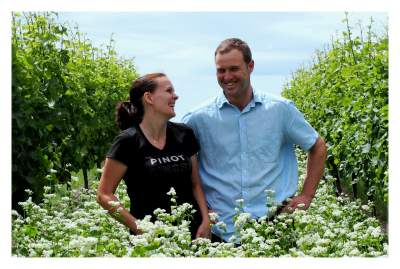
The Te Whare Ra or TWR Winery I had been stocking Te Whare Ra or TWR Pinot Noir for a few years and it had become – and still is – a firm favourite of many Pinot Noir aficionados with customer reviews like this “OMG! Superb, beautifully subtle” and many accolades for all its vintages. So when someone asked me to source some of TWR’s white wines, I did not hesitate to investigate. As luck would have it Anna Flowerday of TWR was in London just after that request and so I was able to catch up with her and try all TWR’s wines without having to go to Marlborough, New Zealand (much as I would have liked to!). Here’s me with the lovely Anna on the right. All (good) winemakers tend to talk enthusiastically about their wines but I was struck by Anna’s clear passion when she talked in detail about the vineyards and the whole wine-making process for the TWR wines. The Whare Ra or Te Whare Ra or TWR Wines at Wines With Attitude t was no surprise that the TWR white wines are of the same high quality and as delicious as the reds and so I added some to the portfolio and keep adding more: TWR Toru – a blend of three white grapes & a wine that Anna and husband Jason made “because we like drinking it” TWR Riesling D – D means dry in case you are wondering TWR Sauvignon Blanc – “a New Zealand Sauvignon for people who think they don’t like New Zealand Sauvignon” most recent addition, TWR Riesling M, a medium dry style of Riesling inspired by Mosel Rieslings and of course TWR Pinot Noir, a beautiful Pinot much loved by my customers. But more of the wines later. Firstly more about Anna and TWR… Te Whare Ra or TWR – small & family-owned Te Whare Ra pronounced Tea Far-ee Ra, is Maori for ‘House in the Sun’ and it is said to be “the oldest small winery in Marlborough”. It has been owned by Anna and her husband Jason since 2003 and it is based in the Renwick sub-region of Marlborough. Anna is from Australia and Jason is a local from Marlborough; after experience in the Australian wine industry they selected Te Whare Ra as the ideal place to produce their own organic wines. It obviously worked as they were named New Zealand ‘Winery of the Year’ in 2014 by the late New Zealand wine guru, Raymond Chan who wrote “I’ve come across very few winegrowers and winemakers who give so much thought to every aspect of the vineyard, winery, winemaking, how their wines show in stylistic and quality terms, and how the wines are presented in the marketplace, as Jason and Anna. This reflects their passion, enthusiasm, extremely high standards, hard work and attention to detail in creating and crafting wines that reflect their vineyard and region, and their guiding the wines sensitively so that they are expressed with great finesse.” TWR – MINIMAL INTERVENTION & CERTIFIED ORGANIC The The Whare Ra or TWR winery and vineyards is quite small, 11 hectares (c. 27 acres) and has some of the oldest vines in Marlborough planted there, seven varieties in total. It is certified organic with both organic and biodynamic practices being used throughout the vineyards. For the Sauvignon Blanc and Pinot Noir TWR grapes were supplemented by grapes from other Marlborough vineyards which if not yet organically certified, use the same practices as TWR. Note that the single vineyard wines come in the tall, long-necked Alsace-style bottles with the “Single Vineyard 5182” on the label, 5182 being the vineyard number designated by BioGro New Zealand. Environmental sustainability is at the heart of the TWR approach showing respect for and with the environment produces the best wines in the Flowerday’s view. Biodiversity is considered crucial to keep the vineyards healthy, for example buckwheat is planted between the vines to help keep pests away from the vines and grapes. All TWR grapes are hand-picked and hand-sorted. Yields are kept low and the wines are made with minimal intervention as the aim is to make wines that best express their origins. Don’t think this means they don’t pay much attention to the wines; on the contrary there is great attention to detail, whether it’s the use of different coopers for the barrels to have the right type of oak influence for the red wines or the berry selection to ensure the best grapes for all the wines. By the way, TWR prefer not to fine their wines where possible; this means that all the wines I stock are all suitable for vegans and vegetarians. TWR – WINE STYLE It is not the Te Whare Ra intention to follow the Marlborough crowd producing commercial-style wines. TWR wines are more about finesse and elegance with subtle richness, complexity and texture coming from their old vines and from lees contact rather than easy-to-drink wines that are full of ripe, tropical fruit flavours. These are wines consistently of great quality and balance. So back to the specific wines: TWR – THE WINES TWR Riesling ‘M’ – Frequently scoring in the nineties from New Zealand and other top wine judges, this medium Riesling is described as “dangerously drinkable”. The newest addition to the range it is a superb medium dry Riesling – citrus fruits, white peach & green tea. The sweetness is perfectly balanced by refreshing acidity. Especially good with hot Asian food. TWR Toru – a blend of three white grapes, Gewürztraminer, Riesling and Pinot Gris that grow together in a single vineyard – Toru means three in Maori. This is a wine that Anna and husband Jason made “because we like drinking it”. I really thought I was going to dislike it as the main grape, Gewürztraminer, can be over-powering but quite the opposite, I love it. It is light and very drinkable either on its own or with spicy food. At TWR three o’clock on Friday afternoon is now designated ‘Toru time’. TWR Pinot
Do old vines make better wines?
Do old vines make better wines? Chances are you will have seen the term “Old Vine” or one of its foreign equivalent terms such as “Vieilles Vignes”, “Alte Reben”, “Viñas Viejas”, “Vinhas Velhas” or “Antico Vitigno” on some wine labels. There is no requirement under any wine regulations that I know to mention the age of the vines used for wine grape production. Yet “old vine” is a term that seems to be used increasingly frequently and with the implication that old vine wine should be held in high esteem. In this wine blogpost, we will take a look at whether grapes from older vines really do make better wine. HOW OLD ARE OLD VINES? Here in the UK we have an amazing old vine at Hampton Court Palace. Planted in 1768 under Capability Brown’s direction, it is said to be the largest vine in the world but even at circa 250 years old, The Great Vine cannot claim that it is the oldest vine in the world as for a long time Georgia, Slovenia and Italy have claimed to have vines planted in the 17th century. Nor can it claim that its fruit is used for wine since it produces a table grape variety. In fact the 17th century has now been trumped as Weingut von Racknitz, a former monastery, in Germany claims to have a 600 year old vine found on an old abandoned terrace. It is hard to imagine when looking at a woody, gnarly old vine that it could produce good quality fruit or indeed any fruit but vines can still produce grapes when very old – those Georgian, Slovenian and Italian 17th century vines are said to be producing grapes still used for wine today. Good quality grapes are not a given however – according to the Old Vine Registry, of which more later, grapes from the 600 year-old German vine taste “terrible, like cucumber”. REGISTERING & DEFINING OLD VINES California started a register of its old vines in 2011; it is believed to have the highest number of old vines and ironically Prohibition played a major role in this as vines were simply abandoned at that time and later “rediscovered”. According to the Californian Historic Vineyard Society website “To qualify as a Certified Historic Vineyard, a vineyard must be a currently producing California wine vineyard with an original planting date at least 50 years ago, in which at least 1/3 of existing producing vines can be traced back to their original planting date.” Over in Australia, the Barossa Valley is proud to have some of the oldest continuously-producing vineyards in the world. It is one of the few wine regions that avoided the phylloxera aphid which is the reason why most of the world’s vines are now grafted onto phylloxera-resistant rootstocks. Understandably keen to protect its precious ungrafted old vines especially after many were uprooted in the 1980s it saw what California was doing and started its own register of old vines. Australia’s Old Vine Charter categorises the old vines further according to their age: Barossa Old Vine – Equal or greater than 35 years of age like the one to the right Barossa Survivor Vine – Equal or greater than 70 years of age Barossa Centenarian Vine – Equal or greater than 100 years of age Barossa Ancestor Vine – Equal or greater than 125+ years of age South Africa in fact has the oldest records of old vines dating back to 1900, a database run by the South African Wine Industry Information Systems (SAWIS). Since I first published a blogpost on this subject in 2017, South Africa’s Old Vine Project, set up in 2002 by viticulturalist Rosa Kruger, launched a Certified Heritage Vineyard seal which certifies that a wine is made from vines of 35 years and older. But producers don’t necessarily always put the seal on their bottles. Conversely some wine producers don’t wait until a vine is 35 or 50 years old before labelling it an old vine; since there is no legal definition of the term ‘old vine’, it is very much a matter of personal preference or perhaps more of marketing preference but as old vine wines are generally and increasingly revered, the term old vine can be misleading. However we are beginning to see some signs of conformity in the registering and defining of the term ‘old vines’… The most significant step in coming up with a worldwide recognised age for old vines since my last update is the 2023 launch of the online registry of old vines that was initiated on a spreadsheet in 2010 by Jancis Robinson’s Purple Pages. Now maintained by the Old Vine Conference, a non-profit organisation that aims to highlight the value of old-vine vineyards and make them economically viable, The Old Vine Registry is still very much a work in progress but is already the most comprehensive online database of old vines worldwide. You can search by country or by age and there are links to the vineyard owners’ websites. The ultimate aim is to also provide links so consumers can see where to find a particular vineyard’s wines. But, as mentioned, it is an on-going project and, since few countries have detailed records like South Africa, sometimes an estimation of age is all that is possible. NEW VINES OR OLD VINES – WHICH ARE BETTER? New vines take time to establish themselves; they don’t tend to produce many grapes until year three first concentrating on establishing their root structure and a sturdy trunk. It is usually only by year five or six that the grapes are of use for commercial wine production. After that the vine’s growth below and above ground is more balanced. As it ages further the vine’s growth becomes less vigorous and as a result fewer grapes are produced; this reduction in yield starts as early as the age of 20 years old. This reduction in yield is in fact the very reason why older vines are sometimes ripped
All about ice wine or Eiswein
All about ice wine or Eiswein You may have heard of ice wine (also known as Eiswein or icewine) but you will be excused if you don’t know much about it because ice wine is quite rare and also expensive – but it is also a beautiful wine so if you get chance give it a try. But before you do, read all you need to know about ice wine. This blogpost looks at what ice wine is, where and how ice wine is produced, how ice wine tastes and which foods are the perfect match with ice wine. THE FIRST FEMALE WINEMAKER Ice wine is a sweet wine so usually consumed as dessert wine. It differs from other sweet or dessert wines for which grapes are dried, raisined or infected with the botrytis fungus that causes noble rot. For ice wine only healthy grapes are used; they are left on the vine until they are frozen. The temperature of the grapes must be as low as -7 to -8 °C before they can be picked. Ice wine differs from fortified wines like port which have spirits added to fortify them. In fact the alcohol level or ABV of ice wines is only about 10%. HOW IS ICE WINE PRODUCED? Harvest is usually very early in the morning to keep the grapes frozen and by hand. Usually harvesting is in November or December – sometimes later although ice wine produced from grapes picked early in the year are generally considered to be inferior. The grapes are then pressed whilst frozen so that the frozen water from the grapes is removed and just the sweet juice is used for the wine. This makes for concentrated, naturally sweet wines. In addition and less commonly known is that the acidity in the grapes is also intensified meaning that the sweetness of the wine is or should be balanced with refreshing acidity. In fermentation yeasts convert as much sugar as they can into alcohol. You might think therefore that the alcohol level for such sweet wine would be high but yeasts struggle to function in low alcohol environments and it therefore takes a few months for fermentation to complete and then not all the sugar is consumed and any remaining yeast has to be filtered out. Levels of residual sugar in ice wines fall in the range of 160 – 220 gram per litre which compares to less than 1 gram per litre in many still dry wines. Ice wine or eiswein is not produced every year – the winter obviously has to be cold enough for the grapes to freeze to the required temperature before picking. Global warming is a concern to winemakers especially in Austria and Germany where the frequency of eiswein production is diminishing. In the 10 years to 2018 for example there were 5 eiswein harvests classified as good in Austria, one vintage classified as little and 4 as very little or hardly any eiswein. In the 10 years before that there were 3 classified as top vintages, 5 good and 3 with very little or hardly any. WHERE IS ICE WINE MADE? Ice wine can be produced made anywhere cold enough to allow the grapes to freeze on the vine but traditionally they have been produced mainly in Germany, Austria and Canada (it is known as eiswein in Germany and Austria and icewine in Canada). The main difference between production in Canada compared to Germany & Austria is that the levels of sugar in the grapes prior to harvest must be higher in Canada. WHICH GRAPES ARE IN ICE WINE? In theory any grape varieties could be used to produce ice wine but in practice ice wine grapes tend to be aromatic and cool climate varieties like Riesling, Grüner Veltliner, Gewürztraminer and Chenin Blanc . Most frequently white grapes are used but you will see icewine produced from black grapes especially from Cabernet Franc in Canada. My own current favourite is made in Austria from black indigenous variety Zweigelt also known as Blauen Zweigelt. The wine itself is a very pale pink colour. Ice wines are generally pure varietals, i.e. not blends and in Canada they must be pure varietals to be designated as icewine. WHY ARE ICE WINES EXPENSIVE? Sadly ice wines are expensive but as you can imagine this is mainly because they cost so much to make plus you need five times as many grapes to produce a bottle of ice wine as you do to produce a bottle of still wine. You may see cheaper versions of ice wine but these will usually be labelled as dessert wine or as iced wine and they will have been produced from grapes artificially frozen in the winery and or with sweet reserve added to the wine. You get what you pay for as they say. HOW LONG WILL ICE WINE KEEP? Generally genuine ice wines will keep about 10 years though some will keep longer; bear in mind that the flavours and aromas will change as the years go by. Once opened however your bottle of ice wine should be consumed within a week or so using a wine pump in between – unless you have a Coravin of course. WHAT DOES ICE WINE TASTE LIKE? Ice wines are medium to full-bodied and very smooth in texture. Because they’re made from aromatic varieties generally the taste will be fairly typical of the grape variety but with more intensity. For white ice wines flavours tend towards apricot, peach, pear, pineapple and lemon with honey whilst red ice wines will taste of cherries, red berries and spice. All good ice wine will have mouth watering acidity so that even though sweet the wines don’t taste sickly sweet. If you do keep your ice wine for a few years before opening, it will be darker in colour and richer and nuttier in flavour plus the acidity may fade a little so the sweetness will be magnified. My preference is
Biodynamic wine: is it better for you?
Biodynamic wine: is it better for you? Biodynamic wine remains an enigma to many people and not therefore a priority for most people when shopping for wine. This guide to biodynamic wine explains what biodynamics mean in terms of wine, how you can tell if a wine is biodynamic or not, what the differences are between organic and biodynamic wine and whether biodynamic wines are better for you. I touched upon the subject of biodynamic wine in my blogpost on organic wine and once you throw the term “natural wine” into the equation things become even more confusing. The three terms are sometimes used interchangeably but they are not the same thing. Natural wine is still trying to secure a common identity and remains a somewhat confusing and controversial term. Organic wine is becoming increasingly popular in the UK as people look for healthier food and drink but biodynamic wine seems to be a mystery with a rather wacky reputation. Let’s see why… WHAT IS BIODYNAMICS? In the most simplistic terms biodynamics is farming without the use of any chemicals and taking a holistic approach by treating the farm or vineyard as one ecosystem. This approach is believed to reduce the carbon footprint and to improve the health of the soil. The rhythm and cycles of the moon, sun, earth, stars and planets may also be taken into account which is where biodynamics’ wacky reputation comes into play. Biodynamics advocates claim it to be the world’s oldest system of organic growing but it was labelled biodynamics only in 1924 by Austrian philosopher and scientist, Rudolf Steiner. Considered the father of biodynamics, Steiner was concerned about the increasing use of synthetic fertilisers and mass farming techniques and lectured farmers about more sustainable agricultural methods which were subsequently researched and developed further. BIODYNAMICS & WINE In the wine world a biodynamic vineyard is treated as one living organism, taking into account the interdependence of all parts of the immediate environment, and it should be self-sustainable and self-supporting. To achieve biodynamically grown grapes, practices in the vineyard may include the following: biodiversity via: livestock which are allowed to roam to graze on cover crops between the vines and assist with natural compost production and cover crops growing between the vines stop weeds and when turned over into the soil help to build up nutrients, break up compacted soil and encourage insects biodynamic compost to encourage microbial diversity and to release carbon planting and harvesting according to biodynamic calendars though this is not mandatory for certification biodynamic preparations including: worm tea instead of chemical insecticide and soil treatments such as cow manure inside cow horns or intestines buried in the soil for several months in order to promote healthy plant growth. These treatments are perhaps also partly to blame for the controversy around biodynamics. WHAT IS BIODYNAMIC WINE? It is important however to differentiate between biodynamic wine and wine made from biodynamically grown grapes. Wine labelled as “wine made from biodynamic grapes” may not be biodynamic wine. How so? The biodynamic practices required in the production of wine made from biodynamic grapes are limited to the vineyard but the winemaker will have more freedom in what he or she can add to, or take out of, the wine during the wine production process. For example they may choose to add bought in yeast rather than using the winery’s naturally occurring yeasts. A truly biologically dynamic wine must be produced from biodynamic grapes AND follow strict regulations dictating the production of the wine in the winery. This effectively means that no artificial agents are permitted during the wine-making process. Using the above example a biodynamic wine can only be fermented with yeasts existing naturally in the winery. Even in organic wine production additional synthetic or natural substances can be used including: sulphites or sulfites – up to certain limits synthetic malolactic bacteria to aid malolactic fermentation additional yeast sweeteners fining agents Biodynamic producers may also use the following practices: leaving the wine unfiltered bottling wine according to biodynamic calendars using solar or wind energy generated in the vineyards. DIFFERENCES BETWEEN BIODYNAMIC & ORGANIC WINE Both biodynamic and organic wines have to be produced without the use of synthetic pesticides and chemical treatments in the vineyard but biodynamics goes further and, as mentioned above, has strict regulations about what can and can’t be done in the winery. The official requirements for all biodynamic food and drink, according to biodynamic association Demeter, “go above and beyond EU organic regulations … They not only exclude the use of synthetic fertilisers and chemical plant protection agents in agricultural crop production, and artificial additives during processing, but also require licensees to proactively take specific measures to strengthen the life processes in soil and in food.” By this definition therefore biodynamic wine should contain no artificial substances – in theory. But when you dig down into the Demeter standards there are exceptions to the rules. For example, under certain conditions when a fermentation is stuck, bought-in yeast is allowed; sulphites can be added and, perhaps more surprisingly given its toxicity and the biodynamic focus on healthy soils, copper is also permitted. Bordeaux mixture is a copper sulphate and lime-based treatment that has been used for over 120 years to control downy mildew. The amounts of these substances and when they can be used are however strictly limited and in fact the EU has recently reduced the maximum permitted copper levels by a third. This may lead to a number of producers losing organic and or biodynamic certification until a natural alternative to Bordeaux mixture is found. Despite these exceptions I think it is fair to say that biodynamic wine will generally have lower levels of artificial additives than organic wine – and that organic wine will have lower levels than non-organic wine. HOW TO FIND BIODYNAMIC WINES Biodynamic wines should be easily identifiable; look for the Demeter logo – often orange in colour or adapted as below on the label for Reyneke’s Reserve Cabernet
Best BBQ wines
Best Barbecue Wines Sometimes the sun does not really show its face much in the UK in the summer. But when things do warm up it’s time to stoke up the barbecue and invite friends round for a long-awaited catch-up. Rather than the relaxed affairs that they should be, barbecues can sometimes be hard work for the hosts especially if you are trying to prepare something a little out of the ordinary and for a large number of guests. So to give you one less thing to worry about and to save you time I’ve come up with some tips on the best wines to serve with BBQ food. Plus, at the special request of one customer, I’m republishing my easy, time-saving but delicious spicy lamb recipe that you can leave on the heat without too much intervention to give you time to chat with your guests – and to enjoy a nice glass of wine. Wine types to drink with barbecued food Some foods can be difficult to match with wine and smoky or char-grilled flavours mean that barbecued dishes fit that category. In addition we have a tendency to marinate foods for the BBQ in all sorts of sauces and spices, never mind the dressings and dips on the side that we tend to eat with our barbecued meat, fish and vegetables, so there are many flavours on the plate fighting for the attention of your tastebuds. I’m not talking about finding the perfect wine match for BBQs as that would be impossible but I’m making a number of suggestions of wines that won’t be hidden behind the smoke, (hopefully!) gentle charring and the myriad of food flavours. So in general… barbecued food requires wines with intensity so that the wine is not overwhelmed. Let’s take a look at some suggestions for red, white and rosé wines that would work well with barbecued food. RED WINES FOR THE BBQ Good-all-rounder red wines for the barbecue are Malbec like Pyros Appellation Malbec or, for something really special, Bodega Noemia’s A Lisa and Shiraz. For example you could try this spicy Australian Shiraz from First Drop or John Duval’s amazing Barossa Shiraz blend, Plexus. Wines produced from either of these grapes usually have the body, complexity, sweet fruit and spice to cope with highly flavoured food. Read more about Malbec in my Guide to the Malbec grape & wines and for Shiraz, turn to my Guide to Syrah or Shiraz. Or for something similar but less known, why not try a Carmenère from Chile? Make sure this style of wine is not too tannic though as it might clash with fatty meats and sauces. Find out more about Carmenère in Carmenère: Chile’s signature grape and wine. And if you prefer a lighter red wine in the summer, the fruity freshness of a cru Beaujolais like Juliénas or Fleurie would help counter any searing and cut through any fat in the meats. Plus lighter reds like Beaujolais would be better than heavier, more tannic reds, with fish and plant-based dishes. You could also serve the Beaujolais slightly chilled – and if it is a hot day, keep all wines, red, white and rosé, out of the sunshine and heat to keep them fresh. You can find out more about this lovely style of wine in my Beaujolais blogpost. WHITE WINES FOR THE BBQ Many people prefer to drink chilled white wine at a barbecue party especially if the weather is warm and are often tempted by the crispest, driest white wines. However hot spicy rubs can however clash with the razor-sharp acidity of most crisp dry white wines. In order to match the intensity of flavours, others might choose an oaky Chardonnay but the buttery richness is not an ideal style for a sunny day and the oaky flavours can intensify if the wine is consumed with vinegary dressings or marinades. The best white wines to drink at a barbecue therefore are somewhere in the middle of these two styles. Aromatic white wines that combine fresh crispness with intense fruity flavours make better bedfellows with barbecued food so try something like a Picpoul or a fruity Marlborough Sauvignon Blanc as long as it’s not too astringent or a peachy but fresh Albariño. Whichever you choose, keep the white wine chilled but not too cold otherwise you risk masking its lovely fruity flavours. ROSÉ WINES FOR THE BBQ Rosé would make a good all-rounder wine to drink at your bbq. But, rather than the lighter (in colour and style) Provence rosés that most people prefer these days, try to find a rosé that has a bit more body and intensity produced from the Gamay or Pinot Noir grapes like this English rosé wine for example. This style of rosé would work especially well with barbecued vegetable dishes as the extra weight of the wine can handle the smoky food flavours whilst the crispness will allow the vegetable flavours to come through. Alternatively consider serving a sparkling rosé wine or champagne. AN EASY BUT DELICIOUS BBQ LAMB RECIPE To help you chill out at your barbecue this summer I am sharing with you one of my favourite recipes – it’s very easy, I promise. BARBECUED LAMB WITH MERGUEZ SPICES I have adapted a fabulous River Cottage recipe for use on the barbecue – it makes a great change from standard barbecue fare. All credit to River Cottage for the original recipe: I suggest one medium shoulder or leg of lamb (c. 2kg in weight) scored and with excess fat removed. You will need sufficient charcoal on the barbecue to keep the meat cooking for two to three hours. The spice paste consists: 1 tsp cumin seeds 1 tsp coriander seeds 1 tsp fennel seeds ½ cinnamon stick, broken up 1 tsp black peppercorns A pinch of cayenne pepper or chilli powder 2 tsp sweet smoked paprika 2 garlic cloves, finely chopped Leaves from 2 large rosemary sprigs, finely chopped 2 tsp sea salt 2 tsp olive oil Crush
Discover the Best Beaujolais Wines
Beaujolais – the ultimate fruity red wine The very name “Beaujolais” often sends a shudder down the spine if, like me, you have memories of Beaujolais Nouveau tasting like fiercely dry Ribena with bubblegum and bananas served early on the third Thursday in November just 8 weeks or so after the grapes have been harvested. It was in my view the Beaujolais Nouveau hoo-ha that was responsible for Beaujolais wines falling out of fashion in the UK; as their popularity grew, their quality in general suffered. The good news is that there is so much more to Beaujolais than Beaujolais Nouveau and it is possible to find superb wines in the Beaujolais region – and they are slowly but surely becoming fashionable again here in the UK. Read on to find out more about the wines of Beaujolais, how they are made, what they taste like and where to find the best Beaujolais fruity red wines. 92% of wine produced in the Beaujolais region is red; you might therefore think that the white wines are not worth a mention but I write a little about them at the end of this article as I think they can be worth seeking out. For now… the fruity red wines of Beaujolais… HOW BEAUJOLAIS FRUITY RED WINES ARE PRODUCED Beaujolais wines are quintessentially light-bodied, perfumed, fruity wines that tend to be fresh (high in mouth-watering acidity) and relatively low in alcohol (11-13% ABV). The red wines are produced 100% from the Gamay grape, a notoriously tricky grape to manage since it grows very vigourously; there is a lot of work involved to keep yields low for the better wines of the region. Most Beaujolais wines undergo a process called semi-carbonic maceration; this is not unique to the region but Beaujolais wines are those that are most associated with the process. In summary, the grapes are not initially crushed in a press but pressure from the bunches of grapes on top of each other in huge tanks squeezes out juice. Fermentation of this juice is initiated by indigenous yeast on the grape skins and carbon dioxide that is produced as a result then triggers fermentation inside the uncrushed grapes which start to burst open. Beaujolais Nouveau (and some Beaujolais AC wine) goes one step further with full carbonic maceration where the tanks are filled with CO2 gas to trigger the intra-grape or intracellular fermentation. Both these processes enhance the fruity flavours and aromas, extract colour from the skins without extracting too much tannin and produce wines that are ready to drink much more quickly than usual. If these wines see any oak, and some of the crus in particular will, maturation will be in large used barrels for just a few months to soften the wine and add some texture rather than to impart oak, vanilla and toast flavours which would mask the fruity characteristics of the wine. THE DIFFERENT TYPES OF BEAUJOLAIS WINE The Beaujolais region which extends from Mâcon on the southern edge of the Burgundy wine region further south almost to Lyons is made up of 12 appellations. And, as you might expect, there is a Beaujolais wine hierarchy. There are 12 appellations (or PDOs) in Beaujolais: THE BEAUJOLAIS CRUS At the top of the scale are the 10 crus (cru here meaning a wine producing area rather than a single vineyard); these are the smallest regions with their own specific appellations (ACs) and therefore their own specific regulations. They are situated on the slopes of the foothills to the North of and with the best granite soils in the region. Maximum permitted yields for all the cru wines are the lowest of the whole Beaujolais region at 48 hectolitres per hectare though in reality they tend to be produced at yields closer to 40hl/ha (I shall cover yields in a later blog). The 10 crus which together produce about one third of all Beaujolais wines are: Brouilly, Côte de Brouilly, Chéneas, Chiroubles, Fleurie, Juliénas, Morgon, Moulin à Vent, Régnié and Saint-Amour You will often just see the name of the cru on the label; Beaujolais need not be mentioned at all. The Beaujolais crus are the least like what most people expect a Beaujolais wine to be like since they tend to be darker in colour, with a fuller body and a more silky texture, more intense and complex aromas and flavours – and they will generally keep for a few years. They are similar in style to red Burgundy which is of course the wine region just to the North of the crus. But each cru differs in character from the next. For example: Brouilly, the largest of the crus, produces wines that tend to be deep ruby in colour, elegant, slightly lighter but complex wines with soft tannins and red fruit flavours (plum, strawberry and redcurrant) and mineral notes Juliénas is noted for its richness, spice and floral aromas. It is one of the darkest in colour and its aromas and flavours are still fruity – sweet cranberry, redcurrant, raspberry and even strawberry – with hints of cinnamon, violet and peony. Morgon is more garnet in colour and is considered one of the more robust crus as it has a bit of structure. But don’t think Morgon is “rustic”; it is still pretty elegant and silky just a little earthier like a Rhône red wine. Its aroma- and flavour-profile includes ripe cherry, ripe plum, kirsch, violet and liquorice. It is one of the most age-worthy crus. Fleurie is more crimson red in colour, a little floral and fruity on the nose – violet, even rose with red fruits and peach, and it is considered to be one of the more refined styles of Beaujolais crus The cru appellations only cover red wines. In fact only Brouilly permits white grapes to be grown in the region but the white wines made there cannot be labelled Brouilly AC but Beaujolais Villages AC Blanc or Beaujolais AC
Wine Competitions, medals & awards
Wine Competitions, medals & awards You will have seen numerous wine bottles on supermarket or wine shop shelves with shiny stickers indicating that the wines have won a medal or award in one of the many wine competitions. The question is, should you buy a wine based on a wine competition, medals and awards or ignore the award winning wines placed in prime eye-line position especially given the criticism of even the most prestigious wine competitions? Are the wines without stickers worse than, as good as or maybe even better than the wine medal winners? Join me as I delve into the wine judging process, the judges, what exactly is being judged in a wine and the frequent criticism of wine competitions. WINE COMPETITIONS There are many, many wine competitions. The best known in the UK are the large international competitions like the International Wine Challenge (“IWC”), Decanter World Wine Awards and the International Wine & Spirit Competition (“IWSC”). I confess upfront that I have been a judge for the IWSC several times, qualifying to do so because of my attaining the Diploma in Wines and Spirits from the Wine & Spirits Education Trust. Other prestigious wine competitions include the Concours Mondial de Bruxelles, the Concours General Agricole de Paris and Mundus Vini and there are scores of other wine competitions with a local or themed focus like the New Zealand Wine of the Year Awards, the Brazil Wine Challenge and Concours Mondial des Féminalise in which the judges are all women. The goal for a winemaker entering any of these competitions is a shiny sticker to be displayed on the bottle representing the (usually) gold, silver or bronze medal it has been awarded or the commendation it has received if it didn’t quite make the medal table. Of course I am being flippant because that shiny sticker brings with it prestige, attention from consumers in a very crowded market place, attention in the press and perhaps even representation if they don’t already have someone in the big wine-consuming countries importing and promoting their wines. JUDGING WINE – THE JUDGES In the best competitions wines are tasted blind by a panel of judges from wine industry experts. One notable exception is the People’s Choice Drinks Awards, launched in 2017, which includes keen wine enthusiasts in the first round of judging. In the case of the IWSC, panels consist of five to seven expert judges, two to four of whom might be Masters of Wine who ought to know a good wine when they taste one. Using a panel ensures that medals are not decided based solely on one opinion but on a majority view. After tasting the wines initially without discussion, each judge usually writes a few notes and scores each wine, after which they join in a discussion of the merits or failings of each wine; sometimes, to save time, only the wines that have a large divergence in scores are discussed. In my experience there are few disagreements and where there are, this is usually only a difference of a few points e.g. between a silver and a bronze medal rather between a gold medal and a non-medal position. The process can give rise to some healthy debate. Any samples where a decision cannot be reached are put before another panel or a committee of judges. And, to make sure they themselves are not entirely out of kilter, the judges for the IWSC have their scores and comments monitored. Judging the judges if you will. What’s in it for the judges? Most wine competitions don’t pay the judges so they generally are doing it for their love of wine; I find judging gives me some good wine tasting experience and it’s an excellent opportunity to meet some great characters from the international wine world. JUDGING WINE – THE PROCESS At the IWSC each panel of judges tastes circa 60 to 100 wines per day; in some other competitions it can be as many as 200 per day. The use of spittoons is therefore essential! Wines are usually served in small groups or ‘flights’ of up to circa 15 wines with a common theme which is usually known to the judges e.g. wines from the same region or wines of a similar style. Having a common theme is useful for comparison purposes. In some competitions judges know the price of the wines; personally I prefer not to know this as I think it can subconsciously affect the scoring. The location of the competitions varies but all should be held in venues with neutral smells (similarly judges are asked not to wear strong-smelling scent). Natural light and a white table (or piece of paper) are required to make an assessment of the colour of the wine. Talking of colour, it may surprise you to know that white wines are often tasted after reds, rather than before. This is because white wines can liven up a palate that is a bit jaded after tasting a large number of red wines. Sparkling wine has the same effect so these often also come after the reds. Read what the colour of a wine can tell you about the wine. What is more important in the order of wines, is that heavier, more intense reds come after lighter reds as they could mask the more delicate features of the wine and similarly oaky white wines are tasted after lighter whites. What is essential is that sweet wines are tasted after everything else as sweet wines can really alter the taste and mouthfeel of dry wines. IN WINE COMPETITIONS, WHAT EXACTLY IS BEING JUDGED? Which brings me to what judges are actually judging. In most wine competitions, judges are not expressing a preference for a certain taste or style of wine but evaluating the quality of the wine based on its appearance, aromas, palate, body, balance, complexity and any wine judge should be worthy enough of making such a judgement. The IWC
All about the Pinot Noir grape & its wines
The Pinot Noir grape & its wines Writing my wine blog post A Quick Guide to New Zealand’s Wines made my mouth water for Pinot Noir so I thought I would pour myself a glass and write about this tricky grape and its amazing wines. Pinot Noir was a very unfashionable wine for many years when the market favoured bigger, brasher and more alcoholic styles of wine but since the early noughties it has become more in vogue, helped to an extent by the 2004 film “Sideways” starring Paul Giamatti. Whilst his character’s obsession with Pinot Noir was somewhat OTT, there is no doubt that once a Pinot Noir fan, there is no going back because there is little that compares with Pinot Noir’s combination of complexity, silky texture and light elegance. These characteristics are part of the reason that Pinot Noir is a safe bet to give as a gift or to take to a dinner party. Admittedly it can be expensive but it is usually worth it. Let’s take a look at the Pinot Noir grape and its wines, which foods pair well with Pinot Noir and why Pinot Noir tends to be expensive. FEATURES OF THE PINOT NOIR GRAPE – The home of this grape is thought by most to be Burgundy in France though some argue Germany and even further afield. The lighter bodied red wines produced in Burgundy are considered the epitome of Pinot Noir as this grape reflects well the differences in terroir of that region. However it is also grown in the USA, New Zealand, Germany, South America and Switzerland to name but a few Pinot Noir-producing countries. Most of these have tried for years to emulate Burgundy’s red wine style and its success – and many producers are succeeding. – Pinot Noir is also seen in some rosé wines and it is one of the black grapes permitted in Champagne and consequently it is seen in many sparkling wines made in the champagne style. – Long considered to prefer a cool climate, the Pinot Noir grape is being grown increasingly in warmer climate areas. Due to its thin skin it dislikes the frost and ripening too quickly so it won’t respond well anywhere that’s too cold or too warm. If it’s too hot there’s a risk of the fruit flavours becoming jammy. And if it’s too wet, the grape is susceptible to all sorts of moulds and diseases so nowhere too rainy. Well, I did describe Pinot Noir as a tricky grape. – Whether this long-standing reputation is fair, Pinot Noir does require more than a little TLC in the vineyard and subsequently in the winery, whether grown in a warm or cool climate region. Therefore it tends not to be seen so much in commercial style, entry level wines (though there are some so the “better value” examples are best avoided if you want to try a good Pinot). – Pinot Noir is also known as Spätburgunder, Blauburgunder, Savagnin Noir or Pinot Nero, amongst many other synonyms. It has a tendency to mutate so there are many recognised clones of the grape – over 1000 – and this means that there are differences in leaf shape, berry size, berry colour etc and different clones grow better in different places. – As might be expected, Pinot Noir is related to the other Pinots, Pinot Gris, Pinot Blanc and Pinot Meunier. In fact current thinking is that these are all mutations or clones of the same grape. FEATURES OF PINOT NOIR WINE Despite the red Burgundy style being the holy grail, not all Pinots are the same due to the many differences in clones, growing techniques, terroir, vintages and wine-making techniques. But generally you can expect your Pinot Noir to be: Light & translucent red in colour Light in body Low in tannins Pretty high in acidity which makes them lovely and refreshing Perfumed or fragrant Complex in its aromas and flavours A varietal wine i.e. 100% Pinot Noir as it is rarely blended with other grapes Smooth with a silky texture Aged in oak, usually, although the oak will often be used rather than new so that it does not overpower the fruit flavours and aromas Age-worthy; good Pinot Noir should keep for c. 10 years and improve with age in that time As a general rule for Pinot Noir’s profile: Cool climate Pinots are usually lighter, more elegant and flavours a little more herbaceous and earthy so expect mushroom, truffles, sharp cranberry, raspberry and sour to sweet cherries. Some also show floral aromas like violet and rose Warmer climate Pinots are a bit bigger, richer and fruitier with riper raspberry, strawberry, black cherry and ripe plum with spice, liquorice and gamey aromas. Again as a general rule, Burgundy, German, Swiss and Oregon Pinot Noirs fit the cool climate profile whilst Central Otago, South American and Californian Pinots are closer to the warm climate profile; other New Zealand Pinots fall somewhere between the two. To compare different styles why not try my Pinot Noir mixed case or add some of my Pinot Noir wines to a mixed case of your own. By way of guidance my current Pinots (many of which are pictured above) increase in intensity from on the left: the light and fruity Pinots from Andreas Bender in Germany and Tracy et Cie in the Loire Valley a truly cool climate organic Pinot from Patagonia that is complex and silky smooth the light and elegant TWR Marlborough Pinot Noir the great value single vineyard Burgundy from Domaine Bachey-Legros Pegasus Bay’s Pinot Noir which has become more Burgundian and more elegant over the years and regularly achieves a number of amazing scores from wine critics the more intense but still velvety smooth Californian Masut Pinot Noir WHY IS GOOD PINOT NOIR EXPENSIVE? As already mentioned Pinot Noir is considered a difficult grape to grow Because the grape is so picky about its growing conditions it cannot be grown everywhere, meaning it has rarity value Pinot Noir’s yields are low even in warm climate
7 tips for buying wine online
7 tips for buying wine online We read frequent reports about how e-commerce in the UK is growing and that includes a trend amongst time-pressed wine lovers towards buying wine online. But there are some things to be aware of when looking at wine e-commerce and I don’t mean in this instance the large scale wine investment scams – I will write about wine fraud at a later date. I’m writing here about little tactics that wine retailers use online – and sometimes in store – to persuade you to buy their wines. I see these “tricks” used over and over again as I research wines for my website and look into the competition and they make my blood boil. At best, these practices are deceitful and dishonest. So if you are buying wine online make sure you follow the steps below. COMPARE CHABLIS PREMIER CRU WITH CHABLIS PREMIER CRU I don’t know why but some people seem to delight in telling me that they have found one of my wines cheaper somewhere else. Let’s set aside the fact that I don’t aim and can’t afford to be the cheapest in the market given that Wines With Attitude is a small but niche company that prides itself on its excellent customer service rather than on bargain basement prices (read the testimonials to see what customers think). What I usually find when I follow up on these claims is that the wines are simply not the same wines at all. When buying wine online, make sure you compare apples with apples – or Chablis Premier Cru with Chablis Premier Cru. Recently Reyneke Reserve Cabernet Sauvignon was on a price comparison site with Reyneke Reserve Red; they are both red wines, both made by the fabulous South African producer, Reyneke, but completely different wines produced in different ways from different grapes and as a result in different price brackets. One region that can cause a lot of confusion in this respect is Burgundy. All Burgundy white wines are 100% Chardonnay but they can vary in quality depending for example whether they are “basic” Burgundy, village wines or single vineyard premier cru wines and depending on the producer (read my blog on Burgundy for more detail). In terms of the producer, there is confusion because of the way that the Burgundian vineyards have been split up over time under the Napoleonic Code and so you may find more than one producer of what looks like the same wine as it is from the same wider vineyard e.g. Chablis Premier Cru Montmains is a vineyard split into different parcels owned by different producers. I stock one from Jean-Marc Brocard. Some names are just confusing and, in this instance, I don’t think there is always an intention to confuse the wine consumer. For example I have seen Eperosa’s Stonegarden Grenache (out of stock) on sale outside the UK as Eperosa Stonegarden but there is also an Eperosa Stonegarden Shiraz. Stonegarden is the name of a single vineyard but the vineyard contains Grenache and Shiraz (and Mataro or Malbec) but the two wines mentioned are very different. These are just a few examples – rule 1 is to make sure you know exactly what it is you are buying. Of course all the detail about the wine should be explained in the description of the product. Read the tasting notes when buying wine online … if there any and perhaps read them with a pinch of salt. Many wine retailers – and I mean MANY – simply put the wine producer’s wine tasting notes on their website or shelf. Nothing wrong with that perhaps but very often they are not labelled as the producer’s description and to be very honest some of them are a bit wishy washy and vague, others frankly quite weird. Here’s an example of a wine description from a fairly well-known brand, see what you think… “The ‘I’m so famous that there are children named after me’ wine. The wine that has the perfect mix of tropical fruit and spicy oak flavours that had the country in a frenzy longer than it takes to find the perfect LBD.” Some retailers pinch their wine descriptions from other merchants – I have had this happen to me several times. I was told by one of these retailers that I should be flattered; however they are profiting from my hard work and it can take a long time to put the tasting notes together. Grrr! And perhaps worst of all are the wine merchants who don’t include any description of the wine – now I will admit that sometimes my wine tasting notes are a little late to the website and sometimes my descriptions can be a bit wordy but since you can’t taste or smell the wine before buying it I figure that I should try to describe it as best I can. But really, no description at all?? Sadly I see this on a lot of wine websites. CHECK YOUR DATES When buying wine online, make sure the wine on sale is from the vintage that you are looking for because for most decent wines from most wine-producing regions there will be vintage variation. This is why I don’t automatically stock the next vintage of my wines. I will only add them if I have checked them out first to make sure they are as good as or better than the previous year. Not all wine companies do this. Worse though are the websites that don’t tell you the vintage at all, though fortunately they are few and far between. CHECK THE NUMBERS What I mean here is make sure that any validations of the wine are valid. I see this ruse too frequently. Putting a 95+ Parker Point rating or a Platinum medal from X or Y competition into a wine description can help sell wine. But sometimes when you dig deeper, you find out that the 95+ rating or platinum medal
Guide to Cabernet Franc & its wines
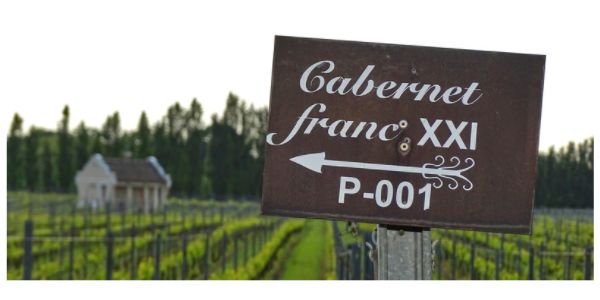
Guide to Cabernet Franc & its wines A guide to the Cabernet Franc grape and where it is grown, the characteristics of Cabernet Franc wine and what it tastes like plus what to eat with Cabernet Franc. Despite being in the 20 most planted grapes in the world, Cabernet Franc is not necessarily one of those grapes that you look for when choosing wine. It tends to keep a low profile – more of a bridesmaid than the bride. But, for years overshadowed particularly by Cabernet Sauvignon, Cabernet Franc is reckoned to be on the upward trend. CABERNET FRANC GRAPE CHARACTERISTICS Black grape variety Cabernet Franc is a bit of a workhorse, more often seen as a support grape to Cabernet Sauvignon and Merlot and, since it ripens earlier, it is used as an insurance should those grapes not have chance to ripen fully due to poor weather. Having said that, Cabernet Franc needs a lot of sunshine to ripen and lose some of its naturally high acidity, otherwise it can taste rather green and stalky. It is rather like Cabernet Sauvignon but lighter and less tannic. The reason for the similarity to Cabernet Sauvignon is that Cabernet Franc and Cabernet Sauvignon are in fact related though it was only about 25 years ago that DNA profiling confirmed Cabernet Franc to be a parent to Cabernet Sauvignon (the other being Sauvignon Blanc). A fruity little number in more ways than one, Cabernet Franc has also been discovered to be a parent to Merlot and to Carmenère. Note Cabernet Franc is also known as Bouchet, Bordo, Breton and Cabernet Frank. Italian wines labelled Cabernet are usually Cabernet Franc. WHERE CABERNET FRANC IS PRODUCED Many Bordeaux wines have Cabernet Franc as a minority grape in the blend. The notable exception is St Emilion and the other right bank appellation, Castillon Côtes de Bordeaux, where it is given more prominence; in fact, the renowned St Emilion Grand Cru, Château Cheval-Blanc, instead of having Merlot as its majority grape, has c. 60% Cabernet Franc and is considered by some to be the finest wine of the Bordeaux region. Aside from Bordeaux, Cabernet Franc has long been seen as a varietal in the red wines of Touraine in the Loire Valley, wines such as Chinon and Bourgeuil, and of Saumur also in the Loire. In total France accounts for c. 58% of global Cabernet Franc production. Perhaps surprisingly Brazil is second in terms of volume at 12% with Italy third at 10%; the cooler areas in the north-east, Friuli and Veneto, see most of the plantings in Italy. There are further Cabernet Franc vines in many countries around the world but not in huge volumes, reflecting the fact that the grape is usually added to Bordeaux style blends. Increasingly however Cabernet Franc is being seen as a varietal wine on its own especially in cooler regions of new world wine-producing countries like the USA, Canada, Argentina and Chile. Yields need to be controlled to ensure that the grape’s fruit rather than herbaceous characteristics dominate; this means that it is not really a grape for the lower end of the price range. WHAT CABERNET FRANC WINE TASTES LIKE Cabernet Franc shares many characteristics of Cabernet Sauvignon but it is lighter in many ways – lighter in body, tannin, alcohol, colour and acidity – so it makes a good alternative for those who find Cabernet Sauvignon a little over the top. Generally medium bodied Cabernet Franc still has sufficient structure, fruit, acidity and tannins to age well – and age earlier than Cabernet Sauvignon. It is also generally much easier to drink, lighter and softer with a smooth texture. In fact it can be a very elegant wine. The overriding feature however is its beautiful perfume. Fruit characteristics abound in Cabernet Franc, think berries and cherries – raspberries in particular, strawberries, blueberries, cherries along with plums. Graphite or pencil shaving aromas are also typical. Other common aromas and flavours of Cabernet Franc include green pepper, green olives, violets, sweet tobacco and blackcurrant leaves. Generally the warmer the climate, the rounder and richer the Cabernet Franc wine and the more prominent the fruit aromas and flavours. The herbaceous aromas are more prominent when the grapes used in the wine have not been ripened fully. And this is the one downside to Cabernet Franc. A note of caution: Cabernet Franc is relatively well suited to the cool climate of the Loire and North East Italy as it ripens early compared to some varieties. At their best these wines can be fresh, fruity, low alcohol wines with a distinct raspberry and pencil shavings aroma profile. But those originating from particularly cool summers can taste rather austere and be especially light in body. Unripe Cabernet Franc can have rather harsh stalky characteristics. So to ensure a softer Cabernet Franc wine with good texture and integrated tannins, be wary of those produced in very cool vintages. FOOD PAIRING WITH CABERNET FRANC Cabernet Franc’s acidity and body make it a good match for a number of different foods. Its berry and herbaceous characteristics make it a particularly good match for game, lamb, duck and for herby and olive- and tomato-based dishes. Warmer climate Cabernet Franc with its rich plum flavours will go well with most red meats, especially roast beef, with mushrooms, peppers and with many cheeses including brie, camembert, smoked cheeses and even goat’s cheese. Look first at the intensity of the food and match heavier, more intensely flavoured wines with stronger-flavoured foods and lighter styles with more delicate flavours. IS CABERNET FRANC BECOMING MORE POPULAR? According to the University of Adelaide’s Database of Regional, National & Global Winegrape bearing areas, there was an increase of 7% in the vineyard area dedicated to Cabernet Franc globally between 2000 and 2016. Whilst France and Italy have both reduced their plantings in that period, countries that saw growth include Brazil, the USA, Chile, Argentina, Hungary and Canada where it is even being used for
Where is your wine really from?
Where is your wine really from? WINE PROVENANCE: CLUES TO LOOK FOR ON THE LABEL You may not pay too much attention to the specific origin of your wine but many consumers are increasingly concerned about the provenance of their wine just as much as they are about their food. So, you would think that a wine label would tell you exactly where your bottle of wine is from, wouldn’t you? The country and wine region that the wine is from should surely be given, maybe even the specific vineyard that the grapes were grown in for a more upmarket wine? But all is not as it seems on the origin of wine on some wine labels. Read about clues to your wine’s provenance from the wine bottle label and misleading terms on wine labels to look out for. GEOGRAPHICAL INDICATIONS ON WINE LABELS COUNTRY, REGION, SUB-REGION & VINEYARD All wine bottles should give some indication of the provenance of the wine inside. Using France as an example, what you may see on the label may just be the country as in Vin de France, the general region as in Vin de Bourgogne, the more specific region, sometimes a village area such as Gevrey-Chambertin or even a specific vineyard as in Gevrey-Chambertin La Romanée. All of these classifications are known in the EU as Geographical Indications (“GI”) or appellations except for the country level Vin de France which is used for wines without a GI. The equivalent for wines without a geographical indication in Italy and Spain is “vino”, in Portugal “vinho”, in Germany “Deutscher Wein” and in Austria simply “Wein”. This means that Vin de France for example may include wine from different regions of France, wines that have failed to meet appellation regulations or wines that the producer prefers to market by its grape variety rather than by its origin. These latter wines tend to be simpler, consistent brands at lower price points. In the EU there are two categories of GIs for wine: the general region level, e.g. Vin de Bourgogne, is known as a Protected Geographical Indication or PGI (logo on left) and the more specific geographical areas like Gevrey-Chambertin or Gevrey-Chambertin La Romanée are known as Protected Designations of Origin or PDOs (logo on right), essentially the appellations but the difference between the two is significant as you will see below. Wine bottle labels displaying the region of origin of a wine will not necessarily include the country of origin. Some French producers for example may deliberately avoid using France on their labels in case their wine is confused with a Vin de France. Many producers choose to focus on the wine region and the chateau or winery name and so you might be expected to know that Fixin is in France (in the Côte de Nuits subregion of Burgundy) for example. As a general rule, the more specific the location that a wine comes from, the better the wine is likely to be – and therefore the more expensive it is likely to be as well. A wine labelled with a specific vineyard name rather than just Vin de France should have been produced according to specific, tight regulations for that vineyard appellation. THE 100% “RULE” If you choose an EU wine from a PDO, like Gevrey-Chambertin or Gevrey-Chambertin La Romanée in our example, you can be sure that 100% of the grapes used for that wine will originate from the specific PDO area mentioned. It is like a guarantee for you when you want to know the provenance of your wine. You might expect that would be the case for all wines but in many countries regulations allow wine producers to declare a wine is produced in a certain region when only a certain percentage of grapes originates from that region or to state the wine is one vintage when it may be a blend of vintages or to advertise a wine as one grape variety when it may contain more than one. In the EU a PGI wine also known as IGP wines (the old vins de pays) must have only a minimum of 85% grapes originating from the region on the label, 85% of any grape variety declared on the label and 85% of wine from the vintage on the label. Fattoria di Sammontana Sangiovese Toscana IGT above (not currently in stock) could have 85% to 100% Sangiovese therefore; in fact it has the same blend of grapes, 90% Sangiovese and 10% Caniolo Nero, as it had when it used to be a Chianti DOC. I have focused so far on EU examples as these have more long-standing regulations; other countries are gradually adopting geographical indications but the rules are more diverse though several countries follow this 85% “rule” or similar. Like the EU PGI wines for example, Australian and New Zealand wines follow the 85% rule so a wine labelled as Australian Barossa Valley Shiraz 2019 need only contain 85% of grapes from Barossa Valley and only 85% need be from the 2019 vintage and only 85% need to be Shiraz. Wine producers may put 100% Chardonnay on the label if they want to erase any doubt about the contents of their wine. In Australia the geographical indication is not compulsory on the label which might indicate that a wine doesn’t have a minimum of 85% of wine from one region. Conversely it is possible to see a mix of geographical indications: according to Wine Australia, a wine produced from 83% Barossa Valley grapes, 13% Heathcote grapes and 4% Pemberton grapes would need to be labelled ‘Barossa Valley Heathcote’, Pemberton being excluded as it is below 5%. The same 85% rule applies to South African wine but if a winemaker chooses to state “Wine of Origin Franschhoek” or “WO Franschhoek”, then 100% of the grapes must come from Franschhoek or whichever production area follows or precedes Wine of Origin or WO. In the USA the minimum can be 75%,
Guide to the Merlot grape and wines
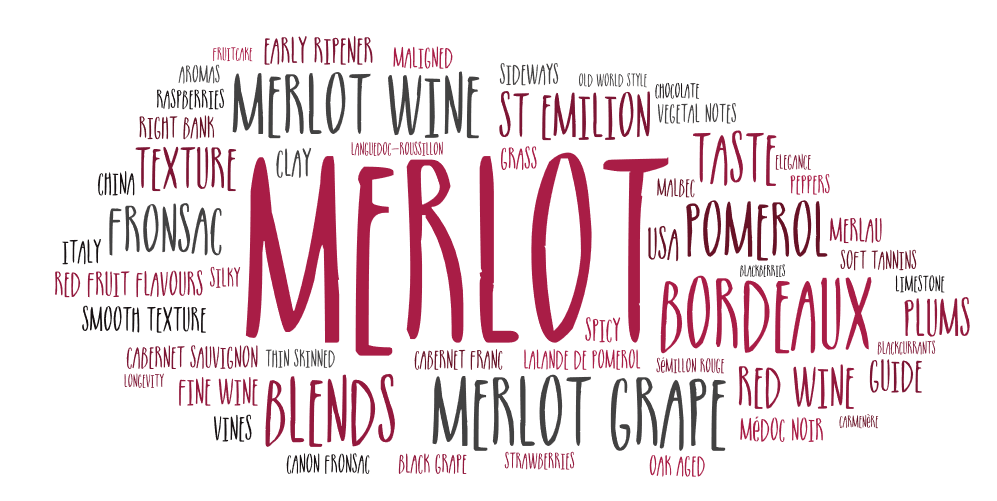
Guide to the Merlot grape and wines A guide to the Merlot grape and where it is grown, the characteristics of Merlot wine and what it tastes like plus what to eat with Merlot. Often in the shadow of Cabernet Sauvignon, with which it is frequently blended, most famously in Bordeaux, Merlot has somehow acquired a reputation for being inferior, its reputation not helped by the 2004 film Sideways in which Merlot was shunned by one of the main characters simply because his ex-wife liked it. But it is the second most widely-grown grape in the world so there must be something to like about this maligned grape, Merlot, and its wines, as we will discover. MERLOT GRAPE CHARACTERISTICS Merlot is a black grape variety that ripens earlier than many other varieties and is therefore often used as an ‘insurance’ in blends, should other grapes not have chance to ripen fully due to poor weather e.g. in Bordeaux where a larger percentage of Merlot may be used in wines if the later-ripening Cabernet Sauvignon has not seen enough sunshine and warmth. On the downside, Merlot buds early which makes it susceptible to frost and it is thin-skinned which makes it susceptible to rot and mildew so in very cold and/ or damp years there is a risk of low or even no yields. But on the whole Merlot is considered relatively easy to grow and that means that, despite the fact that it plays a significant role in many fine wines such as Pomerol and St Emilion in Bordeaux, Merlot can also be found in many more commercial-style wines of varying quality across the globe. The name Merlot is thought to derive from the French word for blackbird, ‘merle’, and there are differing views as to whether it is because its skin colour resembles the colour of a blackbird’s feathers or whether it is because that species is particularly partial to the sweet grapes. Other names for Merlot include Merlot Noir, Merlau, Médoc Noir and Sémillon Rouge. WHERE MERLOT IS PRODUCED France is home to circa 40% of the world’s Merlot vines and about half of those are in Bordeaux, from where the grape originates. Often seen as a support grape to Cabernet Sauvignon in that region, there is in fact more Merlot than Cabernet Sauvignon planted there. Merlot is traditionally the more dominant grape variety in the Bordeaux blends of the right bank areas of Bordeaux (north of the Dordogne river) such as St Emilion, Fronsac and Canon-Fronsac, Pomerol and Lalande de Pomerol as it is well-suited to the limestone and clay soils there. However Merlot is added in seemingly ever-increasing quantities to wines of the traditionally Cabernet Sauvignon-dominant left bank areas of the Médoc and Haut Médoc (south of the Gironde river), especially in vineyards with less of the traditional left bank gravel-based soils. The other main French region that has Merlot plantings is the Languedoc-Roussillon region which produces mainly blends of IGP wines, previously known as vins de pays, of varying levels of quality. Following France in the rankings, Italy, the USA and China have the next largest vineyard areas dedicated to Merlot but these account for just 9%, 8% and 6% respectively. WHAT MERLOT WINE TASTES LIKE When it comes to flavour, Merlot is a bit of a chameleon because firstly it is often blended with other grapes but secondly and perhaps most importantly its aromas and flavours can vary greatly depending upon a number of factors including the climate conditions in which the grape has grown, whether it has been picked early or late in the ripening season and whether it has been oak-aged or not and for how long. So Merlot can be quite hard to recognise. Pure Merlot wine from cooler climate regions or from early-picked grapes is known for its classic red fruit flavours – raspberries, plums and even strawberries with some vegetal notes like peppers and even grass. These red-fruit flavoured Merlots are considered more old-world style; they generally have lower levels of tannin and alcohol but have good levels of acidity and a smooth texture. Note that if Merlot displays too many green flavours, it is likely that the grapes were picked a little too early or may not have really ripened fully. When produced in warmer climate regions 100% Merlot wine will be bigger and bolder, often considered to be a more international style of Merlot. Fruit flavours may also include blackcurrants and blackberries, ripe plums with spicy notes, chocolate and even a touch of fruitcake. Alcohol is likely to be higher and the wine generally more full-bodied with soft tannins (given the thin skins). In blends Merlot is valued for its natural sweetness – not that it is high in residual sugars but more that the fruit flavours are of sweet juicy ripe fruits – and for its softer, more approachable characteristics. In fact it is specifically paired with Cabernet Sauvignon in order to tone down some of Cabernet’s more austere qualities. Merlot-dominant wines age relatively well but are generally ready to drink much earlier than their Cabernet Sauvignon-dominant counterparts. FOOD PAIRING WITH MERLOT Merlot wines, whether a simple commercial style, a fresh, cooler climate, red-fruit style or a richer, spicier style, can of course be enjoyed on their own because of the soft tannins and smooth texture though you may enjoy the finer examples of Merlot after it has been in bottle at least three or four years. Which foods would complement Merlot – and vice versa – really depends upon which style of wine it is. Easy-drinking, lighter, fruity Merlot pairs well with tomato-based sauces, pizza or chilli con carne. The more savoury style of Bordeaux Merlots or Merlot-dominant blends complements most red meats including game, mushrooms, truffles and roasted vegetables especially the more mature wines. The juicier, fuller-bodied style of Merlot make for a good match for steak, game, lamb especially when served rare, and duck. But really you can’t go too wrong with Merlot. If
Why drink sweet wine with dessert – and which sweet wine?
Why drink sweet wine with dessert? And which sweet wine? Celebrations like Birthdays, Mothers’ Day and Christmas are the perfect excuse to lay on a feast including dessert. Do you give any thought to which wine you will drink with pudding or stick with the red or white wine you have been drinking with the main course? Find out why drinking a wine that’s sweet with desserts makes sense and what the key characteristic is that sweet wines need in order to complement desserts. This blogpost also includes a comparison of different types of sweet wines like Sauternes, ice wine, vin doux naturel, Moscato d’Asti and port, a brief description of how each is made and which type of desserts each pairs with best. WHY HAVE A SWEET WINE WITH DESSERT? After carefully selecting white and red wines for the first two or three courses of your meal, why would you not also find something to complement the pudding? Carrying on drinking the wine you have had during the previous course or courses will often not work and here is why. Drinking a wine that is not at least as sweet as your dessert can make your wine taste at best less fruity, at worst flat, bitter and even astringent. In addition, any tannins in red wine will clash with the food’s sweetness, make the wine taste metallic and bitter and the tannins will seem even more prominent and unintegrated. There are a handful of sweet wine and savoury food combinations that work well, some of which are mentioned below, but bear in mind that if you drink sweet wine early in a meal, it is very hard to go back to a dry wine especially a red and enjoy it as the flavours of the wine will seem flat. THE MAIN CHARACTERISTIC OF SWEET WINE TO DRINK WITH DESSERT The fundamental thing to remember, if you are going to have any wine with your dessert, is 1) to make sure that the wine is at least as sweet as the dessert. Many people over the years have told me, as soon as sweet wine is mentioned, that they don’t like it but I suspect that most of those people have not had the right sweet wine and consumed it with the right food. I’m not dictating what you should or should not drink but your dessert and wine will both taste better and complement each other if you choose a wine that is sweet and with one other key characteristic and that is… 2) good acidity. A wine’s acidity makes the wine seem drier than it actually is and it will ensure that the combination of sweet wine and sugary food is not sickeningly sweet. Acidity will slice through the sweetness of a dessert, make the wine seem balanced and leave your mouth watering. DIFFERENT SWEET WINES & WHICH DESSERT TO EAT WITH THEM Below are some sweet wines (some are classified as fortified wines but are also sweet or medium-sweet), together with some suggestions of the type of desserts that will work well with them. There are no hard & fast rules however but it is worth following suggestions 1) and 2) above. PUDDING OR DESSERT WINE WITH FOOD There are many ways of achieving sweetness in wine and many of the world’s wine regions have their own specialities like TBA Riesling, Barsac, Monbazillac, Tokaji from Hungary but I’m going to use Sauternes as my main dessert or pudding wine example since it is considered by many to be the world’s best sweet wine. All these wines are produced in the same way. Sauternes is typically produced mainly from Sémillon grapes that have been affected by ‘botrytis cinerea’, a fungal infection also known as noble rot, which in the right conditions makes the grapes shrivel on the vine, leading to very concentrated and sweet juice. Sémillon gives the wine body and tropical fruit flavours; Sauvignon Blanc which is often added to Sauternes brings acidity and citrus flavours and the best Sauternes wines include a small portion of Muscadelle which add lovely floral aromas to the wine. Flavours in the wine will include a range of citrus flavours like lime, grapefruit, tangerines and lemon zest, honey, apricots and often mango, pineapple and barley sugar. You can pair Sauternes and other noble rot-affected wines with most desserts but in my opinion they work best with lighter desserts such as fruit tarts, lighter chocolate puddings with fresh fruits such as raspberries, cherries or strawberries. Desserts with any of the typical fruit flavours of Sauternes will match as well e.g. citrus-flavoured puddings and apple pie. For heavier desserts with lots of cream you could still drink Sauternes but it must have a high level of mouth-watering acidity to cut through the fat in the dish. Similarly for desserts with salt like a salted caramel brownie, make sure your Sauternes has good acidity because the salt will reduce the acidity of your wine and make it seem quite flat and even flavourless. Tokaji is typically sweeter and more marmalade-y than Sauternes – it is a great match with a crème caramel and any other caramel-based desserts. Sauternes will also pair well with many blue cheeses like Roquefort – and with foie gras for those with a preference for more savoury dishes but as mentioned above, be wary if you plan to switch to a dry wine, especially a red, after it. ICE WINE WITH FOOD Ice wine also known as Eiswein is wine produced from grapes left to freeze on the vines; when the grapes are pressed only the sweet juices that have not frozen are used in the wines. Ice wine should also have good acidity to prevent them being too sweet and to help them pair well with most puddings. Often made from white grapes like Chenin Blanc, Grüner Veltliner, Gewürztraminer and Riesling, increasingly ice wine is being produced from black grapes like Cabernet Franc, Merlot and even Austria’s Blauen Zweigelt which
Why we celebrate with champagne
Why we celebrate with champagne In the run-up to Valentine’s Day, Christmas and New Year’s Eve, many wine merchants like me will recommend that you open a bottle of bubbly with your loved ones. After all, we should celebrate the good things in life. This got me thinking… whether champagne, prosecco, English sparkling wine, crémant or cava is your fizz of choice, why do we celebrate with champagne or sparkling wine? And it’s not just Valentine’s Day, Christmas and New Year’s Eve that make us reach for the sparkling wine. Birthdays, weddings, engagements, Mother’s Day, Father’s Day and sporting events. You name the occasion and we just love to drink champagne. But, if you are a lover of Left Bank Bordeaux for example, why not open a bottle of that instead? When and why did this tradition for celebrating with bubbly begin? CHAMPAGNE IS USED FOR CELEBRATIONS IN MANY COUNTRIES Oscar Wilde is reported to have asked “Why do I drink Champagne for breakfast? Doesn’t everyone?” Well, as nice as that sounds, in fact most of us don’t drink champagne for breakfast or even every day or every week. Although in France, which still consumes about half of the champagne produced, it is common for a bottle to be opened just as you would open any other bottle of wine to have as an aperitif or with a meal, it is more commonly used to celebrate an event in the export markets of the UK and the USA (by far the biggest export markets), Japan, Germany, Belgium, Australia, Italy etc. And the celebrations for which champagne or sparkling wine is the preferred choice range from birthdays, anniversaries, the birth of a child, weddings, divorces (sometimes), job promotions, naming ships, sporting victories etc etc though I just don’t understand the practice of spraying champagne all over your fellow competitors at the end of a Formula 1 race – too much clearing up afterwards and too much champagne wasted! THE ORIGINS OF CHAMPAGNE Wine has been produced in the Champagne region for many centuries but the original wines were not sparkling or white but light pink wines made mainly from Pinot Noir. The sparkle was actually created by accident. London had become a good market for French wines and the bottles of pink wines from Champagne, with sugar added to satisfy the British sweet tooth, would often burst from the pressure created by a second fermentation in the bottle as temperatures rose in the spring after the wine had been bottled. It was the British who, with their coal resources that could fire hot furnaces, initially produced sturdier wine bottles to withstand better the pressure so that they could enjoy more of this bubby wine. However since some of those stronger bottles also exploded the now sparkling wines imported into London society became scarce and in demand. This demand which was not unnoticed and was replicated back across the Channel especially in the early 18th century. CHAMPAGNE AS A LUXURY PRODUCT The scarcity of the sparkling champagne made it a luxury product throughout the 18th century, enjoyed only by those with the means to buy it. Only in the first half of the 19th century did champagne production improve sufficiently to make the final product more stable, consistently sparkling and more widespread. The widow Veuve Cliquot is renowned for her contribution to the improvements in the industry but one of the major breakthroughs came from a little-known pharmacist called André Francois who worked out a formula for the amount of sugar that could be added to the wine to promote a second fermentation without the bottles exploding. After this many more champagne houses were established and the product became more widely available for several years though still largely a product for the aristocracy and the rich. There was further scarcity in the latter years of the 19th century thanks to the phylloxera louse that decimated vines throughout the world including in the Champagne region. This meant that other sparkling wines were developed and gained more of a hold in the market and this fuelled some fraudulent négotiants to pass off other wines as champagne sparking the Champagne Riots of 1911. I can quite understand rioting about champagne! But on a more serious note the outcome was the birth of laws requiring champagne’s origins to be declared on labels and ultimately of the Champagne appellation in 1936. MARKETING CHAMPAGNE Since the two World Wars, champagne production and the champagne market have grown massively but the wine still manages to maintain its reputation as a celebratory product and a luxury though certainly now much more accessible to people outside the aristocracy. This has largely been due to clever marketing by the champagne houses and by the champagne industry. The better or more canny (or both) champagne houses developed their names into brands. Advertising and celebrity endorsements, intended or otherwise, have helped some houses more than others but certainly boost champagne’s general image as a luxury (and sometimes expensive) product. And whilst champagne is generally more accessible, specific brands priced outside the pockets of the average person in the street have now become the luxury items only for consuming by the rich and famous – think Krug, Cristal and Armand de Brignac which Jay Z is associated with, even featuring it in some of his songs, and is believed to have invested in. In what is possibly the worst marketing ploy I have heard about in the wine trade, it is believed that a careless comment by someone at Cristal about rappers’ association with their brand was the trigger for Armand de Brignac’s subsequent success. LET’S OPEN A BOTTLE OF BUBBLY & CELEBRATE The price of champagne will sadly always keep it out of reach of most people for their “everyday” wine. What’s for sure though is that champagne and other sparkling wines will remain the drinks of choice for celebrations for many years to come. The symbolism associated with opening bottle of
Women Winemakers
Women Winemakers In recognition of International Women’s Day on 8 March, I’m celebrating female winemakers in this blogpost. Wine production has traditionally been very male-dominated and that situation has been slow to change however in the last 30 years or so there has been a quiet evolution with more women than ever involved in wine. And, if the general consensus that women are more sensitive to aromas and flavours than men is to be believed, then the industry – and wine – can only benefit from more women winemakers. THE FIRST FEMALE WINEMAKER Back in the early 19th century winemaking was certainly not considered a suitable profession for women. But, after the death of her husband in 1805, Barbe-Nicole Clicquot Ponsardin, became the first woman to run a champagne house, Veuve Clicquot. Rather than just a figurehead of the business, the widow Clicquot was heavily involved in the business and is thought to have come up with at least two important inventions: – the riddling process whereby champagne bottles are moved upside-down over a couple of months from a horizontal position to dislodge the yeast sediment and – adding a little red wine to champagne to create rosé champagne. So we have a lot to thank Veuve Clicquot for. 3 MODERN WOMEN WINEMAKERS None of the main educational organisations offering oenology courses provides a breakdown of the number of women attending or passing its wine courses but it is evident to me visiting wine regions, attending trade fairs and reading wine trade press that there are an increasing number of women involved in wine. Here are just three of the amazing women winemakers that I work with and whose work and wines I admire: TIZIANA SETTIMO OF AURELIO SETTIMO In 1943 Tiziana’s grandfather, Domenico Settimo bought what is now the Aurelio Settimo estate in the hamlet of Annunziata in Piedmont and the family they practised mixed farming, producing fruit, corn, hazelnuts and grapes and breeding hens, rabbits and cows. Most of the grapes were sold off to local wineries with a small amount used to produce wine for the family as was the custom although by the late 1950s Tiziana’s father Aurelio had begun to bottle some wine. When he took over the winery in 1962 he decided to grow only grapes and expanded the vineyards, producing wine under the Aurelio Settimo label. It was only in 1974 that the winery stopped selling 50% of its grapes and kept them all to produce more wine. Tiziana worked alongside her father from 1987 until his death in 2007 and then took over the wine-making. The business is still a family affair and the philosophy remains the same: a focus on quality and respect for tradition. They continue to produce only red DOC and DOCG wines from the Nebbiolo and Dolcetto grapes from their own six hectares of vineyards. Whilst respecting traditions in her wine-making, Tiziana keeps yields low and practises careful maceration to avoid over-extraction, with the aim of elegant, balanced wines that are not excessively tannic – and wow, does she succeed! The 2016 Langhe Nebbiolo which she describes as her “baby Barolo” is fresh, fruity and smooth in texture – and drinking beautifully in 2023. The 2011 Barolo is fuller in body and more complex given its age and wood ageing but it still retains elegance, balance and a silky long finish. MADELINE FERRAN, DOMAINE DES ESCARAVAILLES In recognition of their daughters’ involvement in the business, the Ferran family business name is Ferran et Filles. Fourth generation and elder daughter Madeline has been involved since 2018 after studying oenology and gaining experience both in France and overseas. Working alongside her father, Madeline is now at the forefront of the business with a growing influence on the 30-hectare vineyards in the southern Rhone and on the wines themselves. Practising sustainable viticulture, Madeline is driving the estate towards organic farming certification, a process that takes a number of years. The aim is to “produce authentic and unique wines, a reflection of our terroirs and our work”. The vineyards are the highest of the Rasteau appellation which allows them to achieve freshness and balance in their wines which many in this warm region cannot. Domaine des Escaravailles benefits from a number of different soils ranging from the water-retaining blue marl famous in the appellation, large stones (“galets”) as can be seen in the photo and sandy soils all of which have their advantages (and challenges). The range of terroirs also allows plot-specific wines to be produced from 15 different grape varieties, though Grenache dominates. Most of the vines are old which combined with low yields means wines that are concentrated, complex with depth. ANNA FLOWERDAY, TE WHARE RA Anna Flowerday and her husband, Jason, produce a number of stunning wines at their 11-hectare vineyard and winery, Te Whare Ra (pronounced Tea Far-ee Ra and Maori for ‘House in the Sun’) in Marlborough, New Zealand. From McLaren Vale in Australia, Anna is the sixth generation of her family to be involved in wine. Having met in Australia and gained experience in winemaking overseas, Anna and Jason bought TWR in 2003, restoring the vineyards and starting the conversion to organic growing and production by saving old vines, the oldest in the region that others told them to rip out, and bringing the soil back to life. The health of the soil is the key according to Anna. Yields are kept low and the wines are made with minimal intervention as the aim is to make wines that best express their origins. Environmental sustainability is at the heart of the TWR approach showing respect for and with the environment produces the best wines in Anna’s view. Whenever I talk with Anna I am struck by her clear passion for what she does and this is reflected in the quality of the TWR wines which show finesse, balance and elegance with subtle richness, complexity and texture from their old vines and from lees contact rather than
Riesling – love it or hate it?
Riesling wines – love them or hate them? A guide to Riesling wines Though I now have a number of Riesling wines in the portfolio, I was long in two minds about having more than one – in my experience people either love Riesling or hate it which is why I describe it as the Marmite grape (with apologies and also homage to the manufacturers of Marmite). But there are many different styles of Riesling wine that it is doing it a disservice not selling more than one plus I was long ago persuaded to by a new customer who was keen to get hold of some Andreas Bender Dajoar Zenit Riesling that he had had with friends in the Portland restaurant in London. I am so glad I did as it is a beautiful wine. And it is after all unfair to write off Riesling as a whole since it produces so many different types of wine. So in this blogpost I shed some light on the Riesling grape and its wide range of wines. Where is Riesling from? This white grape is also known as Johannisberg, Kleinriesling, Rheinriesling, Riesling Gelb and a host of other names but should not be confused with Riesling Italico or Welschriesling which are synonyms of a somewhat less-known grape. So versatile and hardy is the Riesling grape that it can be grown in many different regions around the world, producing a wide range of wine styles and flavours as it is also good at expressing its terroir. It grows best in cool climates and tolerates well cold winters. The location of the vines can have a huge impact on the style and flavours of the wines with cooler climate Rieslings producing more delicate green fruit & floral notes, warmer climate Rieslings generally being more peachy and richer in style. Germany is the homeland of Riesling with c. 45% of the world’s Riesling vineyards. It produces, some would argue, the best Riesling wines though there also are some poorer versions produced there as Germany tries, rather unsuccessfully, to convert the overseas wine-drinking public to their pride and joy. Riesling is grown throughout Germany though the Mosel and Pfalz regions produce the most. Mosel famous for its slate soils produces a light floral style of Riesling. The best sites there are considered to be the steepest sites with slate soils near the river where the grapes can benefit from maximum sunshine due to carefully positioned vines and reflections from the water’s surface. The reputation that German Riesling still has as a medium dry or even medium-sweet white wine is not really justified as most nowadays is dry or ‘trocken’. The USA, perhaps surprisingly is the second largest producer of Riesling with c.10% of the world’s Riesling vineyards and growing interest for Rieslings from California, Oregon and Washington State. Australia is gaining itself quite a good reputation for very dry, lime-flavoured Riesling – look for Clare Valley and Eden Valley Rieslings. In France Riesling is a permitted grape variety only in the Alsace region where the wines often have pronounced minerality. There has been a tendency for Alsace to add sugar to its wines to help boost the alcohol levels (rather than to sweeten them since they are vinified dry). Therefore Alsace Riesling is often more full-bodied than German Riesling. New Zealand is developing its Riesling vineyards; it is its 6th most produced grape variety. New Zealand is producing both off-dry and dry wines – the Te Whare Ra Riesling D is Dry, the ‘D’ meaning dry (they also produce a Riesling ‘M’ version for medium-dry). Austria produces mostly dry Riesling but also very sweet, dessert wine. A little known fact is that Luxembourg also grows a small proportion of the world’s Riesling but then not so surprising given it lies close to the Mosel region. Flavour Profile of Riesling wines It is partly Riesling’s ability to express its terroir well that makes it hard to generalise about one single flavour profile for its wines. Riesling wines can have one or more of the following – florals, minerality, fruit and spice. However one thing that all good Riesling has wherever it is produced is bracing acidity – just like Sauvignon Blanc. Even sweeter versions will not be sickeningly sweet as the sweetness should always be balanced by acidity. Rieslings aromatics can be quite concentrated. Distinct flavours that are usually recognisable include lime, green apples, pears and floral notes like jasmine and lime blossom especially when the wine is young, dry and from cooler regions. As Riesling develops richer peach and even nectarine flavours dominate and/ or if it is from a warmer site tropical fruit. As they get older Rieslings get richer and a wider range of aromas and flavours come to the fore including honey, beeswax, spice and toast plus sometimes the distinctive petrol or kerosene aromas may develop. The petrol note, loved by some and detested by others, is more likely to be found in better Riesling wines than in more commercial-style wines where grapes from higher-yielding vineyards are used. It is also detectable earlier in warm climate Rieslings. It should however always be subtle in any Riesling. According to Andreas Bender, producer of several Rieslings including the lovely Dajoar Zenit Riesling from the Mosel, Riesling needs some time in bottle to become rounder and for all the flavours to fully express themselves. I could see this in early 2019 when doing a vertical tasting with him of his 2015 and 2017 Zenit Rieslings; the 2017 needed a little more time to develop to its full potential. Give it another 12 months or so and it will match the 2015. Better winemakers such as Andreas aim to make the grape’s aromatic qualities show and therefore usually ferment the wine in stainless steel tanks. If oak is used it will be large vats and old oak to minimise the impact. Lees contact may also be used to give some Rieslings texture and richness which some
All about terroir and how it affects wine
How Terroir Affects Wine Terroir is a much-used and much-debated term but what exactly does it mean? Some say terroir produces better wines with more character, so-called terroir wines – but is that right? I confess I have long been a great fan of terroir and I use the expression quite liberally in my unique tasting notes. But there are many who think the term terroir is over-used and the concept over-rated, little more than a marketing ploy. This blogpost looks at what terroir means, how terroir affects wine and why it is such a topic of hot debate. WHAT DOES TERROIR MEAN? It is not, as some have suggested, pretension that dictates the use of the French word “terroir” in the English-speaking world; there is simply no one word that can describe the concept in English and it originated in wine’s old world. Terroir is a concept that has dictated the appellation system in many old world wine regions. Burgundy’s small ‘parcel’ vineyards for example were ranked centuries ago according to the perceived quality of each specific vineyard and these rankings formed the basis of Burgundy’s appellation systems formalised in 1936. The top ranking or Grand Cru wines of Burgundy originate from the vineyards with the best terroir of the region; consequently they command the best prices. There have been few changes to the system since and classification by terroir has been copied in other wine regions of the world. It is mistakenly thought by some, since vineyards are the basis for this sort of classification, that terroir must refer specifically to the soil in the vineyard; after all there are hundreds of different types of soil and they are known to affect the taste of the grapes/ wine but soil is just one component of terroir. Terroir in fact comprises the whole ‘natural’ environment in which the grapes are grown and is therefore a combination of: the soil, with differences in structure, texture, depth, pH levels, water drainage & storage capabilities all having an effect. Note – contrary to popular belief, it is not well-watered vines on fertile soils that produce the best fruit but vines on well-drained soils that have to struggle to find water the general climate of the region the climate of each specific vineyard, a so-called meso-climate and even the vine’s own micro-climate since the climate at one end of a vineyard may differ to the climate at the other the topography of the land including: the aspect, with south-facing vineyard considered superior in the Northern hemisphere and north-facing in the Southern hemisphere elevation or altitude, considered to be a significant factor as it affects temperatures in the vineyard incline, with slopes facing the sun generally preferred to flat land proximity to water, not necessarily for watering purposes but for the water’s ability to store heat and warm up land areas close to it the surrounding vegetation which can affect not only the local climate but also the taste of the wine e.g. the taste of eucalyptus often detected in Australian wine plus the interaction of all these components for example in governing how much direct sunshine the grapes receive and in dictating how much water is available to the vines etc. Therefore each vineyard (or even each plot within a vineyard) has its own unique terroir and this is in part what makes each well-made wine from each vintage unique. Terroir determines the quality of the grapes grown and therefore is a significant (but not the only) contributor to the character of a wine. DOES TERROIR INCLUDE WINE-MAKING? Many argue that the wine-maker and the wine-making process are necessarily also part of terroir. It cannot be denied that human intervention greatly affects the elements of terroir listed above whether winemakers choose to let nature take its course and intervene as little as possible in the vineyard and in the winery or whether they throw every chemical permitted at the vines and in the wine-making process. After all the wine-maker must decide whether and how much fertiliser and pesticide to use, how densely the vines are planted, which training system to use for the vines, which date the grapes should be harvested, whether natural or bought yeasts are used for fermentation, whether to use oak barrels, stainless steel vats or concrete tanks etc etc. The list is endless. But for many others, myself included, ‘natural environment’ is the key phrase in the definition of terroir; terroir is about the naturally-occurring elements that affect the wine not about the decisions made to create the resulting wine. But it is the wine-maker who dictates how well the terroir is reflected in the wine and therefore has a huge effect on the character, as well as the style and quality, of the wine they produce. It is a combination of good terroir and great wine-making that produces great wine. ‘TERROIR WINE’ The phrase terroir wine seems to be increasingly used in marketing wines but surely all wine is terroir wine since all vineyards have terroir – and a terroir that is unique to them? Be a little wary of the expression as the implication is that terroir wine is superior wine and it may be used simply to justify a higher price label than a wine deserves. Whether labelled as terroir wine or not, wines that don’t display terroir can sometimes be the subject of snobbery. New world wines especially were accused in the past of being devoid of or ignoring terroir and it could be argued that that was why cheaper, more commercially-produced wines were the focus for new world exports to Europe from the 1980s to the 2000s. It could however just be that they wanted to do something different from the strict classifications and regulations of the old world, that the wine-maker preferred to accentuate a wine’s fruit flavours rather the terroir, that the winery wanted to produce a consistent style of wine year on year or, as was the case with South Africa, that
All about Sauvignon Blanc
ALL ABOUT SAUVIGNON BLANC It is probably no surprise that Sauvignon Blanc features in the top 10 most planted wine grapes in the world.* Check out any list of the most popular wines in the UK and Sauvignon Blanc will be close to, if not at, the top. We Brits have fallen big time for the whole Marlborough Sauvignon Blanc brand and whilst there are many great examples of New Zealand Sauvignon Blanc, there are also many other amazing Sauvignon Blanc styles which are explored in this guide to Sauvignon Blanc. Read on to find out about the Sauvignon Blanc grape and where it is grown, the characteristics of Sauvignon Blanc wines and what they taste like plus what to eat with Sauvignon Blanc. SAUVIGNON BLANC GRAPE FACTS & CHARACTERISTICS White grape variety Sauvignon Blanc is also known as Blanc Fumé, Blanc Fumet, Fumé Blanc and Muscat-Silvaner. The name is derived from the French for wild’ “sauvage”. Sauvignon Blanc has often been confused with Savagnin Blanc which is believed to be one of its parents. Chile has in the past imported what it thought was Sauvignon Blanc and only in the 1980s was much of it discovered to be another grape variety, Sauvignonasse. Sauvignon Blanc is a parent of the Cabernet Sauvignon grape. Sauvignon Blanc is an early ripener and the vine’s growth is vigorous which means that it is best grown on poor soils in cool climate areas to rein it in and slow down leaf growth, which can also be tamed with pruning. Its naturally high yields mean that Sauvignon Blanc can be – and is – used to produce huge volumes of inexpensive wine but keeping costs low by not pruning leaf coverage prevents the grapes from ripening and leads to herbaceous or green notes caused by compounds called methoxypyrazines – remember how grassy flavours and aromas used to dominate many Sauvignon Blanc wines? On the other hand, left too long on the vine, overripe grapes can produce wines dominated by big tropical fruit flavours so picking at just the right moment is crucial, depending on the characteristics the winemaker is aiming for in his wine. Sauvignon Blanc is a naturally pungent or aromatic grape with good acidity. Cool climate regions again are best to prevent this acidity dropping too much as sugars rise in the ripening grapes. Rather than being mainly used for high volumes of more commercial entry-level wines, Sauvignon Blanc is increasingly being produced in the mid to high price range and as its characteristics can be influenced by different factors in the vineyard and by different techniques in the winery, very different styles of Sauvignon Blanc wine can be produced as you will read below. WHERE SAUVIGNON BLANC IS PRODUCED According to the University of Adelaide’s Database of Regional, National & Global Winegrape bearing areas, vineyard area dedicated to Sauvignon Blanc globally almost doubled between 2000 and 2016. Circa 50% of plantings are concentrated in three countries – New Zealand, France and Chile. NEW ZEALAND SAUVIGNON BLANC Marlborough Sauvignon Blanc is perhaps the best-known Sauvignon Blanc these days but in fact the grape variety was only planted there in the early 1970s. Pioneers like Brancott Estate and Cloudy Bay saw the potential for Sauvignon in Marlborough’s largely cool climate, and other producers followed to such an extent that the grape is now the most planted in New Zealand and accounts for 72% of the country’s total wine production. And according to NZWine.com, three quarters of all New Zealand Sauvignon Blanc is planted in Marlborough. FRENCH SAUVIGNON BLANC Despite the huge influence of New Zealand in Sauvignon Blanc’s history, more Sauvignon Blanc is still grown in France than in New Zealand or indeed any other country, spread across the country but mainly in the Bordeaux, Loire Valley and Languedoc-Roussillon wine regions. Before the emergence of Marlborough Sauvignon, the cool-climate Loire Valley’s Sancerre was considered by many as the epitome of Sauvignon Blanc (and still is to many). Pouilly-Fumé is perhaps less well-known but very similar in style. Better known for its red wines, Bordeaux has long grown Sauvignon Blanc for a range of different wines, dry and sweet. And in Languedoc-Roussillon Sauvignon is used mainly for cheap and cheerful, fruity IGP (or vins de pays) wines. CHILEAN SAUVIGNON BLANC Sauvignon Blanc is Chile’s most planted white grape variety accounting for c. 10% of the country’s and 12% of the global vineyards although, as mentioned above, some of the older plantings are Sauvignonasse. Stick to wines from the cooler parts of the country like San Antonio, Bío Bío and the Leyda Valley for the more elegant wines. There are further Sauvignon Blanc vines in many countries around the world but not in huge concentrations. It is worth mentioning South Africa however which is increasing its Sauvignon Blanc vineyards and creating some fine examples of sauvignon, often with crisp gooseberry characteristics. WHAT IS SAUVIGNON BLANC LIKE? It used to be said that you could tell a glass of Sauvignon Blanc by a distinctive smell of cat’s pee. That odour, now referred to as boxwood since certain species of boxwood apparently emit a similar smell when flowering, is thankfully no longer a common feature of the wine. In fact there are many different aroma/ flavour profiles for Sauvignon Blanc that have evolved as winemakers use different factors in the vineyard (such as different clones, quality and type of soils, vine pruning methods and harvesting dates) and different techniques in the winery (such as different fermentation temperatures, using oak barrels for fermentations and/ or ageing, malolactic fermentation, lees ageing and blending). All these different factors make it difficult to define one Sauvignon Blanc style. There are various ways to try to paint the picture but all involve making generalisations – I make some regional generalisations but perhaps key to the styles of Sauvignon is whether your wine is from a cool or warm climate area: COOL CLIMATE SAUVIGNON BLANC Cool climate Sauvignon will be lighter in colour and
What does acidity in wine mean?
WHAT DOES ACIDITY IN WINE MEAN? This Wines With Attitude guide covers everything you need to know about acidity in wine – how you taste acidity in wine, what causes it, which wines have high acidity and which are low in acidity, whether high or low acidity is better plus tips on matching high acid wines with food. Wine writers use the word “acidity” frequently – I know that I write the term often in my Wines With Attitude tasting notes. Conscious that some consumers may be wary of the words “acidity” or “acidic”, I try to vary the words I use to describe wines displaying acidity so you will see terms such as fresh, bright, zesty, zingy, refreshing, tangy and crisp though whether these really convey the true meaning could be debated. It is simply difficult if not impossible to avoid using “acidity” because it is one of the essential components of a good wine. So, if we can’t avoid the term, let’s find out more about it. HOW TO TASTE ACIDITY IN WINE Acidity is not a taste as such (if your wine tastes of acid then you have a problem) but it can be detected by a tingling sensation on the sides of the tongue. When you taste a wine with high acidity such as a Sancerre, your mouth will water more than usual – just as it does when you bite into a sharp Granny Smith apple or drink unsweetened lemonade. It whets the appetite, making you want to take another bite or sip. WHAT ACIDITY ADDS TO WINE structure and longevity; a wine low in acidity is less likely to age well stability by helping to keep bacteria and microorganisms at bay colour; the more acid, generally the more stable, intense and more vibrant the colour flavours; just as lemon can lift flavours in fish, acidity makes wine refreshing or crisp and leaves you wanting more similarly, acidity can sharpen the aromas of a wine. Hot tip: Tannins and acidity in particular can clash so avoid wines with high levels of both WHAT CAUSES ACIDITY IN WINE? Acidity is naturally present in grapes as it is in many foods and different varieties have different natural levels of acidity – Nebbiolo and Sauvignon Blanc for example are at the high end of the scale and Grenache and Viognier are at the low end. The level of acidity is also affected in the vineyard by soils, location and the weather or vintage. The level of acidity in grapes first increases but then declines as the grapes ripen on the vine and the level of sugar rises. It is therefore key to the natural balance of a wine that grapes are picked at the right time i.e. when acidity and sugars are at “optimal” levels. Why? Well, if acidity falls too much, a wine could be considered flat or “flabby” with dull flavours and a higher susceptibility to spoilage and infection. Too much acid can make a wine seem too sharp or even bitter. It is all a balancing act for the winemakers as they also need to consider fruit flavours, sugar and therefore alcohol levels. Winemakers might be tempted to adjust the acid (or the sugar- or both) and are generally permitted to do so within the boundaries of local regulations. Acidification, generally by the addition of tartaric acid, the most dominant acid in grapes, can be undertaken to increase acidity in warmer climate areas but can result in poorly made wine, especially where the adjustments are made post fermentation where the added acid has less chance to blend with the wine. A good taster can often recognise poor acidification as there is a very artificial acidic taste to the wine. Acidity is usually naturally lowered by malo-lactic fermentation or secondary fermentation, a process often encouraged by winemakers as it softens the acidity, converting malic acid into lactic acid and carbon dioxide. Deacidification may also be permitted by adding a carbonate – and though acid levels are reduced this can leave calcium tartrate crystals in the wine. These crystals are harmless but can deter some consumers from buying or drinking a wine. One type of acidity in wine that is not desirable is volatile acidity, essentially acetic acid or vinegar. A small amount is produced during fermentation but it increases in a wine exposed to air and in large quantities spoils the wine. Hot Tip: If you smell vinegar or nail polish remover in a wine, send it back WHICH WINES HAVE HIGH AND WHICH HAVE LOW ACIDITY? I could get scientific and talk about measuring total acidity and pH levels in wine but I’ll keep it short and just say that wines generally have a pH between 3.3 and 3.7 which sits in between black coffee with a pH of 5.0 and orange juice with a pH of 3.0. Few wines therefore are more acidic than a glass of your morning orange juice. But which wines should you opt for if you prefer to avoid those wines – here are a few tips: Hot tip: White wines tend to have higher acidity than red wines Almost all red wines undergo malo-lactic fermentation to convert harsh malic acid to softer lactic acid but not all white wines do; for example producers tend not to use MLF for Sauvignon Blanc but for producers of white Burgundy it is essential for the style. Lighter style red wines tend to have higher acidity than heavier, more full-bodied reds. As mentioned above as grapes ripen the level of acidity in them increases but then declines as the level of sugar rises. In cool climate areas such as Burgundy vines can struggle to ripen fully so grapes generally have higher acidity and lower sugar. Conversely grapes grown in warmer climates tend to have low acid and high sugar. Hot tip: Cool climate wines tend to have higher acidity than wines from warmer regions Very dry wines tend to have good acidity but this does not mean that